
On Tuesday evening when we came back home after having dinner with friends, there was a voice mail message from my father in-law saying, “I fell again today.” He is 87 years old and this was the second time he fell this month. His voice sounded weak and his breath shallow. After we called him back, he was gently persuaded to go to the Emergency Room and get an x-ray. We drove him from his senior housing apartment to the hospital. It was clear that he was having a lot of trouble walking just to get from his doorway to the car. It was almost midnight when the doctor informed him that he had two cracks in his pelvis. They admitted him to the hospital and told him that he would need to learn to use a walker. He would have to keep all weight off his leg for the next six weeks. With a barely audible voice, he responded, “I just don’t want to be a burden.”
Loosing independence is hard. I have experience at that. And, this will indeed cramp both his independence as well as ours. The sadness that comes from thinking you are a burden, is a familiar feeling for me. My earliest childhood memories are mingled with my repeated medical issues. Since I was born with a severe bleeding disorder, I learned at a very young age how suddenly a joyful day’s walk in the park could change into a medical emergency. As a result, family plans can be altered for days and even weeks. Before I was 6 years old, I had convinced myself that I was a burden on my parents and nothing that my parents said really changed my mind.
In fact, because my parents had rarely been ill themselves, I now think they didn’t understand why I would feel this way. They didn’t seem to notice that most of our family defined their worth by what they did, not their medical diagnosis. I could see my parent’s worries about money, even when they tried to hide them. I knew money in our home was short because of the bills that were received after each trip I made to a doctor or to the hospital. I knew why vacation plans had to be cut short or holiday celebrations ended abruptly for every member of my family. It was because of a crisis that required me to get immediate medical attention.
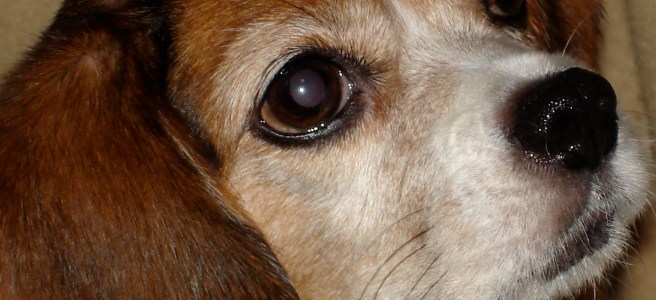
Now, however, I can see the other side. Part of that I learned from taking care of our dog, Penny. We adopted Penny from a local humane shelter eleven years ago. She hadn’t lived with us for a full year when she began having seizures, not unlike epilepsy. Being part Beagle, she also loves her independence. She doesn’t follow commands easily and seems to believe she knows best what is right. Yet, she wants to be as close as possible to her family, which she considers to be her pack. Penny demands the center of attention when the human family members try to have a conversation, and wedges her body between my spouse and myself when we attempt to sit side by side. She is a needy and willful dog that often stretches my compassion and generosity to the limit. The veterinary bills for her care have shrunk our budget just as her medical needs have limited our independence. She has triggered my anger and made me feel ashamed at my emotions.
Finally, I came to understand that Penny is my shadow self. Her traits remind me of the parts of myself that I would rather not see or recognize. When I opened my heart to Penny, I healed something deep inside of me. When I understood why I chose to care for her, protect her; provide for her needs I could finally see the full value in myself.
Penny has given me the gift of knowing that it is not what you do for yourself, or for others, that make you a being of value. Burdens can also be a blessing.

 My Turn
Thank you for sharing so deeply on this tender subject … it opened me up to look more deeply into myself … Isha
LikeLike
I really appreciated that vulnerability in this piece. I would love to know more! Ellen
LikeLike