A long time ago, I was born with a very rare bleeding disorder. Actually, I bleed just fine. My clotting is disabled. To be more specific, my blood does not clot at all without a transfusion of the clotting factor that my body does not produce on it’s own. It seems appropriate to me to use the term “disorder.” Living with a bleeding disorder can topple my to-do plans into chaotic debris at the most unexpected times.
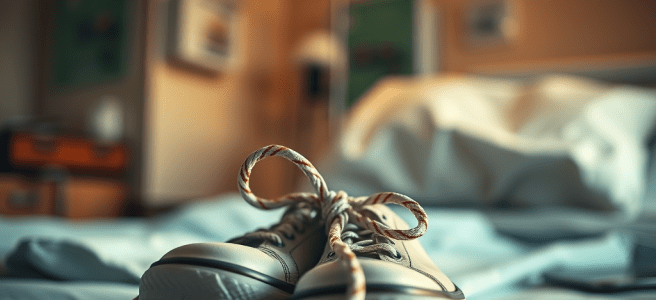
It’s not like the fairly tale “The Princess and the Pea” or the phrase that has been spoken to me so many times in an anxious tone, “does that mean you could bleed to death from a small cut?” No, it does not and no, it is not about a softer mattress. It means that shoelaces can be hazards to my health.
Recently, I spent the better part of one day in a hospital being infused with clotting factor to stop a bruise that was swelling at the top of my foot. “How did this happen?” the doctor asked. As I feel my shoulders droop and my eyes focus on my own knees, it seems I have taken on the body language of the three-year old still inside me. I mutter, “I laced my shoes too tightly.”
More often than not, it is the kind of accident that would have no noticeable impact for someone with the ability to clot. Like the accident that happened to me in a parking lot, on my way to my annual mammogram appointment. On that occasion, my right arm met the side-view mirror of a parked car. On the side-view mirror it says, “Objects in mirror appear closer than they really are,” and this mirror itself was closer to me than I expected.
Because of my bleeding disorder, this type of accident can transform my plans for several days and even weeks. This one refocused my attention almost immediately. The bruise, between my wrist and elbow, was noticeable within minutes. It swelled and grew as I fretted about my options. The technician in radiology could provide no ice pack for temporary relief. Even after all these years, it’s hard to switch plans, like the ones I had made for the remainder of that weekend.
I’ve learned not to listen to the mother‘s voice that I internalized long ago. I still hear her voice saying, “What did you do?” Those words sound accusatory to me, as if I had inflicted the pain on myself through my carelessness or stupidity. Mom meant well, though, and her training about how to be attentive has minimized my injuries. It still crosses my mind that if I hadn’t been in a hurry to get to the appointment on time… if I just hadn’t been so preoccupied with having a mammogram, it would not have happened. After all, I did not get a bruise from the mammogram itself, which sometimes happens. So, why can’t I just listen to Bobby McFerrin’s voice singing in my head? “Don’t Worry, Be Happy.”
“What happened to you?” I imagine people asking me in the next three to four weeks as the bruise enlarges, spreads and then fades away slowly. “Oh, I got into a fender bender with a parked vehicle and my arm was damaged, but the car is fine.”

 My Turn
This is my new favorite.But for humor in the face of crisis and danger, it would be too dark a world. There's a three year old in all of us.
LikeLike
Linda – Bravo!!! It is wonderful to see you talking about your bleeding disorder!! I know it's not easy for you and I applaud your courage to put your chin up and your too-tight shoelaces out there… as it were….. hopefully, we'll hear more from time to time. Thanks for sharing, it's healing for you and it's inspriring for me. xoxoEd
LikeLike
Linda, this is another one I really liked. The content is interesting and informative for those of us who do not live with what you do. And it is touching and personal. It also has the element of the universal human experience in reference to experiencing one's vulnerabilities and feeling like a child, over and over again. Ellen
LikeLike