
My childhood home had a backyard surrounded by a wire link fence. It wasn’t a fence intended to keep things out, but rather a safety parameter for children and small animals. Many a neighborhood child entered the gate of that fence to a zone where they could depend upon attentive listening, honest answers and respect that was extended to people, animals, plants and rocks.
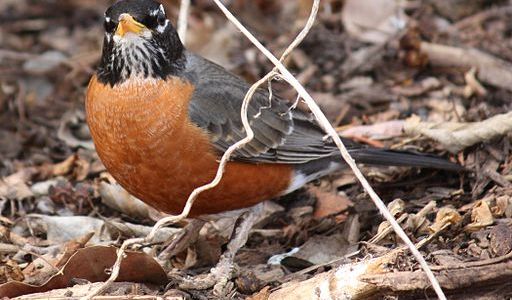
Behind our house, there was a family with four children. The youngest child was born prematurely. The infant weighed two pounds at birth. After spending the first few months of her fragile life in an incubator, she emerged to meet the world totally and permanently blinded by the oxygen. Her name was Robin and it was a fitting name for her since as a child she greeted life with all the enthusiasm a bird displays bobbing for worms on a lawn.
When Robin was still an infant, her mother left. Shortly after that, Robin’s father began dropping her off at our house each morning before he went to work. Robin’s three older siblings would go to school. During school vacations, our house was normally filled with children anyway, but Robin spent most of her week days with us until her father remarried several years later. It was the late 1950’s. No thought was given to paying for childcare. My parents both took on the challenge willingly and embraced the lessons that Robin taught us about the world as she experienced it.
Robin was a child not like any we had known before. Children learn many things by watching others. Until we knew Robin, we were unaware that children who cannot see need special training to learn to eat their food. Sucking is instinctual and when left untrained, blind children may never learn to bite or chew their food. When my mother first said, “Chew your food,” we watched in utter surprise as she slapped one of her tiny hands on the top of her head and the other under her chin and squeezed as hard as she could while trying to push her own jaw.
Over the first several years of her life, my parents made sure she had many opportunities to explore the world around her. They took her to local farms where she could pet sheep, goats and calves. They included time on their walks in a forest for her to touch the textures of moss, pine needles and sand. She went with our family on picnics where she would revel in the smell of wood smoke and the taste of a dinner cooked in tinfoil. As soon as she entered our house, she would dash through the kitchen and throw open the door to our basement, practically running down the narrow wooden steps to the old upright piano that had once belonged to my grandmother. She had more than a little musical talent. She would sit for long spells playing loudly and then softly. Quite consistently, she would strike perfect chords and invariably play tunes she had only heard on the radio.
The more time we spent with her, the more we came to respect her self-taught survival techniques. When Robin went somewhere new or met people for the first time, her conversation often seemed very repetitive and monotonous. She would ask questions constantly trying to discern, by the answers, who was nearby. She probably also learned a lot just by noticing the different perceptions of each individual. Interspersed with her words were numerous sharp clicks made with her tongue.
We once took her on a trip to a bird sanctuary to listen to the sounds of the woods and fields. We left the car by the side of a dirt road and went off to explore. On our way back, Robin stopped about thirty feet away from the car and announced with confidence, “There’s the car over there.” We puzzled over this statement for some time until she had repeatedly demonstrated her ability to tell when she was close to a car or house. We finally connected the habit of her tongue clicking and the echo that helped Robin to locate large objects in her path.
Few things frustrated Robin. As a child, she never learned the gambits of feeling sorry for herself or being grumpy or petulant. Yet, one day as she was in our back yard, playing a game of toss with other neighborhood children, she came running to my father with a quizzical look and a troubling question. “Which one,” she demanded to know, “is the red ball?”

 My Turn
I loved your story about Robin! It seems that her deficit and the way she was brought up contributed to giving her a unique and less conditioned attitude to life, in which she had to work out lots of things for herself.I don’t suppose you have kept in touch with her, or heard what became of her?Here in Europe I think our robins are a different species altogether, from the looks of your photo.
LikeLike
Thank you, Yves. I have not heard from Robin in many years and I no longer know where she is living. The robins are different in the UK. However, as Joan Borysenko says, “I don’t believe I’ve ever met a person who hasn’t been challenged or wounded by something. Difficulties present choices; we can either waste away from our wounds or use them to grow our souls.”
LikeLike