
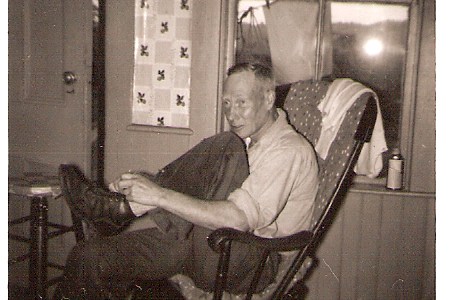
Uncle Byron sat in his rocking chair watching the sun set. The supper dishes were removed from the big dining table that in his childhood was used to spread out the meals for his nine siblings and whatever guests happened to come for a visit at mealtime. I piled the dishes in the sink and heated the water over the wood stove to wash and rinse them clean again, I watched as Byron gazed out over the front pasture that sloped down to the road. The road had not yet been paved and an occasional automobile passing by would raise a sandy dust as it rumbled over the gravel. The kitchen window faced the maple sugar camp that Byron had operated since he was a young man. But, Byron did not look in that direction; instead his eyes were fixed on the display of color in the sky from the setting sun
Slowly, Byron pulled out a cigarette paper and his pouch of tobacco. With the mindfulness of a Buddhist monk, he curved the paper with his fingers and filled the ridge with a small portion of dried tobacco. Then with care and gracefulness, that revealed how often he had practiced this ritual in the past, Uncle Byron rolled the paper around, licking it on the edge to hold the two ends together. The match he struck against the wood stove and as he exhaled he filled the room with the aroma of smoke.
He sat and rocked and watched the setting sun, seemingly unaware of the clatter of pots and pans. The women who were washing, drying and putting away seemed equally absorbed in their task. Byron had spent all of his life in that house, with the exception of his tour of duty in WWII. He had cared for his mother until her death and tended to the farm chores by himself when his five sisters and four brothers moved away one at time. He seemed during these times very comfortable in his solitude.
However, on the evenings when family and friends were in the house, Byron’s face displayed contentment. When the day was coming to a close, after each platter and plate, cup and saucer was set back in it’s spot in the china cabinet, people drifted back to the dinning room table. The deck of cards was shuffled and dealt to each player. The stories of neighbors and family were told and re-told. There was usually at least one joke about Byron’s elder sister whose Baptist faith scorned card playing as much as alcohol consumption. What would she think if she could see them shuffling and dealing for hours on end, or if she new that her own husband made beer in the basement?
Even Byron’s humor was tempered with compassion. He was a quiet man and when he spoke his words often revealed his empathy for those who were small or weak or ill. The night his youngest sister was killed in an automobile accident, it was Byron who received the telephone call. He sat by himself until dawn, not conveying the news to other family members. When asked, he said he did not want to upset their sleep.
When we arrived at the farmhouse for a visit or left to return home, Uncle Byron gave a hug that was so tight it seemed he did not want to let go. Had he suffered enough loss in his life already that his heart could bear no more?

 My Turn