Tea Service

The first time I went to the outpatient infusion center the nurse who checked me in took my blood pressure, recorded my weight, then smiled. “Your lucky, you’re just in time for the tea ladies.” Sure enough, just as I settled into the reclining chair a volunteer rolled a tea cart loaded with choices in front of me. My worry about how difficult my veins were for a nurse to stick evaporated as the “Tea Lady” poured me a cup of steaming mint tea and handed me a cookie.

That was twelve years ago.

For the next ten years I made regular trips in for infusions of clotting factor. I scheduled my appointments for mid-afternoon when the Tea Ladies would be there. When I discovered that I would no longer need infusions of clotting factor, I told the nurse, “I’m going to be a Tea Lady.”

“You don’t need to come back any more. Just enjoy your freedom,” she replied.

When I had fully recovered from transplant surgery, I told a friend I was volunteering once a week at the Cancer Center, she asked, “Doing what?”

“Serving tea,” I replied.

“Your grandmother would be so pleased!” she exclaimed.

The thought had not occurred to me. I had not known my grandmother at all. I had only seen her once briefly when I was five years old, but I was very familiar with the country farmhouse in Canada where she had raised her ten children. There the tea kettle sat steaming on the wood stove. It was ready to make tea all day. Although the china cabinet in the dining room was battered with wear, the fine English bone china cups and saucers behind the glass doors glinted. Some of the fragile fluted edges had gold rims that sparkled when the sunlight came through the dining room windows. All the cups had paintings of delicate pink, or yellow, or blue petals, and trailing leaves. These treasures were not kept for special occasions, but were pulled out and used whenever a cup of tea was served. My mother had learned to brew a pot of tea for guests from her mother. In turn my mother had taught me by her example. Steeped in tea by my mother’s hospitality, I had watched as every person who entered our home was offered a cup of tea. Tea was just how we welcomed people.

Now each Tuesday afternoon I take the empty carafe to the coffee shop to be filled while we arrange the cart. Then I fill the electric kettle and click the tab to set it boiling. I open the cabinet to check the tea supply on the cart. The cart should have a generous sampling of teas, Earl Grey, English Breakfast, decaffeinated tea, herbal teas and, green tea. As I do this my team mate arranges the tray of cookies and cupcakes donated by two local bakeries. She has an artistic sensibility and the platter looks scrumptious.

I double check. Are there enough packets of sugar and a variety of sugar substitutes, napkins and, stirrers? Despite the checking and re-checking there seems to always be one thing we forget. One week we forgot the single-serve cups of half and half. If we forget or run out of something, one of us dashes back to the supply room.

When the cart is loaded we head towards the Cancer Center elevator, “Let’s not forget to pick up the coffee this time,” my team mate chuckles as I round the corner pushing the cart. We both look forward to seeing the faces of outpatients and their companions relax and smile as we come into view.

“When you have nobody you can make a cup of tea for, when nobody needs you, that’s when I think life is over.”

― Audrey Hepburn
Annie’s Gift

The librarian at the desk looked up from checking out books. “Here comes the tuna fish lady,” she whispered to the new librarian who was just learning the routines of the smallest branch library in the city. Both librarians’ gave Annie a smile and a nod as she shuffled her way towards the newspapers and magazine section. “I don’t know how she makes it up those stairs. She comes everyday and sits in the periodical section, then walks home.”
The new librarian turned to glance in Annie’s direction, “What’s her name?”

“I don’t know, but we call her the tuna fish lady because she smells like that’s all she eats. Poor thing. Before she leaves she’ll come over to say goodbye. Try not to laugh. She says the same thing every day. She must be pretty lonely.”

“This is a tough neighborhood for her to walk in alone,” said the new librarian.

“We figure she rents a room in one of those big old Victorian houses that are so dilapidated now.”

Sure enough, after Annie had read all the daily newspapers she came to the check out desk with a tsk tsk shake of her head. “When I die,” she said wiggling her arthritic finger at the two women behind the desk, “you’re going to have a new library and it will have no stairs.”

“Let me get the door for you,” said the new librarian. “Can I help you down the stairs?”

“Why thank you dear,” said Annie.

One April day in 1952, Annie didn’t show up for her daily visit at the branch library. After a month the main library was notified that it was named as one of many beneficiaries of a will. The list of charitable organizations was long and the last one read, “And the remainder will go to the Springfield City Library to build a new branch in the Winchester Square section of the city.”

No one assumed that the remaining funds would amount to anything substantial enough to build a new library. In fact when all the other named beneficiaries had received the amount Annie had allocated for them, there was more than enough to build a new library. There was enough to fill the bookshelves, pay for some staff, and acquire the latest technology.

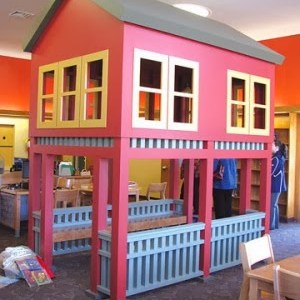
Annie had made only two requirements for the gift of a new library her estate would create, first that there would be no stairs and second that it would not be named for her.

(Story told to me when I was a new librarian at the Springfield City Library in 1972.)

Rare Disease Day 2016

 I see a dermatologist once a year just for a check. It happened that my appointment this year was on Rare Disease Day. The doctor said, “How long has this spot on your face been there?”

“I don’t remember,” I said.

“I don’t like the look of it.” He left the room and came back wearing magnifying goggles. After he stared at it through the glasses, he said, “I’m going to biopsy this spot.”

“Remember, I have a bleeding disorder.”

“It won’t be a problem,” he said. “I’d sleep better tonight if I biopsied it.”

If my brain had not shut down after hearing the word “biopsy,” or if he had not made it sound so urgent, I would have said, “I’ll need to get an infusion before you do any cutting.” When I feel afraid, it shuts down my thinking temporarily. I was in flight response and I just wanted this suspicious spot on my skin off.

The doctor left the room and the nurse snapped a photo of the spot. Then she turned her back to me while she uploaded the photo into the computer. Much to my surprise she had a syringe and was pointing the needle at my cheek. “This will sting a little, but it will numb the area.”

“No,” I said switching to fight mode. “You’re not going to inject anything. It will only make a second place to bleed.”

She made a face and said, rather gruffly, “I’ll have the doctor come speak to you.”

When the doctor came in he said, “What do you want me to do?”

“Either use a topical anesthetic or nothing.”

“We can put a topical cream on and wait several minutes,” he offered. I could hear the hesitation in his voice. Was I slowing down his efficient routine?

“I’d rather you used nothing for pain.” I glanced at the nurse who visibly cringed.

“Ok,” and off he went to get his surgical kit.

In two seconds he was done. Then he put a gauze pad on the wound and told the nurse to hold pressure on the spot for five minutes. “It’s just oozing,” the doctor said confidently.

That was when I began blaming myself for allowing this procedure to be done before getting a dose of fibrinogen first.

Five minutes later the nurse pulled up the pad and peaked. “Still oozing,” she said.

I refrained from saying, “I told you so.”

After another five minutes the cut was still oozing. Again in another five minutes, it was still oozing.

“Can you hold the pad while I get the doctor?”

“Sure,” I said. I sighed heavily, realizing that half of tomorrow would be spent getting an infusion. It was too late in the day to get it done now.

The dermatologist came in looking a bit concerned, but not apologetic. What was normally easy for him, looked more challenging now that he understood the consequences of what he believed was a simple procedure.

“We could put some jell foam on it and bandage it securely,” he offered.

“That would be a good idea,” I responded trying to cleanse my tone of sarcasm.

The nurse muttered, “I’ve never used jell foam.”

Before the doctor could respond, I said “You’ll have to sterilize scissors and cut a small piece to put over the cut. We used to keep jell foam in the house when I was a child and my mother sterilized the scissors with rubbing alcohol.”

“Right,” the doctor said, “and crisscross the tape to keep the bandage on tight.” Off he went to another patient.

I left the office with a bandage that covered more than half my left cheek. The waiting room was standing room only by that time. I got in the car and called the hematologist to see if I could get an infusion the next morning.

The hematologist removed the bandage after the infusion so she could see the cut. It was less than a half-inch slit, but three days later she had me come back for another infusion, just to make sure the cut healed fully.

The following week the report came in the mail. Benign.

“It never fails to amaze me how so many doctors – your’s in particular – always know so much better and refuse to listen. I mean, you’ve lived with your body for six decades. Is it a guy thing?” my cousin commented afterwards.

In truth, I think it is just part of the territory for having a rare disease.

Blue Christmas

In my experience most holidays are not as advertised. The family gatherings are fraught with tension, exhaustion from preparation, and the ghosts of loved ones no longer alive.

It’s all about expectations.

The year we gave Roxy a forever home was one of those rare times when our expectations were exceeded. We saw her walking with her foster parents just before Thanksgiving in 2009. The adoption agency said they had already promised her to another person.

Disappointed we could not forget the happy little dog for weeks. Then we got a call to say that Roxy had escaped from her new home and run away several times. She had been placed back into foster care. The voice on the telephone said, “Do you still want her?”

“Yes,” we said without hesitation.

In early December, Roxy joined our family. When the foster parents came to introduce her to our home, they brought with them some doggie diapers. No one had told us about her lack of bladder control. I put the diapers in a drawer and never used them. “I’d rather have to scrub the carpet than put a diaper on a dog,” I proclaimed.

I swear, Roxy grinned at me. But, then she seemed to always have a happy face.

The shelter said she had been born five years earlier, but she looked much older. When we took her to the veterinarian for a check we discovered that her heart condition was much more serious than we had been told. If we had known I doubt that it would have changed our minds. It was love at first lick.

Roxy welcomed anyone who entered our home with a gentleness that extends equally to friends or strangers. I called her the watchdog because she liked to watch at a respectful distance any carpenter, electrician, or plumber. She didn’t bark unless we were preparing her dinner. Even the squirrels in our yard seemed to know she was harmless.

The two cats that share our home are attracted by the smell under her floppy ears. They try to cuddle up beside her as if trying to share her warmth. She isn’t sure they can be trusted, so without a growl or protest she simply moves to a different spot. The younger cat does not take the hint and tries again and again, despite Roxy’s subtle rejections.

She is like a bodhisattva, infinitely forgiving. As we scrub the carpet with pet stain and odor remover, barely containing our annoyance, I look into her confused brown eyes. She doesn’t understand anger.

She takes heart medications, pain medications, and a pill for incontinence. We purchased the special food for intestinal distress. None of these are a cure, but they do help.

She coughs when she drinks water and recently her cough wakes her up from a deep sleep. After several trips to the veterinarian we learned that her heart was so enlarged now that her trachea has collapsed. The vet prescribed several new medications that alternately make her restless and groggy.

“I’ve come to hate this holiday season,” the vet says. “Every year I euthanize more pets at this time of year than any other.”

Now her waggy tail droops down like a flag without a breeze. We are exhausted from trying to help her feel better. With some coaxing we can get her to eat little bits of food wrapped around her medications. Watching Roxy wheeze, cough and struggle to breathe makes the joy of the holiday season crumple like discarded gift-wrapping.

It’s all about expectations, I tell myself.

A Skitter of Squirrels

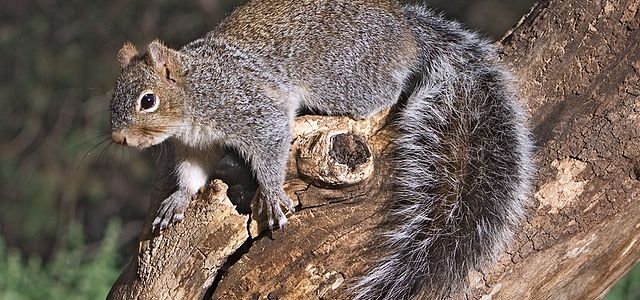
Scurry, tackle and play the squirrels are dashing into the yard for the morning romp. They are noisy, scratching up trees in a spiral twist, and racing through crackling leaves. They cavort with each other, doing somersaults and tumbling. They freeze only when I let the old dog out, but when they realize the dog is not a threat they go back to foraging for food on the ground.
I sit at the dining room table in front of the glass french doors munching on my breakfast cereal and watching two squirrels who are sitting upright just on the other side of the glass chewing their breakfast of seeds. They have finished their game of tag. Their tails are gracefully curled upward. They can see me munching. I can see them chewing. Have they come to thank me for the peanuts scattered on the patio just for them? Most people who feed the birds don’t like having squirrels. The truth is whenever we buy birdseed we also purchase a bag of peanuts for the squirrels. They don’t bother the birdseed that is in the bird feeders when there are peanuts for them to eat.
The squirrels seem to mingle in a balanced harmony with the birds. After all, they share the same trees. If only humans could be that reasonable.