Patriots Day

In the 1970’s on Patriots Day, I would stand at the crest of Heartbreak Hill in Newton, Massachusetts cheering and clapping for those who had made it to the sign-less landmark in the Boston Marathon. I didn’t always get a spot to stand until the winners had passed, but I tried not to leave until the last straggler made it past me. To call it a hill is an exaggeration.

The slow incline that goes up for almost half a mile begins about twenty miles into the race. Most of the runners who made it to the top of the hill looked like it had taken every bit of endurance to keep moving forward. Their heads drooped; their eyes had lost focus and their fatigue was palpable. But when they heard the applause from the crowd, they raised their heads up and pushed out a smile, regaining some energy. They grabbed at cups of water held out to them, drinking on the run. If the day wasn’t cloudy or rainy, some poured the cup of water over their heads before tossing the paper cup to the tree belt. The supporters at the top of Heartbreak Hill weren’t as numerous as the crowd the runners had seen at the start or the people who would be waiting for those that made it to the finish line. I wanted to applaud the many who would win a personal victory through their endurance.

This year two bombs were detonated near the finish line, killing three and injuring more than 170. Many hearts were broken. The city and surrounding towns were in a lock-down, no public transportation ran, no businesses were allowed to open, everyone was told to stay home with their doors secured. People were constrained into seclusion between the time law enforcement teams killed one of the suspects in a street battle and the time when the second suspect was captured the following day. Parent’s had to find the words to explain to their children why they were quarantined on a beautiful sunny spring day.

Instead of the alarm of Paul Revere, “The British are coming!” people were more inclined to think it was now the terrorists who were attacking. Now it is the city and the marathon that will have to make it up a hill of pain and trauma before they triumph.

The Devil I Know

Often I have found myself explaining to people who ask, “So, if you have no fibrinogen, do you bruise easier?” What I want to reply is, “No, I have very thick skin.” Of course I would be thinking figuratively, not literally. I’ve answered so many of these questions in my lifetime I have adopted a defense system that shields me from blood phobias.

The questions were scary for me when I was a child and someone would ask, “Can you bleed to death from a cut?” The questions were embarrassing when I was an adolescent, “How do you stop bleeding from your monthly periods?” As a young adult the questions seemed ridiculous, “What happens when you shave your legs?”

Most people fumble about trying to phrase the question they really want to ask, “Will you start to bleed in front of me and collapse in a pool of blood?” Eventually, I grew weary of the questions.

I learned a skill set and developed a level of confidence. More than that, being a “bleeder” became part of my identity. It did not define me, but I knew how to handle it. Then came the game changer in the form of an email message from a friend in California. She had been born with a fibrinogen deficiency and had reached out internationally online to find others who also had low levels or no fibrinogen.

A small group of us had been exchanging information on an email list for several years when she wrote saying that she was now having problems with thrombosis. At first there was disbelief, It gave me the heebie-jeebies when she reported that they were giving her clotting factor and anticoagulant medications at the same time. Then in 1997 a young woman in Switzerland sent a message that she had several embolisms in both of her lungs. When I was hospitalized not long after that for an internal bleed in my lower intestine, my hematologist laughed when I told him that an embolism was my biggest concern. It was no laughing matter to me though. Since then one of the members of our group has died from complications of thrombosis and one has recently reported that she lost the use of her right hand and some vision when clots formed in the arteries of her arm and neck.

Having long passed the fear of bleeding I now found myself afraid of the opposite. The irony is that I am starting all over with the pattern of vulnerability, misunderstanding, and angst. It felt like it was a new devil sticking its tongue out at me. It’s not, though, it’s just that same old devil testing me. It smiles and whispers in my ear. “You think you are in control, but you aren’t.”

Once Upon a Mattress

My throat is sore when I swallow. When I try to speak, I can hear a rasp in my voice. “Oh, no, I must be coming down with a cold.” I start preparing my comfort foods, ginger-lemon tea and homemade soup. I check the medicine cabinet to make sure there are still cough drops left from the last time I had a cold and while I’m in the bathroom I gurgle with warm salt water.

Nostalgia settles in my chest with the tickle in my lungs. I want my mother to tuck me in under the warm blankets and put the soup to simmer on the stove. I crave her care, just as I did when I was a child, more than the tea or the soup. I think of all the children who rarely get noticed by their mother or other important adults in their life unless they are sick. I’m thankful that was not the case for me, nonetheless, my unusual bleeding disorder brought a level of benefit. Many of my childhood friends were jealous of me. They wanted the special consideration I received from their parents or teachers. Doctors, nurses, even phlebotomists were more interested in my “special case.”

For years it seemed to me that the thing that made me special was my bleeding disorder and over the years it became more and more a part of how I defined myself. I was in high school when my hematologist said, “I believe we will have a cure for afibrinogenemia one day,” I was frightened by the idea. Who would I be if I had blood that clotted? What would make me special then? I had received enough attention that I realized there was a downside to being ordinary.

If you had asked me, I would have said that I disliked being treated differently than other children. That was true, but it took me years to admit that there were some perks. By that time I was an adult and I had developed strengths and abilities that had nothing to do with my bleeding disorder. It seemed shameful to me to face up to the reality that I actually liked being a certified princess, one that bruised easily and required special care.

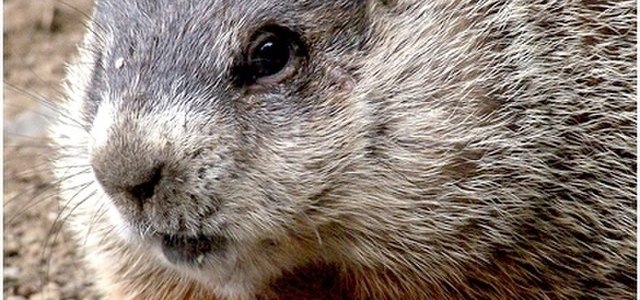
The Groundhog Named Chuck

Johnny, one of my childhood acquaintances, liked wild animals better than tame ones. He could stand as still as a tree listening and sniffing the breeze for signs of change. By the time he was eight years old, Johnny knew the difference between each caw of a crow. He knew which sounds signaled danger, which ones marked a territory, which were directed to finding a mate. Johnny could imitate a crow well enough that the crows would converse with him.

When Johnny heard the groundhog whistle, he knew it was the sound of fear. Johnny went to Chuck’s rescue. That’s how they became companions. Chuck liked to gnaw on carrots with his extended buckteeth and he would come when Johnny called for him. He also liked to shell peanuts and chew the corn off a cob. Chuck would waddle into the house and crawl under Johnny’s bed for a nap. Johnny kept a lot of things under his bed, dirty clothes, magazines, and rocks he had collected. It must had been a comfortable place for the groundhog to burrow. Johnny didn’t make a secret of Chuck, but he didn’t show him to other children either. He knew Chuck liked privacy. In many ways they were a lot alike, Johnny and Chuck. They each knew the benefits of staying still, listening with attention and respecting the space of others.

In autumn when the gold, orange, and red confetti leaves fell from the trees, Chuck got fatter and fatter and would soon start digging a hole for hibernation. Johnny never tried to find where Chuck had built his winter home. Chuck wouldn’t come out of his deep sleep until it was really spring. No early peaking on February second, like his cousins Wiarton Willie or Punxsutawney Phil. When the frost was out of the earth, Chuck would come out of his hiding place underground, clean himself off and then look for something to eat.

That’s when Johnny announced to his friends that it was really spring.

Beagle Brain

Tug, pop, tug, pop, tug, I pull out my knitting for what seems like the 100th time. Perhaps it is only the third or forth time. The linen yarn is beginning to show signs of fraying, separated and torn strands of fiber; my patience is beginning to fray too with each unraveled loop.

Shaking my head, I think to myself, I have a beagle brain. Having now shared living space with three dogs, each one part-beagle, I have become rather familiar with their nose to the ground view of life, their ability to be easily distracted and their careless regard to any commands from their human companions. The trouble with beagles is they think they are smarter than anyone else. For example, Roxy, who is part beagle and part King Charles Spaniel, normally comes gleefully when called for dinner or a walk. But she gives me only a sidewise glance before she takes off to track down a scent or find just the perfect spot to poop. Only when her quest has come to its end, will she glance up with an innocent look. “Oh, were you calling me?” her eyes seem to say as she trots in my direction.
 
So when I began knitting the scarf, I got about 6 inches completed when I noticed a mistake. I thought, these directions don’t make sense. There must be something wrong with the pattern. It certainly couldn’t be my mistake. The second time I tried my own directions and I discovered that didn’t go well either. It’s not a complex pattern; in fact it is mind-numbingly repetitious. My thoughts stray, I forget where I am and knit two together when I should have done a yarn-over. For a while I manage to get back on track but after I have about 10 inches completed it looks more like a tangled senseless design than the nice diagonal pattern in the book. Pop, tug, pop, tug, rewind.
 
Do I hear someone calling my name?