Tooth Fairy

At a restaurant with friends, I bit into my sandwich and was surprised to hear a distinct crack coming from inside my mouth. That was odd, I thought, it looked like harmless turkey and cheese with some lettuce and cranberry dressing. Not wanting to embarrass myself, I rolled around the chewed food in my mouth and examined it with my tongue. I found nothing suspicious. Then my tongue landed on the tooth farthest to the back lower right. Missing by at least half, the jagged edges and gap told the story. I had broken a tooth.

I have always taken excellent care of my teeth. Until that moment a few fillings in childhood and the removal of my four wisdom teeth, when I was a teenager, were the only times I had ever needed dental work. I had bled significantly with the loss of each baby tooth and when the permanent teeth came in and the bleeding stopped, I brushed and flossed them aggressively.

The dental hygienist who cleaned and polished my teeth every six months complemented me on my thoroughness, as she would hand the x-rays to the dentist. “No problems again,” she would say. It made me puff up with pride. My arrogance deflated at the moment I realized I had broken a tooth. My wayward tongue kept exploring the gap and the rough edges, reminding me each time that my teeth were no longer perfect. My first reaction to most injuries is, “What did I do wrong?” This was no different. Having allowed myself to feel proud of the way I had cared for my teeth, I now felt self-blame.

It was Friday evening when the tooth broke and I was grateful to have no pain. I waited until Monday morning when the dentist’s office opened to call and book an appointment. “We can fix this,” the dentist said enthusiastically when he finished checking the damage, “I’ll just put in a crown.” At last he had me, I thought grimly.

“Must have been all the times I chewed ice cubes, even when I knew better,” I muttered.

“Did you know that compulsively chewing ice cubes can be a symptom of anemia?” he said.

“No, but that would make sense,” I said glad to be forgiven for my sin.

Then I smiled and said, “Of course you realize I don’t want you to use any Novocain.”

He looked concerned, but not alarmed at the idea. “Is it the injection or the use of Novocain? Because we don’t use Novocain anymore.”

“Both,” I said. “Novocain, like a lot of topical anesthetics, is an anti-coagulant and any injection site will bleed unless I get an infusion of fibrinogen. But, don’t worry,” I added, “I won’t kick you too hard in the groin.” Nothing like a little added incentive for him to be as careful as possible I thought.

He smoothed the fragments left of the broken tooth and gave me a few breaks when I began to squirm and in the end the process wasn’t that bad. Now my most expensive gold jewelry is inside my mouth where no one can really see it and I plan to sip cold beverages from a straw, so ice cubes won’t tempt me.

Support

Recently in a friend’s home, I sat down at her dining room table on a chair with arms. Much to my surprise the chair was on casters and when I plopped into the cushiony seat the chair rolled backwards over the hardwood floor, perilously close to her antique china cabinet.

Over my lifetime, several bleeds into my joints have deteriorated the cartilage and left beads of calcium along the bone. My ankles haven’t been able to flex for many years and my knees are weak. When I sit down I collapse, rather than lowering myself slowly. When I stand up from a chair, I need support. If I have a choice, I pick a chair with firm arms so I can push myself up with my hands to a standing position. It makes me look as if I am at least twenty years older than I am. Considering that as a child my life expectancy was estimated at ten years of age, vanity seems like a small price to pay for living past sixty.

Sitting in the rolling chair, I began to think about how I was going to stand up. Where could I find support so that I wouldn’t send the chair or myself flying out of control? I considered my options carefully as I sipped my tea. My friend was unaware of what was scrolling through my brain. I could use the table to lean on, my core muscles could help, the soles on my shoes would grip well on the slippery floor. I practiced these things in my mind before it was time for me to stand up. No glass was broken and I got up safely.

Support is something I need to keep my balance in life. Sometimes it is physical support, medical support, or emotional support. I depend on friends and family to help me through difficult times and to celebrate the joys.

I have come to appreciate that there are different types of support I need for balance. There are times when what I need is empathy, a hug or a “I’m so sorry you are going through this.” I am very grateful for friends and family who can provide that kind of support.

There are also times when I need guidance, challenge and advice. These are times when “good job!” doesn’t mean much unless the person who says it really understands the work from personal experience. That’s why for guidance and advice about living with a bleeding disorder I lean on women with a bleeding disorder and they lean on me. Together we provide mutual support.

Missed Stick, Mistake

John, the only nurse at the outpatient hematology clinic who feels confident about starting an IV on me, approached me with a grin, “What arm to you want me to use today?”

I’m not an easy stick. He knows that, and I know that, and we both know what I’ll answer. “The arm where you can find a good vein,” I say.

“Okay, let’s try the left hand, that’s the easiest one.”

I extend my hand looking at the tiny row of scars like little beads running on the skin that covers the zigzag of the pale blue vein. This slender vein has been stuck a lot.

John’s facial muscle contorts and twist while he stretches the skin on my hand and examines it. He squints at the juncture of two veins. I can tell he is trying to determine if there is enough space for him to insert the catheter from the butterfly without bumping it against the wrist bone.

“Little stick,” he warns me. Then I hear, “Dang! There is no blood return.”

He pulls out the plastic tube from inside my skin, places a thick cause pad on the gusher, and I elevate the arm while putting pressure on the wound. “You know how much I hate missing. I thought I had it and then the vein pulled away.”

“Yeah, it happens a lot,” I say. Actually, it doesn’t happen nearly as often as it did before I learned how to use relaxation techniques. I realized that my thoughts had been preoccupied with other things that morning. My blood pressure was higher than usual when I checked in and the scale displayed a weight that was considerably larger than I wanted it to be. I had been knitting while I waited for the RiaSTAP to be mixed with sterile water in the hospital pharmacy. That usually makes me feel calm, however, when the bag of white foamy liquid arrived, I was attempting to pick up several dropped stitches.

John seemed a bit more agitated than usual too. Now after missing once, he muttered something about how he hates to fail. He set up the equipment to try again. Wisely he went for the right forearm this time. He knows enough not to put the tourniquet on an arm with a punctured hand. While he does the prep work I do mine. I begin practicing my deep breathing, letting go of judging myself for gaining weight and dropping stitches.

I managed to relax enough so that the vein did not pull away and the blood flow did not decrease in that arm. This time the stick was successful and I spent the next hour, reflecting on the consequences of being afraid to fail.

Don’t be afraid to fail. Don’t waste energy trying to cover up failure. Learn from your failures and go on to the next challenge. It’s OK to fail. If you’re not failing, you’re not growing.
Anne Sullivan

Father’s Last Walk

My father walked to relax, observe, and reflect. When he went for a walk, he paid attention to the sounds of natural silence, the skitter of squirrels and the rustling of wind. He stopped to notice when the skunk cabbages were in bloom, or to pick a twig to chew from a sweet birch tree. The twigs tasted of wintergreen.

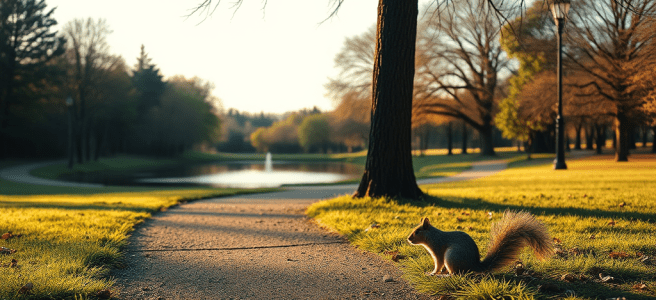
Until I was ten years of age, I often joined my Dad in his daily late afternoon walk. Two blocks from our home was a path that led into a park. Once inside the park, a paved road made a circular path. It had been closed to all motorized traffic and now it was used by bicycles and walkers. In the center of the park was a lake, which we could see at a distance. As we walked along just inside the outer edge of the park, Dad would point out the ferns by name, and identify the rocks I squatted down to examine.

My father shortened his steps to match the gait of my child-sized legs. The gentle rise we called Blueberry Hill felt steep to me then. Dad slowed his stride, so I could keep pace going up the slope. On these walks, we noted the passing of time not in hours and minutes but by the angle of sunlight and the seasons.

In the springtime the blueberry bushes displayed delicate white flowers. Afterwards, the pale green pearls formed in early spring, turning gradually into a delicate pink, blending to rich purple and finally blue by summer’s end. Each week the berries became plumper and plumper. I would often break into singing a popular song of the time, “Blueberry Hill” by Fats Domino.

I imagine that I kept up a verbal chatter that rivaled the sounds of the ducks quacking as they paraded back to the pond. By the end of our route, we passed the backsides of neighborhood homes. From out of open windows, the scent of dinner rolls baking, chickens simmering and pork chops frying awakened our growling stomachs. My father would wink at me, ”It’s time for supper.” Like the birds returning home to their roosts, Dad and I would quicken our steps.

After he retired, Dad increased his walks to several each day. To humor my mother and I, he carried a walking stick and wore a hat to protect his head from sun and rain, but he refused to relinquish his walk just because the snow piles had not been shoveled or the weather report warned that there was extreme heat and humidity.

Up until he had a massive heart attack when he was 91, my father continued his daily walks. In his last year of life his walks were to the nursing home, where my mother was a resident.

During his final three days of life, I sat at his bedside. As the doctor predicted his systems were shutting down. Each time a nurse entered the room to ask, “How are you doing?”

He responded, “I would be fine if I could just go for a walk.”

Guinea Pig

Merlin the Peruvian Guinea Pig shuffled over to his cage to greet me. His long fur parted in the middle of his back covered his eyes and toes. It was hard to tell which way he was facing until he moved. Merlin and I were simpatico. I knew what it was like to be a human Guinea pig.

Hospitalized frequently during my childhood, I tested the first oral polio vaccine in the 1950‘s. It satisfied a need I had to be useful. I also believed I owed a debt to the medical researchers who were trying to discover new treatments.

In 1967, my doctor asked if I would test a new anticoagulant. The new medication had only been used as a last resort on soldiers, serving in the war in Vietnam, who had suffered deep tissue burns. I was 18 years old and for the first time I was going into the hospital for a planned procedure, to have my four wisdom teeth extracted. I casually agreed to be a guinea pig again.

A nurse started the IV line in my right arm before the doctor arrived. A technician made a tiny cut in my left arm. She explained that it was 10 mm long and 1 mm deep. Every 30 seconds she used absorbent paper to draw off the blood. Normally the bleeding would stop before 9 minutes. I watched as the blood bubbled up one drop at a time, knowing that with no fibrinogen it would take a lot longer than 9 minutes to stop. Without fibrinogen the blood would not clot.

I watched the doctor place the bottle of medication on the IV pole and connect the tubing. He stopped the saline solution and started the medication. I turned my head to look at my left arm and the little drops of blood had stopped surfacing. Amazed, I looked back at the face of the doctor and noticed that his lips were moving but I couldn’t hear any words being spoken. A second later everything went black and I remember my last thought was, “I’m dying.”

When I opened my eyes I was startled to see at least ten people by the bedside. Where did all these people come from and why were they looking so worried? There was a cart that had not been there before and I heard one of the doctors say the word, “anaphylaxis” and then “the adrenaline worked, thank God.”

From deep in my belly I started to laugh. It was like a magic trick I had popped back to life before their very eyes. The audience of doctors and nurses looked more concerned at my laughter, so I stopped, but I just could not wipe the grin off my face.