Linda Wright, author of "My Turn: When Caregiving Roles Reverse," now lives in Florida. She has served on the boards of organizations serving people with rare, genetic bleeding disorders like hers. As a writer, she has contributed to several anthologies and is a member of the Tallahassee Writers Association. Linda is married to the Reverend Ms. Robin Gray.
Who did not love playing in dirt as a child? Not me. Maybe it was sand at the seashore or mud or clay that you scooped up in your fingers. Or were you a child who was cautioned that dirt was filthy and not to be touched?
The backyard of the house my parents mortgaged was dirt poor. The sandy soil had been stripped. It had lost the nutrients and organic matter that help plants to grow. Depleted, it was no longer fertile enough to make a vegetable garden thrive.
Once the ground had thawed in the spring, I watched as my mother collected all the vegetable peelings and uncooked scraps of food waste in a tub that was stored under our kitchen sink. At the end of each day she would take the bucket out to the backyard, dig a hole in the space where my father had cleared the grass, and bury her gifts in the ground.
When the maple and oak leaves fell in autumn, they were raked into piles that the neighborhood children jumped into. After we grew tired of rolling in the musty pile of crackling orange, red, yellow, and brown leaves, they too were given space in the ground where they rested all winter.
It was rudimentary composting that in time brought us juicy tomatoes, squash, and crispy pole beans each summer.
Although it has not been a part of my religious practice in the past, this year I have things I want to give up during Lent. It will not be the cookies I have with my afternoon tea or the occasional meal I have that is not strictly plant based. But there are things that are both unhealthy and distracting that I am giving up during this season of sacrifice, in order to attain clarity.
Lately my thoughts have been scattered. Like the tree branches blown over the ground with the recent wind and rain, I feel tossed betwixt and between. I spend more time than I want reading and responding to email and social media. The books I want to read pile up and up. My relationships with friends and family go untended.
This season is one of acknowledging death, and rebirth. As I am about to complete my 76th year of life I understand that time is precious. It is impossible to escape my mortality. I have fewer years of life before me than behind me. Dust will return to dust. My generation will be replaced by others.
Recently social media has capitalized on the human tendency to flutter from one thing to another. It keeps me scrolling way past the time I had planned to find some bit of information. Worse yet is that in order to hold my attention, much of what I stumble upon is designed to make me angry.
Years ago when I was leading workshops, I learned that distractions take precedence. It’s instinctual, probably a survival technique ingrained from our ancestors. If it is a single distraction, as when a comedian is interrupted by a heckler, the best advice is not to ignore it.
That doesn’t work when the distractions come at an alarming number and frequency. Lately the distractions feel like the devil at work. Even though I don’t believe in Satan, I recognize that there are evil forces purposefully stirring things up, making me doubt my faith. I feel the need to return to a sacred practice.
Today the “news” seems to be less about what happened and more about what the consequences could be. I am feeling powerless, trying to figure out where to begin. It is hard to avoid the comparison with being lost in a wilderness and needing a time of solitude and reflection, in order to muster the spiritual energy to resist the evil forces.
During Lent, I am giving up the temptations of mindless busyness that have become addictive for me. Only then will I be able to pay attention to the things that mattered the most, rather than the myriad details that have been cluttering my thoughts. Perhaps it will reinvigorate me, giving me renewed energy to start where I am, use what I have, and do what I can.
Start where you are, use what you have, do what you can. ― Arthur Ashe
As the sun set outside the kitchen window, Mom would do the dishes. She would rub the Ivory soap bar onto the sponge and scrub each plate, fork and knife, pot and pan. Then she would gently place the item in the drainer. Unless I had to stay in bed with an ice pack on one of my bruises, I picked each up and dried it. It was a special time of the day when I could ask about things that were puzzling to me.
The year I was seven, while I was wiping a plate with the towel, I asked “Why are some people not riding the buses in Montgomery, Alabama?”
Mom told me that after my father enlisted in the Navy he began basic training in Richmond, Virginia. My parents had only been married a few years, so Mom packed up and moved to be near him. Richmond was very different from the Nova Scotia, Canada she had grown up in, or the Massachusetts she moved to when she married Dad.
“In Virginia,” she said, “a lot of people had dark skin and they were called ‘colored’ then. Now they want to be called black. I took the bus to my job every morning. If I was the only one at the bus stop, the bus would stop for me and open the door. If colored folks were there first, the bus would not stop. It would breeze on by like the driver didn’t see them standing there. Those people needed to get to work just like me. I couldn’t believe it. How could the driver not see these people standing and waiting for a ride? But no one else seemed surprised. The bus driver would signal me to get on first and then a few of the other folks too. But sometimes the driver would slam the door shut before everyone else had a chance to get on board.” She paused, scowling, “I think they just want to be treated fairly.”
I already knew what it felt like to be left out. The Elementary School Principal had tried to ban me from going to her school because of my bleeding disorder. As I thought this over, I said, “Mom, I don’t think I know any people who are black.”
Then she started her second story of that night. “You know Mrs. Walker the librarian.”
I liked Mrs. Walker better than my first grade teacher and I nodded enthusiastically. I had never paid attention to her skin color. I knew Mom liked her too because they would talk while I picked out books to take home.
Mom went on, “Did you know she has a Masters degree in education but they would not hire her as a teacher here? That’s why she is a librarian. So even though we live in Massachusetts, black people don’t get treated the same as white.”
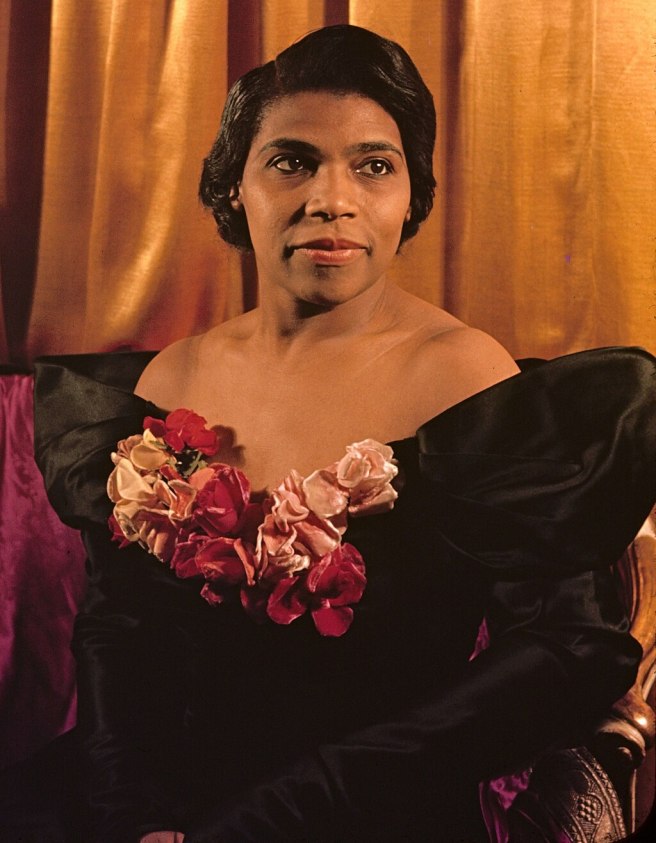
While I was still processing all of this, Mom began her third story. “Before you were born I worked as a clerk in the ‘Better Dresses’ department on the third floor of Forbes and Wallace. One day the world famous singer, Marian Anderson was to perform in the city auditorium. She had sung on the National Mall in Washington, D.C. Thousands of people stood outside to hear her sing and it was broadcast on the radio. When that famous lady came in wanting to buy a dress, the store manager told her she would have to come up to the department I worked in by the service elevator. It was then that I realized that it didn’t matter how talented or famous you were if you had dark skin.” Mom didn’t get angry often but I could hear anger in her voice then.
By the time I reached adolescence, the Civil Rights protests had reached our city in Western Massachusetts. Whenever my injured ankles would allow me to climb the stairs, my parents went to church and I attended Sunday School. One morning our teacher brought a guest, a friend who was a lawyer and a young black man. His name was Oscar Bright. His lesson was about how head cheese is made. Then with a grin, he said, “Would you like to eat some?”
There was a chorus of “Yuck, no thanks,” from the teenagers. Then he talked about prejudice and how you can miss out on somethings that are really good if you have a closed mind.
Not long after that day, the morning newspaper headline read “Oscar Bright Arrested at City Hall Protest on Drug Charge.” My best friend, Cheryl joked, “I guess Oscar Bright wasn’t very bright.” I didn’t laugh. I believed that the man I had met would not be so stupid as to carry drugs in his pocket when he knew he might be arrested by police. I said so, feeling angry, like I remembered my mother being when she had told me her stories.
This week we purchased three blueberry plants. We haven’t had a blueberry bush since we said farewell to our home in Massachusetts in 2007. Those plants were a birthday gift from my father one April. I don’t remember most of the birthday presents I have received in my lifetime, but I can still remember the joy those blueberry bushes gave me.
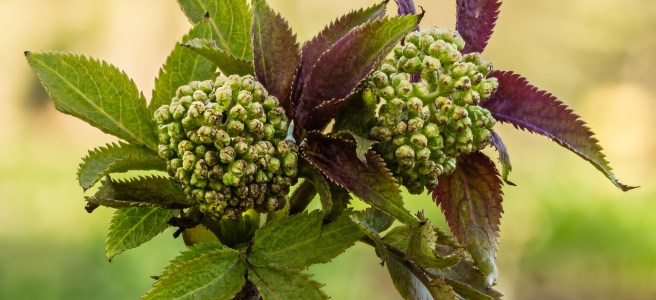
The blueberry bushes were a gift that fed me pleasure for years. Each spring when their pink tips started to spread at the edges of green leaves, I relaxed in the return of spring. Gradually the pale white blossoms would begin to expand. The bees and butterflies thought the flowers were an offering just for them. They kissed each tender bloom and carried the pollen from one plant to an other. By mid summer each flower had transformed into a plump juicy berry, dark blue with a rim of pink by the stem, like a berry belly button.
It didn’t take long before the birds discovered the gift too. I’m not sure how many years it took for those bushes to produce enough berries to fill a small bucket, but it did take us a while to notice that if we didn’t put a net over the bushes the birds would gobble all of them up before we had a chance to berry pick. Even after we tied netting around each bush, the birds still got a generous share from what dropped to the ground. Once they discovered that, if they flapped their wings around the netting, a shower of berries would land at their claws and they could feast to their fill. We didn’t mind sharing. There was still enough to put on our morning cereal bowl or put in a bumbleberry crumble.
Since we moved into the retirement community our house has a much smaller garden space, so the blueberry bushes are a variety that is supposed to grow in a pot and they will reach a height of only two to three feet. In Florida February is a good time to plant. The advertisement claims that the plants will produce sweet, dark blueberries. Will there be enough berries to put a few on our cereal bowls, or into a bumbleberry crumble? If not, we will be glad to provide a bit of sustenance to the bees and birds.
For those who do not know about bumbleberry pie or bumbleberry crumble, here’s how I make mine. It is different every time. I use any mix of assorted fresh and/ or frozen berries… strawberry, blueberry, blackberry, raspberry. My Canadian relatives usually add some chopped apples. If strawberries are part of the mix, you can add some chopped rhubarb. It takes about five cups of fruit in all. I toss the fruit in a small amount of sugar and some cornstarch. I like mine quite tart but most people add more sugar and even honey to their crumbles. Then I put the fruit in a nine by nine baking dish and cover with a mixture of oatmeal, flour and brown sugar. I plop several small chunks of cold butter on the top and bake. It’s my favorite dessert and best when shared.
In 1968, I tossed a prosthetic ankle brace into my closet. Wearing that brace had caused a purple welt on the back of my knee. A hematoma formed from the pressure of the strap. The brace had to be modified more than once before I could wear it without injury and, when that was done it did not give the support that my ankle needed. I wore it for almost a year before throwing it into my parent’s attic forever.
In addition to being less than functional, it exposed me as a cripple. The looks strangers gave me were of pity. At nineteen, I did not love my own bones, yet I would rather use a wheelchair if necessary, than do additional harm to my body.
Osteoarthritis in both of my ankles, both knees, both shoulders, one hip and, one wrist, is the legacy of my congenital bleeding disorder. Over the years however, I have become proud of my identity as a disabled person and learned the power of coming out of the crip closet.
Since that first brace, almost sixty years has passed. The doctor looked at my X-ray and ordered me a new brace. After I wore it once, I refused to wear it again. Instead I did physical therapy for what the doctor called “serious arthritis.” That helped to make walking more stable. For the second time in my life I tossed another prosthetic support aside.
When the ankle became inflamed and so painful a few weeks ago that it would not bare my weight, I pulled the brace out from the closet. My bones may be fragile, fused, and misshapen but, I care for them.




 My Turn