
Beginning of Life Decisions

My maternal grandmother gave birth to one child every two years until she had five sons and five daughters. It was said that Grandmother was appalled that any woman would have a child more frequently than that. Grandmother expressed her scorn by saying, “She must not know how to use a thimble.” That meant they didn’t practice appropriate birth control. Her children, including my mother, saw the irony in where she drew her moral line.

Of my grandmother’s ten children, six did not have any biological children. My mother had several miscarriages prior to conceiving me. In what she believed to be a last attempt, Mom opted to take a prescribed medication that was thought to prevent unwanted miscarriages. Later it was determined that the medication was not only ineffective, but that it created serious health problems. I was her first and last-born child.

When I was still a youth myself, my doctor told me that I would never be able to withstand a pregnancy, because of my particular type of bleeding disorder. This was true. I’ve watched in my lifetime as many women now carry a child with the help of medical technology that did not exist ten or twenty years ago. Women who have past their fertile years, women who are not in sexual relationships with a man, or women who love a man who is unable to provide the Y-chromosomes for the child they want may all give birth to children now. It also seems that more and more I hear of newborns who survive only because of medical interventions that would not have been possible a few years ago. Some people question how this moral line has stretched.

This expanded potential for childbearing with the help of technology is mirrored by the way in which it has become medically safer for potential parents to make decisions about when and how often to give birth. It seems that many question this capacity for increased human decision-making on when a life begins. During my grandmother’s, and my mother’s and my own lifetimes, we all knew some women who chose to use birth control and made decisions to terminate a pregnancy. We also knew of women who, against their will, had a pregnancy aborted by the brutality of the child‘s father.

We each draw the moral line for this pregnancy and against that one where we are able. Others may see irony or even sinfulness in our decisions. Yet, it seems to me, that they are the best decisions people can make under the circumstances of their lives at that moment in that era.
Do No Harm

When I need medical treatment, I go to a hospital. Once they save my life, I get out before they kill me. I have been doing this since my first hospital admission.
 
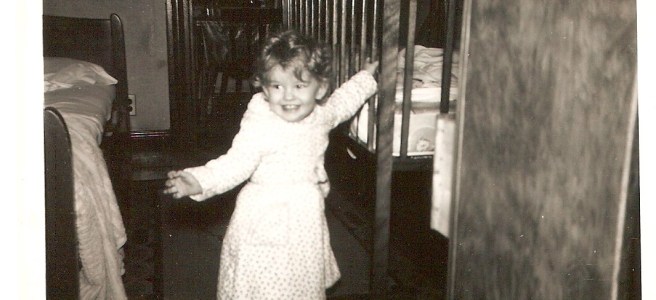
I do not actually remember the experience; I was less than two years old at the time. My parents told and retold the details so often it feels as if I can remember that day.
 
When my father told the story it was with pride. It was like the story Dad told about purchasing one guaranteed-to-be-spill-proof baby dish after another, only to watch me overcome the newest foil. He seemed pleased by his daughter’s ability to solve problems. He saw it as a sign of intelligence. I have no memory of ever sitting in a highchair spilling pureed vegetables onto the floor for entertainment.
 
When my mother told the story of my first hospitalization it was tainted with remorse.
 
When I tell the story, the lesson is about the failure of hospitals to live up to the Hippocratic oath.
 
This is my version. As a toddler, I loved taking a bath. The Ivory soap floating on the surface of the water was like a wonderful toy. It had a pungent smell and it made bubbles as my mother lathered my hair. I wiggled as she scrubbed my back with the washcloth. But one night, I slipped and hit the bridge of my nose on the edge of the porcelain bathtub. It seemed unimportant at first.
 
By the next morning, a deep blue sac appeared under my tongue. It hurt when I tried to eat or drink. My mother was already aware that I bruised easily, although I had not yet been diagnosed with a bleeding disorder.
 
The Emergency Room physician put his fingers on the pressure points under my chin and squeezed hard. My mother protested and he threatened to have her removed from the room. The technique did not work. Instead of stopping the internal bleeding, it created red welts around my tiny neck. If the doctor regretted accusing the terrified woman facing him of being a “hysterical mother,” he never said.
 
I received a whole blood transfusion and was admitted to the pediatric ward for observation. The charge nurse assured my mother that the hospital crib would confine even an energetic child. If the nurse felt sorry for ignoring my mother’s misgivings, she never said.
 
Visiting hours ended. By the time my mother reached the elevator door, she turned to see me tottering down the hallway behind her. I had climbed to the top of the metal bars and shimmied down to the polished linoleum floor below. I wanted to go home… before they killed me.

Dental Care

On Friday, I have an appointment with the dentist. The dental hygienist will scrape away the crusty bits that have accumulated on my teeth in the past six months. It won’t take long; it never does. Then the hygienist will ask if I want mint flavored paste or another flavor. Sometimes the flavors include cinnamon or strawberry. Usually I choose the traditional mint.
 
When my teeth are smooth and shiny again, the dentist will be called in to examine the results. He will nod and smile and poke a metal instrument here and there. When he is satisfied, he will say, “See you again in six months.”
 
I know what will happen because it has been that way now for more than 50 years. With my clotting disorder, removing a tooth would require an infusion of blood products. That makes it especially important to practice preventive dentistry. Since I was a tiny tot I brushed my teeth with vigor after every meal or snack.
 
When the permanent teeth began to develop and my baby teeth began to wobble, I had some trouble with prolonged bleeding. Despite the warnings from my parents, it was hard not to wiggle a loose tooth with my tongue and give it a little tug every now and then. Several times the dentist had to pack the space left in my gums after I pulled away the temporary tooth too soon.
 
Even with all the preventative measures, I did not escape childhood without dental fillings. These were done without administering a local anesthetic. Novocain has anticoagulant qualities, which could make the bleeding from the injection more profuse.
 
When I was an adolescent I had my four impacted wisdom teeth removed and was hospitalized so the coagulation could be managed after the dental surgery.
 
I have reached the age when most of my friends have had a root canal. I doubt that I will escape this myself. At the very least I will probably need to have those old fillings replaced. One of these days, I expect the dentist will examine the x-ray results or frown when he pokes his metal instrument on one of my teeth.
 
I thought the day had arrived when last winter when the teeth on the right side of my mouth started to ache after being exposed to hot or cold. The dentist pulled out a tiny video camera and showed me live pictures of the vertical cracks on some of the upper and lower teeth.
 
“Do you grind your teeth at night?” he asked.
 
“Maybe,” I said, “I don’t know. I’m mostly sleeping.”
 
He made me a night guard and the toothache has gone away. I try not to think about those little cracks expanding up or down my molars. Will those cracks turn into fractures?
 
On Friday when the hygienist asks me what flavor toothpaste I want, I will probably choose mint. It’s nice to have a choice though.

Trolls cannot change truth, but truth changes Trolls.

In the weeks following my 61st birthday I faced my troll. The fearsome creature usually lives in the caves of my consciousness. It pops up threatening to swallow me on occasion. This time it leaped out and surprised me while I was undergoing my annual medical examinations and subsequent tests.

First I made appointments with the hematologist, primary care physician, gastroenterologist and physical therapist. Because my back pain was increasing, I scheduled an appointment to check my orthopedic shoe adjustments and inserts. I also booked an appointment with my dentist to talk about my toothache. 

The physical therapist evaluated my flexibility and strength and adjusted my weekly regimen; doubling the days per week I should spend practicing my routines. The dentist custom-made a night guard to prevent me from grinding my teeth in my sleep. That troll was definitely emerging from the cave.

The other doctors wrote orders for the routine lab tests, scheduled radiology appointments, and set dates for follow-up appointments. Grimly I began attempting to cross the bridge, checking off the list, so that I could reach the other side to (at least temporary) safety. It looked like the troll was creepy crawly coming my way.
 
I find that lists have a way of growing longer even as items are checked off. This list was no exception. No sooner had I checked off annual mammogram than I got a call to come back for an ultrasound for the suspect breast tissue. The evil troll appeared, smiling and licking its lips. I am a stubborn goat though, so I banished the troll with a promise that soon there would be a fatter goat to eat.
 
When the new shoes I had ordered arrived they had been improperly adapted and had to be returned so that the work could be corrected. The mouth guard has been adjusted three times already. The toothache isn’t gone but the neck pain and morning headaches have disappeared.
 
The liver function blood tests were drawn on the orders of the hematologist and a month later the gastroenterologist wrote another order for a blood test. The troll was not alone this time. They looked bigger than I had remembered while I felt smaller. It will still be a few weeks before I get all the results and until then I intend to befriend those nasty trolls.

Woman Power

“You have to meet Beth Ellen,” Don said as the plane took off from Boston on our way to the Annual meeting of the National Hemophilia Foundation (NHF) Meeting. “You two have so much in common,” he added.

 
I shrugged and said something non-committal. Later I learned that Beth had given him the same reaction. He was baffled by our disinterest.
 
When I first met Don, he was twelve and I was fourteen. We were both in the hospital. He had just received an infusion of factor VIII and was strolling down the hospital corridor pushing the I.V. poll in front of him. An intern was preparing to stick one of my veins with a needle, so that I could receive fibrinogen concentrate.
 
We quickly became friends. When we had both graduated from college, Don asked me to run for office in the New England Hemophilia Association. Once I was on the Board, he encouraged me to go to the NHF Annual meetings. This was almost forty years ago.
 
I had been raised in a loving and supportive family. They cared for me and would love me without regard to the limitation and complications caused by my bleeding problem. This kind of support was vital to my health and well-being. Yet even my mother, try as she might, could never fully understand what it was like for me to have a bleeding disorder. Additionally that kind of support was filtered by complex emotions, such as sorrow, fear, and anger.
 
Interacting with people who also had a bleeding disorder gave me another kind of support. There was an understanding between us. Although we had many different interests, we had one thing in common. Before and after Board meetings, we might talk about our families, where we went on vacation, our life goals and attitudes but we rarely socialized with each other. We knew, however, that we could get unbiased and dispassionate advice from people who had “been there, done that.”
 
Why Beth and I resisted meeting each other, I will never know for sure. We were strong, opinionated, and stubborn young women. It may have been that we were used to putting on a façade of self-confidence, like one would put on mascara or lipstick. Neither of us wanted anyone to feel sorry for us or make assumptions about what we could or could not do. “One size does not fit all” does not apply only to clothing; we knew that just because Beth had hemophilia and I was born with no fibrinogen, it did not mean that we had had the same experiences or made the same choices in our lives.
 
When we did start talking there was little that could stop us. We sat in NHF Board conference rooms scribbling notes and passing them to each other like schoolgirls. We compared our collections of earrings… the type that did not require ear piercing. We stayed up most of the night talking about the bleeds we had each experienced from ovarian cysts. We shared information about how to survive a mammogram and find makeup that covered black and blue bruises. We made fun of doctors who had cautioned us not to shave our legs.
 
Despite our hesitancy, Beth and I found a connection that was immediate and deep. We had more in common than earrings and bruises. We understood each other’s fears and dreams. Don was right; Beth and I had to meet.