When Kitty Eyes Are Smiling

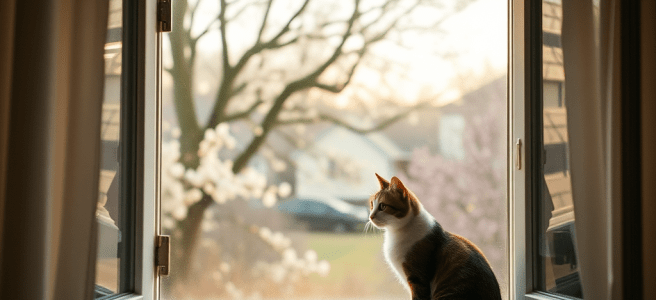
Calliope leans over and takes a lazy stretch, attempting to snatch my leg as I pass by the sofa where she has been napping. The gentle-clawed tug is meant to remind me that when she awakes from a snooze, she would like a snack. She has trained me well with her smiling kitty eyes.

The first kitten that entered my life’s path was a flea-bitten stray that a childhood friend gave to me. My mother took one glance at it and dunked it in the bathroom sink, trying to rid it of the parasites that had infested its fur. I watched with my 4-year-old eyes as the bugs hopped and skipped off the kitten, trying to escape the bath water. Most were flushed away down the drain. Sadly, that was when we discovered I was allergic to cats. I sneezed and sneezed. My eyes turned a scratchy red. “Ready to give up the cat?” my mother would say each day. At last I gave up and said, yes. The kitten was delivered to the A.S.P.C.A.

After that, whenever I visited a home where cats lived my allergy overwhelmed me. In these houses, I would wheeze, gasp for air and then dash for the nearest tissue box. Antihistamine was no help.

Years passed before I would let another kitty enter my heart. Then one morning after church, the minister asked me if I had seen the kittens. There, huddled in a corner of a closet, was a Tuxedo cat. The young cat stared out at me. Behind her was an even more skittish kitten. The four eyes were wide with fear. I was at a loss, having never been closely acquainted with cats. My spouse took charge of the rescue and we began depositing bowls of milk, water and cat food on a daily basis. Gradually they began to greet our arrival.

Another member of the congregation bonded with the kitten and took him home. We took the Mom cat, just long enough to be safely spayed by the vet, I thought. It seemed appropriate to give her a Unitarian Universalist name, since she had sought sanctuary in the church. I gave her the name of Dix, after Dorothea Dix. It wasn’t long. though, before we began calling her Dixie.

For some unidentified reason, my allergic reaction vanished. Inside a comfortable home, Dixie decided that she had never liked the out-of-doors anyway. She made the decision that four, sometimes five, square meals per day was more important than the roaming life. Her favorite snack was little bites from a freshly baked blueberry muffin. I told her all of my secrets and my fears. She comforted me in times of despair, taught me yoga and how to nap well. With time, she learned to curl up on a 2-legged lap, but only when invited. If I scratched her chin, she would close her smiling kitty eyes and grin from ear to ear.

Mothering

The first stray cat I carried home squirmed in my arms. “Look what Cindy gave me,” I sang out. The kitchen door banged behind me. Mesmerized by the tiny fur ball, it shocked me when my mother grabbed the kitten away from me.

“Flea bag,” Mom said in disgust. She headed to the bathroom and ran some water in the sink. Standing beside her on the toilet seat I watched as my mother dunked the kitten, gently scrubbed and then rinsed it. Like passengers on a sinking ship, dozens of fleas jumped into the water only to swirl and drown. The kitten with its fur wet looked like a quarter of the size it had been before the bath. Mom lifted it from the basin and wrapped it in a towel and handed the cat back to me.

“Can I keep it?”

“We’ll see,” Mom said. I knew that meant she was leaning towards a no.

“P-l-e-a-s-e.”

My mother said, “We’ll see.”

When my father got home he said, “Well, its pretty cute.”Before long my eyes began to water and puff up. I sneezed and sneezed until I filled the trash basket in my room with soggy tissues. By suppertime my mother said, “Are you ready to give the cat up?”

“No,” I sniffled and blew my nose again. In the morning my eyes were swollen and itchy, my nose red and running.

When Mom said, “Are you ready to let go of the kitten?” I nodded.

Dad took the kitten to the ASPCA and when he got back home, he looked as sad as I felt. “I’m never doing that again,” Dad said under his breath. My mother, not being one to sugarcoat anything told me the ASPCA had too many homeless cats already. If my kitten was not adopted in a week, it would be euthanized.

After that, each time when I encountered a cat, I sneezed. If a friend had more than one cat I could barely breathe between sneezes. No antihistamine worked for me.

On Mother’s Day 1989, I heard someone talking about the cat that was in the basement hall closet at church. “It seems to have found a way to come in and get out and it has at least one kitten.”

I knew so little about cats, but my spouse said, “They must be hungry.”

It took a bit of coaxing for the Tuxedo cat and her kitten to come out for the food and fresh water, but after a while mother cat and her daughter would be waiting for us to arrive each day. In a few weeks, someone volunteered to give the kitten a home, but not the mother.

We named her Dixie. Despite my long history of allergies, we agreed that we should, at the least, take her to the vet and get her spayed.

“You will have to keep her indoors for a few weeks, just to make sure she isn’t pregnant again, before I will spay her,” the vet said.

We brought Dixie home to our no-pets-allowed apartment and fixed her a space of her own in the bathroom where she had her food dish, water and litter box. In the evening when I came home from work, I would glance up to see Dixie standing at the bathroom window looking down at me. After her surgery, she recuperated, curled up in the cat bed.

By this time, I had realized that I did not sneeze when I rubbed her under her chin or when she do see do-si-doed around my legs. We began to give her access to more rooms and she explored each room, wary of the unknown territory. Her favorite spots to sit were on windowsills. She made no attempt to go outdoors, but she would be waiting at the door when we came home.

When summer came that year, we bought our first house. The window seat in the living room gave Dixie a view of the garden and street. But no amount of cajoling would persuade her to sit in a lap.

In 1999, we remodeled our house to make space for my eight-six year-old parents. Dixie changed. When my mother took an afternoon nap, Dixie would jump onto the bed beside her. Sometimes we’d come home to find my father grinning silently and pointing to the ball of black and white curled in his lap. I wasn’t the only one who missed that kitten we surrendered more than forty years earlier.

Pay attention

Weary bones and a backache

It started with my anklebones. I was twelve years old when I twisted my left ankle learning to dance the Highland Fling. I don’t remember when I first sprained the other ankle, however both ankles had many subsequent injuries. I was fourteen when an orthopedic surgeon suggested that I would be in a wheelchair soon if I did not have them surgically fused. When he said he didn’t think my bleeding disorder was a problem, I refused his recommendation. Fifteen years later, I was still using my feet to get around when another orthopedic surgeon looked at my x-rays and made the same prognosis. I refused again. Then I walked out. Thirty years later the ankles had fused by themselves and sure enough they no longer hurt.

The anklebones are connected to the knee bones. Both of my knees have torn cartilage and calcium deposits. The only knee injury I remember happened when I fell in1980. I landed hard on the right knee. I called the hematologist and explained that I had just started a new job and must get an infusion to stop the bleeding into the joint.

His answer was simple, “No way. Blood products are not safe. Put ice on the knee and keep it elevated for as long as it takes to heal.”

The next morning I loaded my lunch bag with ice packs, pulled out my cane and managed to get into my car. I used the cane to hit the gas and the break pedal while I drove to work. When I got to my job I turned the trash can upside down under the desk, elevated my leg and put ice on it. I don’t think that was what the doctor had in mind, but I considered it a reasonable compromise. I kept this routine up for ten days. I wouldn’t recommend it to anyone else though.

The knee bones are connected to the hipbones and even though I can only remember one hip bleed it was a whopper.

The hipbones are connected to the backbones. Wow, does my back ache! So enough already, I say to myself. It’s time to get serious about physical therapy.

This morning I was in the exercise room working on strengthening core muscles and balance. It is not exactly pumping iron, but for me it really helps. Two days a week I do my physical therapy in the pool. I never learned to swim but I sure do like being in the water.

Half of the pool is about 4 feet deep. I do the warm-up walking in this shallow end and then I work through my routine for about an hour. As my reward I stuff the noodles under my arms and inch my way to the deep (5.5 feet) end to just swing my legs and then just hang. It’s great for my back tension. I sort of let my eyes close half way and pretend I am a frog.

Frogs, I believe, do not have weary bones.

Open Window

It’s a rite of spring and fall for me to clean the windows. I can think of no other household task that I actually get pleasure from. Dusting out the cobwebs and soot that has accumulated between the screen and the glass during the previous season, I wipe clean the blinds, windowsill and wire mesh screening; then polish the windowpanes. Clarity is my reward. Autumn in New England was the time when I would also remove the screens and add storm windows to keep out the cold winds to come.

Now, as I experience autumn in the Southeast for the first time, I am not closing and securing the windows in anticipation of colder temperatures, but the reverse. The hot summer of the South is gently shifting to cooler weather bit by bit, but here it is time to open windows to circulate fresh breezes.

Open windows offer my senses with not just the visual awareness of the out of doors, but the smells and most particularly the sounds. Even indoors I can now hear the sounds of my new neighborhood alerting me to information and triggering emotional responses. The indoor cat is startled, yet fascinated. She looks at me quizzically. We both hear the scratching of squirrels as they scamper up tall trees and peek in the window. We listen for feeding birds landing with a swish on the shrubs. The acorns and pinecones drop from great heights and land with a plop, covering the ground below. The bird songs increase in the early morning hours and late afternoon. Mixed among these gentle sounds are the city noises of traffic, children in a schoolyard at recess, church bells, and an occasional dog bark or ambulance siren. I am aware for the first time of a neighbor who practices an electronic guitar before leaving home in the morning. I can hear another neighbor’s loud bass music booming a beat as he turns his car into his driveway after midnight. And often I can hear the pine needles swish in the wind.

Truly listening is a rare experience. Homes, restaurants, businesses, automobiles, doctor’s offices and libraries are not quiet zones in this time. They are filled with the background noise of televisions, ringing telephones, electronic equipment beeping, radios playing and talk, talk, talk. It seems to me that there is very little space left for listening. My senses are impaired when the rhythm of living energy turns to a cacophony of noise. I feel as if my awareness has become diminished. I am no longer able to fully hear my own energy and my own internal music.

If I listen carefully enough I can hear this music clearly when I awake each morning. It will whisper to me from my body and my mind and integrate the two as one. It will chant that we are all dying while asserting that we are all living. It is not one or the other, but both, that create the harmony.