
This is a short list, there are others. It’s a list of things that, if given a second chance, I would not do again.
I regret not noticing the artificial Christmas tree laying on the floor in the store and hitting the hard edge of the trunk with the top of my foot. I especially regret not wearing laced shoes that day. The bruise that formed on the top of the foot kept me confined to bed for a weekend and required an infusion to stop the bleeding.
I regret standing on the sofa to hang a picture on the wall — it started a knee bleed – the joint damage from that incident still pains me twenty years later.
I regret tripping over the cord that led to my father’s heart monitor in the intensive care unit of the hospital. I lost my balance and slammed my head on the wall and had to leave my father’s bedside to be infused in the emergency room.
I regret ignoring the shoulder that ached while I packed and lifted the boxes of books. I regret thinking the increasing pain was muscle strain and not a bleed into the shoulder joint.
I regret having so many packages in my hands that I could not see the newly paved walkway was uneven with the asphalt driveway. I fell hard on the concrete smashing my glasses, bruising my face, my hand, my shoulder and my knee.
I regret the times I have been in a hurry or preoccupied with thoughts and emotions. I regret the injuries that could have been avoided if I had been mindful of what was in front of me.
The knowledge of the past stays with us. To let go is to release the images and emotions, the grudges and fears, the clingings and disappointments of the past that bind our spirit.
Jack Kornfield
Slow Food

Because I moved to the Southeastern part of the U.S. this summer, I am often asked, “How y’all doin’ with the hot weather?” When people learn I am a new comer to this part of the country, many try to assure me with, “It’ll get cooler in October.” In truth, I expected the hot climate and the intense humidity. This was no surprise and I take heed to follow the natural inclination and slow down.
There have been many pleasant surprises about living in the South. I am eager to learn the names for the native plants, insects, birds, reptiles and amphibians in this environment; the Carolina Wren, the Green Anole, the Zebra Butterflies and the Crape Myrtle that all reside around my new home.
The biggest challenge of this transition has been adapting my inner clock to the differences in the harvest season. In the first few weeks after our arrival, we found turnip greens, okra and black-eyed peas at the growers’ market. Friends dropped off gifts of Tupelo honey, local sausage and goat cheese. I found some herb plants for the patio and watched in amazement at how quickly the bay laurel grew. As the weeks went by, however, there was less and less produce to be found that had not been trucked or shipped from other parts of the country. I sampled the thick-skinned Muscatine grapes and hard pears. But, “Where are the tomatoes?” I kept thinking. Remembering the overflowing baskets full of tomatoes, corn, squash and early apples that are available at this time in the Northeast. I felt oddly out of sync with my new surroundings.
Food tastes better to me when it is grown locally, picked fresh and prepared at home. No carrots have ever tasted as sweet to me as the ones I picked as a child from the backyard garden patch. I washed these slender carrots under the outdoor spigot and ate them unpeeled. My Uncle Bill would do the same with a tomato from his garden; eating it like one might eat an apple or pear. The only asparagus that I have ever truly enjoyed eating came from the little row that was planted along the back fence of my childhood home. The asparagus that was not picked early enough turned to fern, leaving a feathery background for the beans and yellow squash that would spring from the earth later in the summer. When we visited the farm where my mother grew up in Nova Scotia, there was a hearty supply of food from the garden. The fisherman’s truck pulled up the driveway once a week with that morning’s catch of the day. My motivation for helping my Uncle Byron milk the cows was getting a taste of warm whole milk, still laced with cream before it was put through the separator and stored in the refrigerator. Most of the food that was not produced by the farm was purchased from the Coop.
In the early 1970’s, I was fortunate enough to discover a local dairy that would deliver the milk to our door in reusable glass bottles. A few years after that, I started purchasing eggs from a farmer whose wife worked with me. Each Tuesday, she would carry home the egg order from all the staff members and, on Wednesday, her husband would deliver the cardboard cartons of eggs to all of us. I liked knowing the people who provided the ingredients for my food by name. It was fun to watch the cows in the pasture and chickens wandering freely around the barnyard. Most of all, I liked the way the fresh milk and eggs tasted.
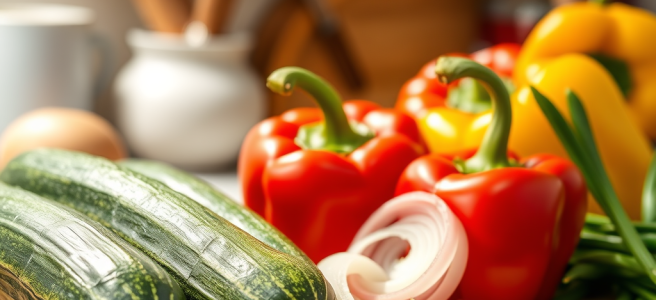
Is it any wonder then, that we have joined the local food coop? We also started shopping regularly at the growers markets. And, now we are participating in Community Supported Agriculture. We joined by paying a fee to the farm to guarantee us a share of the produce harvested each week. In a few weeks, we will start picking up our share of the freshly picked vegetables. When my subliminal clock says that it is almost time for this year’s crop to end, it will just be beginning.
Cooking with Dad
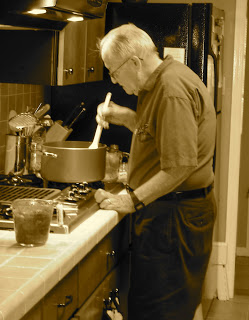
As my father-in-law and I prepare supper together, I joke that we should have our own television cooking program. He is an avid fan of Rachel Ray, the speed queen of cooking, and Paula Dean, the maven of butter and sugar. As he chops the celery, he asks, “What should we call our show?” I say, “Cooking with Dad.” He smiles. I can tell that he gets satisfaction from helping to cook. Even more than that, he likes being called “Dad.”
After he was 70 years old and had retired as a mechanical engineer, my father-in-law worked at a fast food restaurant. For more than 10 years, he would get up each morning at 4:00 a.m. to open the restaurant and prepare the grills for the breakfast crowd. The franchised restaurant chain hired all part-time employees, with the exception of the store manager. Most of these employees were teenagers struggling with the adjustment of becoming adults. They relied on this grandfatherly person for his advice and his good humor. And, they called him “Dad.”
It has been difficult for me to call my father-in-law “Dad.” It somehow does not feel fair to my biological father. My Dad established a relationship with me even before I was born, and continues that bond even after his death.
My father-in-law is now in his late 80’s and I feel the increasing weight of becoming responsible for his well-being. He can walk only a few yards before he becomes short of breath. He insists this is from allergy, not the heart disease the doctor mentioned. As he pitches his body forward in an unbalanced stride, I find myself playing a more “Mother Hen” role than acting like a daughter to him. “Don’t forget your cane!” I say as we leave the house together. “Watch out for that bump on the sidewalk.” He makes a sour face because he does not want to admit he is vulnerable to broken bones. He is struggling with the adjustment to old age. He still wants to be the protective one, not the protected.
But when we cook together at the end of each day, the relationship is transformed. Mimicking my own mother’s voice, I lay out the jobs that need to be accomplished and divide the tasks between the two of us. “You chop the celery and I’ll peel the potatoes,” I say. He can enjoy re-experiencing the roll of protector. “Don’t forget to put on the oven mitts. The pan is hot, you know,” he warns. Together we work to prepare the family meal. It is not just the food that will sustain us and comfort us; it is the sharing of the care giving.
Change of Place
The move has been completed. We are settling ourselves into a new place called “home.”
I prefer to think of myself as a person who enjoys change, not one that resists it. Flexible people bend and do not break, I remind myself. But, as I awoke this morning in a place 1,300 miles away from where I was born, grew up, went to school and lived for more than 50 years of my life, I had to admit how difficult change can be.
It took months to prepare for this particular change; our family’s move to a new home. The transition prompted a volatile mixture of emotions in me. The process often felt as if I was unraveling the threads that had held my former life together in order to reweave a new fabric and texture for the remainder of my life. It was understood that when we left the place we had called “home,” we would not return even for a visit. We would take ourselves to another place and we would call that place “home.”
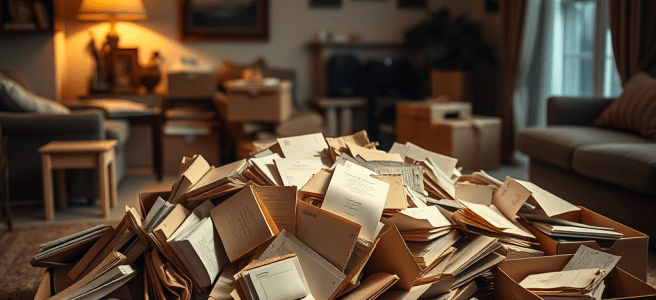
Early in the process, as part of planning for the move, I pulled the shoeboxes stuffed with letters out from the back of my closet shelves. I began opening correspondence that I had saved and reading it piece by piece. Mementoes of my past, carefully sorted and filed by date, stuffed each box. Preserved and saved for another time. Now the time had come.
Sifting through years of personal correspondence, I rediscovered letters written to me by friends and family members. There were also journals, which I had kept as a child. For years, my Aunt Ola had sent me a diary as a Christmas gift. I had faithfully filled the blank pages starting on January 1 of each year, recording my passage from childhood through adolescence.
Mixed among the diaries and personal letters were report cards from schoolteachers, many noting the excessive absent days due to illness and my eagerness to catch up with the rest of my grade once I returned to the classroom.
In addition to the correspondence, which I had saved, I came across the letters my parents had kept during their lifetimes. I had saved their keepsakes without reading them since their deaths a few years ago. Now it seemed like it was time to read these too. Here I found journals that my father had written almost 100 years earlier when he was a young man; letters my parents wrote to each other; and also letters written by me to my parents after I had moved away.
Classification tables copied in my father’s hand writing for identifying minerals, mingled oddly with his genealogical research. My mother, who kept so little, had managed to preserve lists of bird names, wildflowers and mushrooms that she had identified on her regular walks in the woods. My mother had also saved correspondence from the physician who had diagnosed my bleeding disorder. These letters from the doctor included advice and reassurance in response to her anxious questions.
Why had I and others in my family been driven to write so much? And, why did we keep so much of what was written to us? I wonder. What were we trying to document? What had we intended with these archives from our lives? Had we hoped to pass our experiences on to others? Or was the purpose simply to aid our own memories at a later time? For myself, I wondered if my intention was some attempt at immortality.
As I sifted through and reviewed the pages of writing it seemed almost as if it was new information. Time had changed my attitudes and my perceptions of what was true. My memories had been altered and were different than what my journals had documented in a previous time.
For whatever reason, I made the decision to let the past go. One piece at a time, the destination for these written words was the paper shredder. Grinding out thin strips of paper to be recycled and reused, I watched in amazement at the impermanence of life.
To everything there is a season
My father waited impatiently each winter for spring to come. On the day of the Winter Solstice in December, Dad would announce, “The days are getting longer. Spring is on the way!” On that day, he would begin his ritual of helping the snow to melt. On sunny days, he would go out to scoop shovel’s full of snow and ice onto the asphalt driveway. Then contented he would watch as the sun transformed the crystals into liquid.
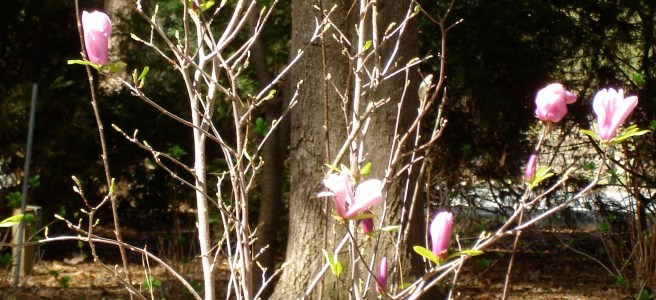
Like my father I enjoy the green and growing plants sprouting up from the earth when spring arrives. It is like a magic trick. Unobserved tree buds stretch out and spread into delicate leaves. “Nothing up my sleeve,” nature says. Each year I am a bit chagrined by how this season takes me by surprise again and again
The tender blossoms uncurl, risking damage from frenzied winds, weighty downpours of rain and drastic changes in temperatures. I watch the naïve fledgling birds as they fend for themselves, pecking for juicy larvae. An alert kitten crouches watching these vulnerable chicks. The prey and predators are hard to separate one from the other.
The older ones are at risk during this season too. With each new generation, I know my days are shortened. The dampness from the earth below my feet awakens the pain in my arthritic ankles. I am reminded that I will return to that soil one day myself. I will dissolve as the melting snow.
 My Turn