Mountains from Molehills


Coffee
Originally uploaded by
lewis foa
For the past few weeks, I have been sorting through my belongings in preparation for moving later this year. Among the papers, I found a piece that my father wrote.

Note from the author: All characters in this article are imaginary. Any resemblance to any person living or dead is strictly accidental.


It has been reported in a magazine advertisement that the battle of Waterloo was lost to Napoleon because he had eaten a green peach and suffered from a stomachache at the time. Possibly, it was a plum, but it doesn’t matter too much. Fruit was cheap in those days, and the point is, it just wasn’t worth it. If this proves anything at all, it is that Napoleon was as easily influenced by trivia as the rest of us.

Back in the sixteenth century, the English used to send ships to North America to bring back sassafras bark. The survival ration of the sailors was considerably less than that for a modern astronaut, but England was short of sassafras bark so there were always plenty of volunteers. Of course, the voyage of Christopher Columbus was just as urgent. He was looking for spice. A more cautious man might have spent the money on research to develop a tin can. Columbus liked excitement. Even though he missed his goal by a hundred and eighty degrees of longitude, we must admire his spirit. He tried.
Most of us are broad minded about the right of others to have little idiosyncrasies. If someone wants to spoil a good cup of tea by adding milk to it, let them do it, as long as they drink it. We don’t mind at all, if someone insists on having sugar in their coffee. We realize that everyone can’t be a connoisseur. We value our right to disagree on matters of importance. We inherit this trait from our nation’s forefathers. Taxation without representation was discussed calmly enough. The first open act of violence in the American Revolution, quite naturally was prompted by the tax on tea.

One of our most important assets is coffee. The history of the coffee house is long and honorable. Without the aid of a single folk singer, they were doing a good business in the days of Shakespeare and [Ben] Jonson. That highly respected institution Lloyd’s of London, as anyone knows, started as a coffee house. Here, the men who underwrote marine insurance gathered to transact their business. It solved the problem of their overhead cost. It also solved the problem of the coffee break.

Sometime in the seventeenth century, we find a Londoner complaining to his diary about the difficulty of getting a good cup of coffee. He charges the coffee merchant with diluting his product with chicory. Now there is nothing wrong with chicory as a drink of course but a basic must for mixed drinks is that they be alcoholic. We all know that coffee is to be real coffee, must be pure coffee. We can expect the worst of a man who would mix chicory and coffee. It will then come as no surprise to you to hear that the chicory he bought was colored with Venetian red to make it nearer the color of coffee. The man who sold him the Venetian red was also dishonest. He was adding brick dust to his product.

One chilly fall evening in the colonial days of our country, a weary traveler stopped at a wayside inn for a night’s rest. When he was seated comfortably in front of the fireplace, his host came in to see if anything further could be done for his comfort. The traveler said, “Yes, do you have any chicory?” the landlord admitted he had. “Good,” said his guest, “would you bring it here please?” His host dutifully went to the kitchen and returned with the box in which he kept his chicory supply. “Set it there please,” said the traveler, nodding toward the table. When the landlord had done as he asked, he continued, “Now, go brew me a cup of coffee.”

It was not everyone who had the wit to get a good cup of coffee in this manner. There were those people who felt the best method was to carry a portable coffee grinder about with them and demand coffee beans. They could then grind and brew their own the more imaginative, however, felt that the legal approach was the only civilized way to handle the problem.

“No vendor of coffee may adulterate his product with any substance whatsoever unless he declare to the purchaser of said coffee the nature of the adulterating substance and the percentage of such adulteration.”

There were, of course, suitably severe penalties for any infractions. Only a person who lives close to the land of the wooden nutmeg would be cynical of the results. Sad to relate the sneer was justified. The coffee merchant kept up his trade with the seller of chicory who continued to color it with Venetian red diluted with brick dust. This mixture was then ground very fine, moistened slightly, and pressed into a mold just the shape of a coffee bean. This took care of the character who was lugging around a coffee mill. As for the legal angle he could feel quite righteous. He was not selling adulterated coffee. Coffee was the one thing he had left out.

Sugar on Snow

This morning at breakfast, I drizzled some maple syrup on my porridge. This time of year, as the frost begins to loosen in the ground and the ice on the pond is covered with a thin film of pooled water, I can feel the sap running in the woodlands of North America. So too, in my soul.

When the sap runs, the earth is approaching the vernal equinox. Daylight is becoming longer, yet the nights are still below freezing temperatures. The earth is softening and it becomes mud season.

Drip, drip, drip, the sweet water flows down through the trees. I sense it within me too. Somewhere, maple trees have been tapped with sap spouts. The tin buckets used for centuries to carry the sweet water to the tanks may have been replaced with plastic tubing; the wood stoves used to heat the evaporators may have been modernized as well; I do not know. Nevertheless, I have no doubt that the steam rising from boiling sap will infuse the winter breeze with the aroma of maple syrup. The tree sap is best when the hillsides are still covered in a thick blanket of wet snow. The bird songs have changed to establish territory for new homes. I listen for the chickadee outside my window, as it now sings the tune of “Sweet spring.”

One of my favorite possessions is a slice of a maple tree, cut from my uncle’s sugar orchard in Nova Scotia. It was a horizontal cut. One side is still rough from the saw that was used to sever the tree. The other side, my father sanded and then shellacked to enhance the rings within the outer bark. As a child, I often sat and counted each concentric circle that recorded the number of years of life for this particular tree. The innermost rings are smaller and difficult to count. Then as the rings expand out, the first scar marks show where the holes were drilled to extract the sap. The scars reach deep inward through several years of growth in my slice of maple tree, but they never enter the core.

My uncle felled many trees to light the fires in his sugar camp. He began setting aside wood in the summertime so that it would dry and be right for keeping the fires burning long and hot.

It takes a lot of tree sap to make syrup, about four times the amount of sap for each bottle of syrup. The trees will have held onto more sap following a winter that has been consistently cold. And the sap will be sweeter in the years when there has been a hard winter.

Like the sweetness in life, the sap supply is dependent on several factors. The age of the trees; the hardship of a cold weather; a thick blanket of snow covering on the ground; nights below freezing with warm sunny days; and, hard labor all produce more sweetness to be collected.

As I ate my breakfast cereal this morning, I mused about all of this. And, I remembered the taste of sugar on snow. Spring is on the way.

Soaring

In the past month, I have flown several times. This is quite unusual for me, unlike those who travel by air for business or pleasure on a frequent basis. I am usually quite earth bound.

When I find myself in the seat of an airplane, my first reaction is to wonder why no one else looks as happy to be there as I feel. Sometimes, I struggle to hold back my enthusiasm for finding a window seat. It helps me to feel less foolish if there is at least one child on board who is experiencing a similar excitement to my own.

As the plane begins to taxi on the runway, I look out the nearest window with wonder. How can this be? Here we sit, luggage stored, tons of cargo packed below us. We are about to lift off the ground to fly! Why does no one else look as amazed as I do? Aerodynamics has been explained to me; still I find it difficult to comprehend.

The engines begin to whine and the flight attendants give the standard instructions and make their routine safety inspections. Often they seem bored. I watch as the airline terminal gates whiz by the window more rapidly. Sometimes, I close my eyes just to feel more strongly the sensations of the gravity pulling, the power of the plane and the energy that comes as we lift off the ground. If we are rising through a thick bank of clouds, all that is outside the window is the uncertainty of white fluff. Suddenly, we are traveling above the clouds. The world opens up again. The experience prompts me to appreciate the belief, held by many, that when we die we ascend to a heaven above.

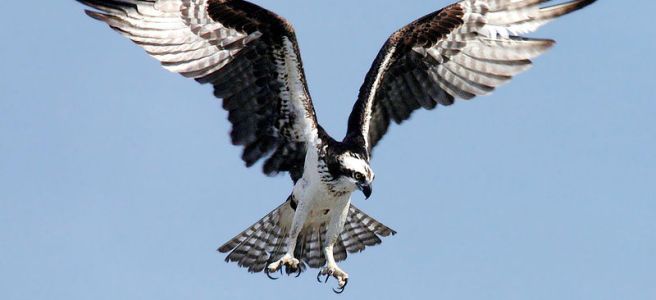
An Ojibwe Elder once explained that the eagle feather has two sides. If the feather had only one side then the eagle could not fly, this wise elder stated. Once these sides are balanced, all is balanced. When the two sides of the feather are balanced then we have proper behavior. This said, the Ojibwe Elder added, “Funny thing is…Eagle doesn’t care if its feathers have two sides…It just opens its wings and flies up to the Creator.”

One of the meditations that I have found most healing is a visualization based on the book by Eligio Stephen Gallegos, Animals of the Four Windows: Integrating Thinking, Sensing, Feeling and Imagery. Each one of the four animals in the meditation is asked to sit in a council circle and all work together on a question or a problem. One animal guides thinking or the intellect; one assists with feeling or emotions; one is called upon for sensing such as taste, touch, or hearing; and one brings the influence of imagery. When these ways of knowing are in balance, so is my spirit. My faith, like the soaring eagle, lifts up and flies.

Thanks to Paul who posted the question on his blog Original Faith, “How does evidence apply to holding religious beliefs?”

It’s Never Too Late for Love

My Uncle Guy was my mother’s youngest brother. Guy had charm and good looks and a devilish twinkle in his eyes. His sisters and brothers all seemed to understand that Guy was their mother’s favorite. Amazingly, no one seemed to resent that. He was also able to sweet-talk all five of his sisters. As a young man, he developed a reputation for being able to attract any woman he wanted. His family speculated that because it came so easily, he chose to marry the woman who was the least smitten by his allure.

Although my Uncle Guy lived closer geographically to my family, we saw less of him and his family than any of my mother’s other siblings. His wife made it know that we were not welcome in her home. Several of Guy’s brothers chose to ignore the lack of an invitation, but most of his sisters chose to stay away. His three children were ones I did not meet until they we were all young adults. Nonetheless, my uncle could always be counted on when anyone in his family needed him.

When I moved away from my parent’s home and into a college dormitory, my uncle took it upon himself to routinely arrange special dinner “dates” that included his daughter and me. Most of the time, two of our friends who were also living in college dormitories away from home, were invited along as his guests. Those evenings were a night on the town. My uncle would treat us all to dinner in a restaurant that we could not have otherwise afforded. Guy‘s attentiveness and generosity left a deep impression upon me.

Although it was no secret in our family that Uncle Guy was in an unhappy marriage, as far as I know, he never talked openly about it to his own siblings. As the years wore on in his life, my Uncle seemed to grow sadder and more resigned each time I saw him.

There was a hint of sorrow behind his eyes that was deeper than the Funeral Home business he had managed for decades. The grief was also more profound than the role he assumed making telephone calls to notify family members each time one of our kin died. It seemed to me that death had come and taken up residence in his heart.

A year after his wife died, my Uncle Guy surprised me with a phone call just before Christmas. I had not seen him or heard from him in several months. Much to my surprise and delight, I thought I could hear a bit of excitement in his voice. He said he wanted to see me and could be at my house in an hour. I hurried to clean up the clutter in my kitchen, set the table and prepare a fish chowder to serve him for lunch.

When he arrived, he had not chatted long when he announced that he had made a trip to his birthplace in Nova Scotia the summer before. He had just received a videotape of a party he attended there and he wanted to show it to me. I popped it in and as the tape rolled, my 71 year-old uncle exclaimed, “My heart just skipped a beat! That’s her!” I didn’t have a clue what he was talking about. But, it was clear that the twinkle in his eye was back. He was in love. She was a woman, he explained, that he had romanced when he was young. She had never married in the intervening years.

Life had returned to his heart and he was not about to let this love get away. Within a year, he was happily married to a woman he loved and who loved him.

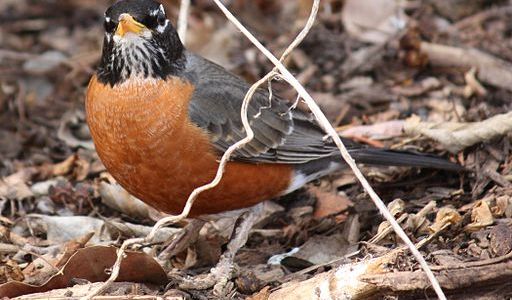
Red Robin

American Robin


My childhood home had a backyard surrounded by a wire link fence. It wasn’t a fence intended to keep things out, but rather a safety parameter for children and small animals. Many a neighborhood child entered the gate of that fence to a zone where they could depend upon attentive listening, honest answers and respect that was extended to people, animals, plants and rocks.

Behind our house, there was a family with four children. The youngest child was born prematurely. The infant weighed two pounds at birth. After spending the first few months of her fragile life in an incubator, she emerged to meet the world totally and permanently blinded by the oxygen. Her name was Robin and it was a fitting name for her since as a child she greeted life with all the enthusiasm a bird displays bobbing for worms on a lawn.

When Robin was still an infant, her mother left. Shortly after that, Robin’s father began dropping her off at our house each morning before he went to work. Robin’s three older siblings would go to school. During school vacations, our house was normally filled with children anyway, but Robin spent most of her week days with us until her father remarried several years later. It was the late 1950’s. No thought was given to paying for childcare. My parents both took on the challenge willingly and embraced the lessons that Robin taught us about the world as she experienced it.

Robin was a child not like any we had known before. Children learn many things by watching others. Until we knew Robin, we were unaware that children who cannot see need special training to learn to eat their food. Sucking is instinctual and when left untrained, blind children may never learn to bite or chew their food. When my mother first said, “Chew your food,” we watched in utter surprise as she slapped one of her tiny hands on the top of her head and the other under her chin and squeezed as hard as she could while trying to push her own jaw.

Over the first several years of her life, my parents made sure she had many opportunities to explore the world around her. They took her to local farms where she could pet sheep, goats and calves. They included time on their walks in a forest for her to touch the textures of moss, pine needles and sand. She went with our family on picnics where she would revel in the smell of wood smoke and the taste of a dinner cooked in tinfoil. As soon as she entered our house, she would dash through the kitchen and throw open the door to our basement, practically running down the narrow wooden steps to the old upright piano that had once belonged to my grandmother. She had more than a little musical talent. She would sit for long spells playing loudly and then softly. Quite consistently, she would strike perfect chords and invariably play tunes she had only heard on the radio.

The more time we spent with her, the more we came to respect her self-taught survival techniques. When Robin went somewhere new or met people for the first time, her conversation often seemed very repetitive and monotonous. She would ask questions constantly trying to discern, by the answers, who was nearby. She probably also learned a lot just by noticing the different perceptions of each individual. Interspersed with her words were numerous sharp clicks made with her tongue.

We once took her on a trip to a bird sanctuary to listen to the sounds of the woods and fields. We left the car by the side of a dirt road and went off to explore. On our way back, Robin stopped about thirty feet away from the car and announced with confidence, “There’s the car over there.” We puzzled over this statement for some time until she had repeatedly demonstrated her ability to tell when she was close to a car or house. We finally connected the habit of her tongue clicking and the echo that helped Robin to locate large objects in her path.

Few things frustrated Robin. As a child, she never learned the gambits of feeling sorry for herself or being grumpy or petulant. Yet, one day as she was in our back yard, playing a game of toss with other neighborhood children, she came running to my father with a quizzical look and a troubling question. “Which one,” she demanded to know, “is the red ball?”