Maturity

At the time when the cerebral fibers in the frontal lobe of my brain began to mature, I became aware of my mortality and my desire to make plans for the future. It’s intriguing to me that bodily changes so profoundly influence states of mind and spirit. Some time in our late teen years or early adulthood most humans, but not all, experience a physiological change in their brain that allows for better impulse control, improved long-term memory and therefore a stronger ability for judging when and where to take risks.

It wasn’t until I was an adult that I began to fully grasp what my parents meant when they said, “be careful crossing the street.” I had, except for rare occasions, taken care crossing the street as a child, but not because I understood what would happen to me if I was hit by an oncoming car. When I was a teenager, I began to comprehend that my life would end one day. And, it could end sooner, if I was not careful or did not think ahead.

With this enhanced understanding that my brain could now handle, I began making plans. I had as a child noticed how my father had longed for a higher education. My parents had set aside money into a college fund for me and it had been clearly part of their planning for many years. Yet, when I reached high school the barriers to bringing this plan into reality became apparent.

The High School that I attended was a granite structure with steep exterior and interior staircases. During those years of my life, I experienced repeated injuries to joints, particularly my ankles that made climbing stairs dangerous and even impossible. The only accommodation for my education was a home tutor.

Nonetheless, I graduated from high school with sufficient grades and test scores to show that I could be accepted to a college. The first three colleges I applied to returned my applications with the explanation that their campus was not accessible. When I sent my application off to a University listed as having accessible classroom and dormitory facilities, I chose not to provide any information that would indicate my “special needs.” The University accepted my application, much to my joy and requested an intake interview. At the interview, the admissions staff person could not keep her eyes off the rather bulky orthopedic shoes I was wearing or the aluminum brace that extended up to my knee. It wasn’t long into our conversation when the admissions person released a heavy sigh and said, “Well, you can come to this school, but I doubt we will find anyone who wants to be your roommate.”

As I left the building, I chose to make my statement by skipping, like a small child, down Commonwealth Avenue. As I shook off the stinging words, I could feel the joy bubbling in my heart. I was in whether they wanted me or not. And, it made me smile to see heads turn as the “cripple with the leg brace” danced down the city street in defiance.

Here We Go ‘Round The Mulberry Bush

“This is the way we wash our clothes
Wash our clothes, wash our clothes
This is the way we wash our clothes
So early Monday morning”

Today as I was gathering up the soiled clothes and towels, I found myself humming this old nursery rhyme that I used to sing as a child. I remembered the lyrics about the housework scheduled for each day of the week.

It’s not much work for me to do the laundry. It does not take the time my mother spent using a wringer washing machine. With that machine, each garment had to be hand fed through the rolling cylinders in order to squeeze out the water before it could be hung up to dry. My maternal grandmother set large tubs of water to boil on the wood stove in order to wash the laundry for her family. After the soiled items were sterilized, they were scrubbed against a tin washboard.


The nursery rhyme continues to name each day of the week with each task that ordered my mother’s and my grandmother’s lives: ironing on Tuesdays, mending on Wednesdays, sweeping floors on Thursdays and then scrubbing floors on Fridays. Saturday was for bread making. This work was predictable, unlike so many other things in life. It brought order, improved health and nourishment for their families. It is no surprise to me that the song ends with:

“This is the way we go to church
Go to church, go to church
This is the way we go to church
So early Sunday morning.”


Meaningful work followed by a day of Sabbath, rest and worship, makes sense to me. Work that brings organization to chaos is inspiring. Life-sustaining work should feed the body, mind and spirit. It also gives me a greater appreciation for times when I can rest, rejoice and play.

I know many people who dislike the work they do, or who are forced to hold jobs that degrade their spirit and leave them feeling angry, frustrated and diminished. Some people feel what they do is little more than circling around a mulberry bush over and over again without meaning.

A few years ago, after I had a hemorrhagic stroke, I was lucky enough to be able to retire from the work that I had done for 30 years. I am still younger than most who are retired. Many of my friends were jealous, although I have not found one who would choose to have a stroke in order to be relieved from her labors. It took me some time to recover from the stroke and my gratitude for the gift of that time away from work was profound. It gave me an opportunity to reflect on the work that I accomplished in my life and what it meant to me and for others. It was not as easy to see that when I was actually working.

There is lots of work to be done in this world, many ways to be of use. It did not take me long to discover new and different ways that I could still be useful. Now, I have learned to appreciate work for its ability to fill my spirit, not just my days.

Shoe Laces

A long time ago, I was born with a very rare bleeding disorder. Actually, I bleed just fine. My clotting is disabled. To be more specific, my blood does not clot at all without a transfusion of the clotting factor that my body does not produce on it’s own. It seems appropriate to me to use the term “disorder.” Living with a bleeding disorder can topple my to-do plans into chaotic debris at the most unexpected times.

It’s not like the fairly tale “The Princess and the Pea” or the phrase that has been spoken to me so many times in an anxious tone, “does that mean you could bleed to death from a small cut?” No, it does not and no, it is not about a softer mattress. It means that shoelaces can be hazards to my health.

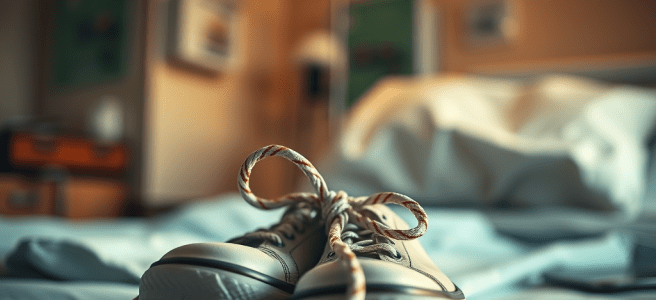
Recently, I spent the better part of one day in a hospital being infused with clotting factor to stop a bruise that was swelling at the top of my foot. “How did this happen?” the doctor asked. As I feel my shoulders droop and my eyes focus on my own knees, it seems I have taken on the body language of the three-year old still inside me. I mutter, “I laced my shoes too tightly.”

More often than not, it is the kind of accident that would have no noticeable impact for someone with the ability to clot. Like the accident that happened to me in a parking lot, on my way to my annual mammogram appointment. On that occasion, my right arm met the side-view mirror of a parked car. On the side-view mirror it says, “Objects in mirror appear closer than they really are,” and this mirror itself was closer to me than I expected.

Because of my bleeding disorder, this type of accident can transform my plans for several days and even weeks. This one refocused my attention almost immediately. The bruise, between my wrist and elbow, was noticeable within minutes. It swelled and grew as I fretted about my options. The technician in radiology could provide no ice pack for temporary relief. Even after all these years, it’s hard to switch plans, like the ones I had made for the remainder of that weekend.

I’ve learned not to listen to the mother‘s voice that I internalized long ago. I still hear her voice saying, “What did you do?” Those words sound accusatory to me, as if I had inflicted the pain on myself through my carelessness or stupidity. Mom meant well, though, and her training about how to be attentive has minimized my injuries. It still crosses my mind that if I hadn’t been in a hurry to get to the appointment on time… if I just hadn’t been so preoccupied with having a mammogram, it would not have happened. After all, I did not get a bruise from the mammogram itself, which sometimes happens. So, why can’t I just listen to Bobby McFerrin’s voice singing in my head? “Don’t Worry, Be Happy.”

“What happened to you?” I imagine people asking me in the next three to four weeks as the bruise enlarges, spreads and then fades away slowly. “Oh, I got into a fender bender with a parked vehicle and my arm was damaged, but the car is fine.”

Balance

Summer is turning slowly into autumn here. The daylight time has gradually been decreasing, while the night darkness becomes longer bit-by-bit. Today is the autumn Equinox. The Equinox is the moment when the Sun is located right over Earth’s equator. It happens only twice a year, once in mid-March and once in mid-September. Today, for a short time, while the Earth is rotating around the Sun, the rays will not be pointed towards the northern hemisphere or the southern, but directly at the middle. It will seem for those of us on Earth, that the daylight and the night darkness are balanced equally.

Where I live, it is not just the light that seems balanced. Temperatures seem more moderate, neither the higher temperatures and humidity of summer nor the piercing cold and dry winds of winter. The green leaves on the deciduous trees around me are gently turning from green to yellow, soft orange and red, before dropping to the ground below. The world around me seems between young and old, between birth and death.

It’s not easy to maintain balance. Perhaps that is why there are only two days in each year when this planet has an Equinox. And, because it is not easy, it deserves a celebration and appreciation.

Almost 20 years ago, on this date I was driving home when my car rolled over on the interstate highway, toppling upside down, and landing only a short distance from a small tree in the strip of grass between the entrance and exit ramps at the exchange. It was about 10:00 at night and I was on my way home after having worked more than 12 hours that day. It happened so quickly.

It surprised me how easy it was for a simple chain of events to unbalance my usually stable car. First, my eyes spotted a skunk meandering in front of my path. Without thinking about the high speed of my travel, I titled the steering wheel to the left in an attempt to avoid crushing the critter that seemed out for an evening stroll. As I realized my car was now heading directly toward the median strip and across to the vehicles speeding in the opposite direction, I jerked the wheel of the car to the right, slammed my foot on the brake and said a quick “It’s been a good life.” In a few brief seconds, it was over.

The car tumbled over, then landed right side up on the grassy strip. I unbuckled my seat belt and stepped out to see a beautiful clear night sky filled with stars. My eyes averted the crumpled car beside me. In only minutes a police officer came to investigate. He asked, “Did you fall asleep at the wheel?” and I responded, “No, I was awake for the whole thing.”

So today, on the Equinox, I celebrate the mystery of those rare occasions when life is in balance and respect those times when it is not.

It’s About Love

Today is our Anniversary. My spouse and I have been together 32 years now and more and more people ask us, “What is your secret to a long marriage?” The truth is, it’s not a secret. It’s love. We don’t hide it; we are not ashamed of love.

What makes a love last? Who knows! Love terrifies and endangers some people. It can be abused, but not forced. It can grow stronger with attention and caring over the years or it can atrophy. It can be a powerful force for change. It can transform the impossible into the possible. It’s love that gives me the strength to look beyond my ego in order to live up to the promises I made in our wedding ceremony.

My spouse and I have kept our marriage vow to offer one another love as an unchanging constant in our lives. In times of joy and sorrow, abundance and want, comfort and affliction we have continued to love each other. And, yes, after 32 years we still expect to do so as long as we both shall live.

The other part of the truth is that for the first 30 years we were together it was not legal for us to marry. Friends and family see that today we do not celebrate two years, but 32 years, of loving one another. I pray that those who feel threatened by our commitment to our marriage will someday experience a love that is great enough not to be diminished by fear.