The Two Wolves in My Heart

An American Indian story tells of a grandfather who was talking to his grandson. The grandfather says, “I feel as if I have two wolves fighting in my heart. One wolf is the vengeful, angry, violent one. The other wolf is the loving, compassionate one.” The grandson asks, “Which wolf will win the fight in your heart?” And, the grandfather replies, “The one I feed.”

Most of the time, I prefer to see myself as willing to get involved to help others. I don’t perceive myself as vengeful, angry or hostile. Yet when I come across aggressive people, like some of the drivers I encounter when I venture into the city, I realize that I also refuse to be bullied.

The other day, I was driving through a city that, many years ago, was familiar to me. A lot of the landmarks I formerly used to help me navigate are gone now. There are empty lots where I remember buildings and construction has changed the look of the area enough so that I slowed down in an attempt to read street signs. It seemed like a reasonable thing to do. An impatient driver with a very large red truck pulled up closer to the rear bumper of my car than seemed safe to me.

Sensing by his hand motions and reading his lips in my rear view mirror it was clear he was angry at my driving speed. Yet, on the narrow streets he was also unable to pass and I was unwilling to pull over. Instead of speeding up, as the man in the red truck seemed to want, I slowed down. Much to my companion’s horror I said, “You think this is slow, now try this!”

The truth is, I value slowness more and more as I age. It has wonderful benefits to my health as well as my spirit. The cliché about stopping to smell roses is indeed true for me. Several years ago, the story about the two wolves fighting inside of the grandfather inspired me to maintain a regular meditation practice. For meditation one must slow down to be aware of just one moment at a time. I believe that practice feeds the part of me that is loving and compassionate, making it stronger. The vengeful side of me is still there, although less and less these days. And, when it arises, I do not let it win my heart.

The reservoir

When I was growing up, my family often drove to Quabbin Reservoir. We liked to check to see how high the water was in the spring and picnic there in the summer. In the autumn, the hues of gold and crimson leaves were doubled by the reflections on the water. My mother would pack a picnic lunch for everyone, including any neighborhood children who wanted to join us. In less than an hour, we would escape the city and drive into what seemed to me to be a magical place.

Quabbin Reservoir was constructed when Winsor Dam and Quabbin Dike were built in the 1930’s to hold the water back in the Swift River Valley. Water flows in from several rivers. It also trickles down from the surrounding hillsides when the snow melts in each spring. Then the water is carried off for millions of people to use every day. The project took more than 10 years to complete and in the process, many small towns were altered forever. Entire towns were displaced, homes destroyed and cemeteries relocated. But, as a child, little of that meant much to me. What mattered was seeing the vast expanse of collective waters.

Climbing to the top of the observation tower, we could get a clear look at the vastness of the water that was dotted by pointed islands, which were once hilltops. My father would drive us across the Dam and then down the backside. We often set up our picnics at the bottom where there was a grove of trees. Once the car doors were open, all the children would begin by climbing to the top of the Dam. When we reached the top, we would all lie down on our sides and roll like sausages down the grassy steps that held the water back. At each of the step’s landing, we would walk to the next stage of the slope until we reached the bottom safely.

Sometimes, we would explore the woods and discover what had previously been a farm or pasture. Old stonewalls that had surrounded private property at one time remained, yet the houses and barns had all been removed. At the base of an old apple tree, we often found morel mushrooms with their shriveled caps. However, we harvested nothing except memories. Usually, I felt stronger when we left a visit to Quabbin, than I had when we arrived.

There were times when there wasn’t as much melting snow and falling rain. Water usage in the city and suburbs continued to increase and the water became noticeably lower and lower at the reservoir. I don’t live as near to the reservoir as I did when I was young, and at least 25 years had passed since I was last there. During those years, I have gone through periods of my life when my inner reservoir has been drained by serious illness, care and concern for loved ones and grief.

This year, I heard someone say that the water level at Quabbin was higher than it had been in years and I knew I wanted to see it again.

The reservoir was as holy as I remembered it on the hot and humid summer day. It surprised me to see that cars are no longer allowed to drive across the dam and many roads had been blocked from traffic. The spillway that I had often seen empty had water cascading over the top. The water was so clear that I could see the ivory veins of granite at the bottom of the swirling pool.

I made a promise to myself to pay more attention to the things that fill me up and strengthen my ability to spill over for those who are in need.

Blending the Old and the New

Shirley, my oldest friend, and I went to a Quilt Festival this week. It’s not that she is older than any of my other friends, I tease her. We remember when we used to climb the apple tree outside my grandmother’s farmhouse. The tree seemed very large to us then, but the branches were low to the ground and easy to reach with our 5-year-old arms. It was more like sitting on a swing than climbing a tree, but the peanut butter, honey and graham cracker snacks we ate there always tasted better than they did in the kitchen.

At the Quilt Festival we saw an exhibit, “Blending the Old with the New.” The quilts displayed were designed by Paul D. Pilgrim. He had used heirloom quilt blocks, abandoned by the person who created them perhaps because of death or old age. The artist then created something different from what was originally intended. The finished design honored the past while also moving in a new direction.

Shirley told me about the energy she senses from an antique quilt top that she recently purchased at an Indian Trading Post outside of Oklahoma City. She describes it as having “amazing colors and the vintage fabrics give you a glimpse into the past” She is eager to add her own energy as she works with it.

Images of quilts blending the old with the new reminded me of the power I sense from the spirits of my ancestors. It brought to mind stories from my family and my experience and the wisdom I draw from them. Lately, I am noticing that when another person describes a place or a time we shared, it usually is quite different from what I remember. What we saw, felt, thought, heard and tasted are altered by our senses and our interpretations. I marvel that what we each observe and notice can be similar yet changed.

When I read my cousin B’s descriptions of our shared grandmother’s home in Nova Scotia, the contrast from how I would tell the tale is striking to me. There is only one year of difference in our ages and we grew up in homes less than 100 miles apart. Yet, because of differences between our mothers, we met for the first time as adults.

We now live more than 1,500 miles apart and in the past year we have become closer through our stories than we were ever before. By reading B’s stories, I connect in a way that is beyond kinship. I honor her journey and the way she has traveled it. Her stories sometimes bring tears to my eyes and her cryptic email messages often make me laugh. Still we see the world very differently. When I told her I was going to a Quilt Festival, she shot back, “So how’s life in the fast lane?”

As a quilt may be stitched together by many hands around a circle or completed generations later, my belief is that we can all transcend the differences that divide us in space and time with our stories.

Burden or Blessing

On Tuesday evening when we came back home after having dinner with friends, there was a voice mail message from my father in-law saying, “I fell again today.” He is 87 years old and this was the second time he fell this month. His voice sounded weak and his breath shallow. After we called him back, he was gently persuaded to go to the Emergency Room and get an x-ray. We drove him from his senior housing apartment to the hospital. It was clear that he was having a lot of trouble walking just to get from his doorway to the car. It was almost midnight when the doctor informed him that he had two cracks in his pelvis. They admitted him to the hospital and told him that he would need to learn to use a walker. He would have to keep all weight off his leg for the next six weeks. With a barely audible voice, he responded, “I just don’t want to be a burden.”

Loosing independence is hard. I have experience at that. And, this will indeed cramp both his independence as well as ours. The sadness that comes from thinking you are a burden, is a familiar feeling for me. My earliest childhood memories are mingled with my repeated medical issues. Since I was born with a severe bleeding disorder, I learned at a very young age how suddenly a joyful day’s walk in the park could change into a medical emergency. As a result, family plans can be altered for days and even weeks. Before I was 6 years old, I had convinced myself that I was a burden on my parents and nothing that my parents said really changed my mind.

In fact, because my parents had rarely been ill themselves, I now think they didn’t understand why I would feel this way. They didn’t seem to notice that most of our family defined their worth by what they did, not their medical diagnosis. I could see my parent’s worries about money, even when they tried to hide them. I knew money in our home was short because of the bills that were received after each trip I made to a doctor or to the hospital. I knew why vacation plans had to be cut short or holiday celebrations ended abruptly for every member of my family. It was because of a crisis that required me to get immediate medical attention.

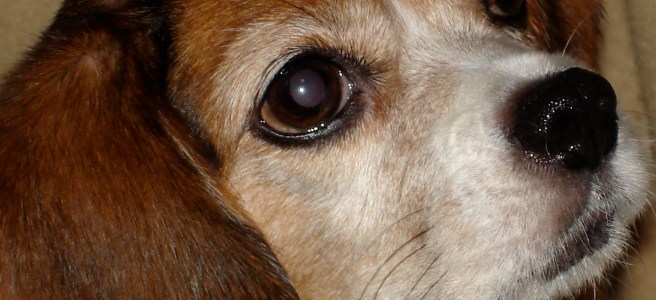
Now, however, I can see the other side. Part of that I learned from taking care of our dog, Penny. We adopted Penny from a local humane shelter eleven years ago. She hadn’t lived with us for a full year when she began having seizures, not unlike epilepsy. Being part Beagle, she also loves her independence. She doesn’t follow commands easily and seems to believe she knows best what is right. Yet, she wants to be as close as possible to her family, which she considers to be her pack. Penny demands the center of attention when the human family members try to have a conversation, and wedges her body between my spouse and myself when we attempt to sit side by side. She is a needy and willful dog that often stretches my compassion and generosity to the limit. The veterinary bills for her care have shrunk our budget just as her medical needs have limited our independence. She has triggered my anger and made me feel ashamed at my emotions.

Finally, I came to understand that Penny is my shadow self. Her traits remind me of the parts of myself that I would rather not see or recognize. When I opened my heart to Penny, I healed something deep inside of me. When I understood why I chose to care for her, protect her; provide for her needs I could finally see the full value in myself.

Penny has given me the gift of knowing that it is not what you do for yourself, or for others, that make you a being of value. Burdens can also be a blessing.

Life Lessons

When I first saw this photo, I was so drawn to it. The critter companions that I carried home when I was a child were often turtles. I considered them all temporary guests and would make sure to see them well placed back in their original homes after they had a brief visit with me. The turtle that taught me to do this, I carried to a reservoir not far from my home, so that it could get a drink. I believed it was thirsty. I held the turtle’s shell tight, thinking that I would just allow it to drink and then carry it back to my home. As soon as it touched the water, however, it gave one strong push with it’s legs and off it swam with great joy… free from the clasping hands of a friendly, but silly, two-legged child.

My father dug a hole in the center of our vegetable garden and covered the bottom of the hole with a plastic liner to make a wading pool for a box turtle that I carried home from the park. Dad also constructed “guest rooms” out of clear plastic and wooden frames for toads, caterpillars and spiders. When a tiny bed-and-breakfast guest arrived for a stay, the children of the neighborhood helped to deliver an ample supply of fresh water and meals that suited the guest’s individual taste. In return, we got to observe toads beginning to sweat profusely then shedding their skins by pulling the old tight skin up over their back and finally over their head, then pushing it into their mouth and eating it. Nothing wasted. Before our eyes, caterpillars transformed into cocoons and spiders caught their dinners on their webs. Each type of spider had a different web pattern and used only that pattern over and over again if the web was torn or destroyed.

The first snake I captured lived for a short time in a glass jar in our kitchen. I covered the jar with stocking hosiery that my mother had discarded. As the snake warmed up in the house, it found the run in the stocking and crawled out, surprised my mother when it popped its head out from behind the refrigerator. At the time, Mom was talking on the telephone to one of her friends and she calmly said, “Sorry I have to hang up now, my daughter’s snake is loose.” Mom’s friend let out a horrified scream, but my mother simply picked up the snake, and suggested that it was time for me to set it free once again.

Each one of the backyard guests had lessons to teach. The lessons I liked the best were about transformation, survival and the mystery of life in it’s many forms.