After reading “Let Your Life Speak: Listening for the Voice of Vocation,” by Parker J. Palmer
Now that my bathroom mirror reflects the face of an old, gray-haired woman and my arthritic bones are stiff and painful, I am pleasantly surprised at the longevity I never expected to have. As a child, I was already amazed by life and endlessly curious about the world around me. I lived each day eagerly exploring and relishing my relationships with the creatures I encountered.
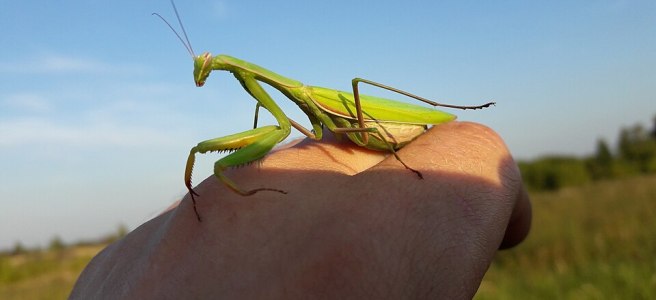
Once, I found a praying mantis that had fallen from a tree and offered it my hand. It dipped its head down to drink water from a spoon I held before returning to its home in the leaves. Even now, the world still holds such wonders for me.
Despite aches and pains, much still fascinates me and astounds me. And yet, I know acutely that, as a human being, I will not escape the decline that comes with age. I will die. A Buddhist teaching reminds me, “My deeds are my only companion; they are the ground on which I stand.”
From time to time, I pause to examine how I spend these remaining years. I ask myself: What occupies my mind, and does it align with the priorities I claim to hold?
One area that caught my attention is social media. Recently, I chose to check Facebook only occasionally. As an administrator for two private groups, I can’t log out entirely, but I’ve stepped back. Too many of my Facebook friends have passed away, and others now post little beyond recycled content.
There was a time when Facebook felt meaningful. I used it to stay in touch with people who mattered to me — like a young woman born in New Delhi who now lives in Japan. At her request, we gave each other nicknames: she calls me “Granny.” That always makes me smile. It confuses my friends — since I’ve never had children, why would anyone call me Granny?
We met online when she was a young teen. She was struggling to live with a rare bleeding disorder, with trauma, and with parental pressure to marry. It frightened her, especially when her disability narrowed her options. We exchanged emails for years.
Eventually, she married a man in Japan. Now divorced, she’s working and building a new life. She sends me birthday cards and photos over Messenger.
Some relationships endure even as the platforms shift.
I also reflect on how I use my money and time. When I first started writing, I didn’t expect to earn anything — and I was right. What mattered to me was hearing from people who had read my book. Whether they posted a review or sent a private note didn’t matter. My heart leapt when I found a handwritten thank-you letter in my mailbox from someone I’d never met.
I own the rights to my book and believe in the freedom to read. I’ve donated copies to my county library, the Library of Congress’s National Library for the Blind and Print Disabled, and Bookshare. I’ve also withdrawn my ebook from Amazon and stopped buying from them.
I often ask myself:
• Are my values expressed in my actions?
• Am I doing things that bring joy or comfort to others?
• Am I helping in ways that are actually helpful?
Not always, I admit. But I’m doing the best I can with what I have. I believe that what I do — how I spend my time and what I write — matters. I’m grateful for the rare moments when someone tells me I’ve made a difference. It’s a quiet, enduring gift.


 My Turn