
“Everything…affects everything”

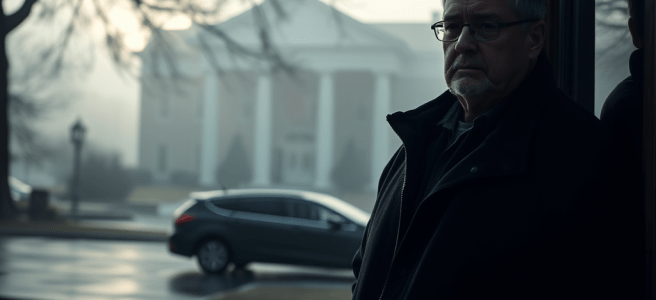
Ralph the custodian at the library arrived for work on a chilly morning. He noticed another car at the back of the parking lot. “That’s odd,” he thought, “the library doesn’t open for another two hours.” He thought perhaps the owner had not been able to start it for some reason and left it there, but then he noticed the engine was running. Ralph walked over to see if the car’s owner had left a note on the windshield. It startled him to see that in the driver’s seat was a young woman, slumped over the steering wheel. He knocked on the window and got no response. The car door was locked.

By the time I pulled my car into the lot everything appeared as usual, Ralph was standing by the door waiting for me. He opened the door so that I would not have to use my key. His usually cheerful face was grave. Halting a bit, he explained the police had come and gone. As Ralph feared, the woman was dead. She had blocked the car’s exhaust pipe, turned on the car engine, locked the doors, and waited to die. If she had had any second thoughts later she would have been too paralyzed by the fumes to get out of the death trap she had constructed.

I had often thought of Ralph as our Tin Woodman, a man who was more comfortable building bookcases and taking care of people, than acknowledging his kind heartedness. He lowered his voice and said, “They took her body to the morgue and towed her car away.”

It was mid-morning when the police officer came to the library to say that they had identified the body. She was a college freshman. The officer told me her name, but I didn’t recognize it. Her name rippled from one staff member to another in hushed tones. Most shook their heads and said, “No I don’t remember her.” Murmurs of “How sad,” echoed each time another staff member came into work.

But Emily at the circulation desk said, “Oh yes, I remember her now. She was soft spoken, kind of shy. She probably used the college library most of the time, but she came here every once in a while.” 

Most of that day few people talked about it. The atmosphere was somber. At the staff meeting the next day, I asked everyone to say a few words about what they had felt when they learned of the suicide. Some librarians, who had children of their own, thought how the young woman’s parents must be grieving. Several people said that they wished they had known her better, known that she seemed withdrawn and anxious. Perhaps if they had taken the time, while checking out her books, to inquire how she was, they could have offered her some comfort. If she hadn’t felt so alone, could it have made a difference? Then Ralph spoke, “I thought I was the only one who thought perhaps I could have prevented this. I wondered if I had just arrived extra early to work, could I have saved her life.”

I think she would have been surprised that the town librarians sat together mourning her death. She may have been astounded to know that thirty years after her suicide, the director of the library still remembered her death as tragic.

Class Photo

In Junior High we were put into tracks. Even at twelve years old, we knew that Tracks #1 through
#3 were the most likely to be accepted at a college. These were the smart kids. We were Mr. Sampson’s Home Room, Track #8. We were the dumb kids, at least in school.

In the fading class photo, bald-headed Mr. Sampson is wearing his signature clip-on bow tie. He
looks rather like a man counting the days until his retirement. Thirty-one budding adolescents squint into the bright sunlight, staring at the camera lens. We were the ones who showed up for school on the day of the class photo in 1961. We stand in rows on the cement front steps of the Junior High School.

The eighteen boys in the snapshot are attempting to look streetwise or surly. Looking at the
photo now, I remember that one of these boys was whispered to have been in trouble with the law. He was older than the rest of us. The rumor was he had done time in a Juvenile Justice Center.

Standing on the lowest steps are thirteen girls, including me. Several of these female faces
can barely be seen, hidden by the faces in front. Some girls are purposely avoiding the camera. Those of us who are flat chested stand up straighter than those who have begun to develop breasts. We look embarrassed by our changing body shapes.

There are only three classmates I can still identify today: Michelle, Christina and Terry. Terry liked to brag about being sexually active. She wore the shortest skirts of any girl in our class and clinging sweaters, but there was little that could be considered feminine about her. Her short black hair appeared uncombed. Her gait looked like she had just swung off the back of a motorcycle. There was an unmistakable “I dare you,” look in her eyes.

Christina wore her blonde hair in a bouffant style that enlarged the natural roundness of her face. She started a Beatles Fan Club, passing out hand-made membership cards and collecting dues during Social Studies Class. Not many fell for her ‘get rich quick’ scam. Christina enjoyed telling shocking tales of wild parties she held when her parents were away. She bragged that at these parties plenty of drugs and alcohol were available and that by the end of the party there was only broken glass where once there had been a chandelier. I was skeptical that there was any truth in her stories. Now I realize that these stories had a striking resemblance to a Frat party. Perhaps Christina had an older sibling who was at college.

Michelle is the only member of that 7th grade class who is still a friend of mine today. She and I had been paired together by the School Principal because each of us had been absent from our elementary school more often than present. Michelle and I were accustomed to being set apart. Michelle had home teachers during her recovery from rheumatic fever; I had missed most of sixth grade while my body healed from surgery. Mr. Sampson assigned Michelle and me to the center back two seats and called it Row 6 ½. It was obvious enough to all, even without this special seating assignment, that Michelle and I were out of place in the classroom. We actually did our homework assignments, dared to raise our hands in class, and when we were called upon, we knew the answers.

After the first month, the Principal reassigned Michelle and me to classes in Track #2, but left us in the Track #8 Home Room. Each morning we sat in Row 6 ½, attempting to understand what “Truth, Beauty and Goodness” had to do with our lives.

Home Before Dark

Little girl with a green straw hat examinging a flower in her hands

It was late in the afternoon when the phone rang. I could hear the concern in my mother’s voice as she talked. Estelle, one of my second grade classmates, was missing. She was seven-years-old, leaner and more petite than I was. She left school that day as usual, but did not arrive home. Estelle’s mother began calling the neighbors as the evening shadows were darkening the city streets. No one had seen her. The police were called.

Much to everyone’s surprise, a confused Estelle returned home a short time later. A man who said he was a friend of her father’s had offered her a ride. When the man headed into unknown territory, Estelle became suspicious. She began a temper tantrum of admirable strength. Screaming, kicking, and biting the man, she ignored all of his protests. At last, the man wanted only to be rid of her. He let her out of his car and drove away. Estelle, then only a few blocks away from home, was totally lost. It took her hours to find her way back.

While her family, neighbors and friends sat awaiting news of her, Estelle was alone and disoriented. When she stepped inside her house at last, her father’s terror turned to rage. First, he spanked her for daring to trust a stranger. Then he took her to the Police Department to file a report. Back home again, she was sent to bed without her supper.

After that, the children of Mrs. Baxter’s second grade class were a little less naive. Our parents lectured about never accepting a ride from anyone: no matter what. We rehearsed marching directly from home to school and school to home. We became afraid of strangers.

Those of us who did not already know, learned that fear could turn to anger, blame and mistrust. We learned that victims could be punished. Life can turn quickly from fun to danger. None of us can prevent missteps. All we can do some times is to scream, kick or claw our way out.

Blending the Old and the New

Shirley, my oldest friend, and I went to a Quilt Festival this week. It’s not that she is older than any of my other friends, I tease her. We remember when we used to climb the apple tree outside my grandmother’s farmhouse. The tree seemed very large to us then, but the branches were low to the ground and easy to reach with our 5-year-old arms. It was more like sitting on a swing than climbing a tree, but the peanut butter, honey and graham cracker snacks we ate there always tasted better than they did in the kitchen.

At the Quilt Festival we saw an exhibit, “Blending the Old with the New.” The quilts displayed were designed by Paul D. Pilgrim. He had used heirloom quilt blocks, abandoned by the person who created them perhaps because of death or old age. The artist then created something different from what was originally intended. The finished design honored the past while also moving in a new direction.

Shirley told me about the energy she senses from an antique quilt top that she recently purchased at an Indian Trading Post outside of Oklahoma City. She describes it as having “amazing colors and the vintage fabrics give you a glimpse into the past” She is eager to add her own energy as she works with it.

Images of quilts blending the old with the new reminded me of the power I sense from the spirits of my ancestors. It brought to mind stories from my family and my experience and the wisdom I draw from them. Lately, I am noticing that when another person describes a place or a time we shared, it usually is quite different from what I remember. What we saw, felt, thought, heard and tasted are altered by our senses and our interpretations. I marvel that what we each observe and notice can be similar yet changed.

When I read my cousin B’s descriptions of our shared grandmother’s home in Nova Scotia, the contrast from how I would tell the tale is striking to me. There is only one year of difference in our ages and we grew up in homes less than 100 miles apart. Yet, because of differences between our mothers, we met for the first time as adults.

We now live more than 1,500 miles apart and in the past year we have become closer through our stories than we were ever before. By reading B’s stories, I connect in a way that is beyond kinship. I honor her journey and the way she has traveled it. Her stories sometimes bring tears to my eyes and her cryptic email messages often make me laugh. Still we see the world very differently. When I told her I was going to a Quilt Festival, she shot back, “So how’s life in the fast lane?”

As a quilt may be stitched together by many hands around a circle or completed generations later, my belief is that we can all transcend the differences that divide us in space and time with our stories.