O Dirt

Cuped hands holding soil and a small tree sprout

After “Ode to Dirt” by Sharon Olds

Who did not love playing in dirt as a child? Not me. Maybe it was sand at the seashore or mud or clay that you scooped up in your fingers. Or were you a child who was cautioned that dirt was filthy and not to be touched?

The backyard of the house my parents mortgaged was dirt poor. The sandy soil had been stripped. It had lost the nutrients and organic matter that help plants to grow. Depleted, it was no longer fertile enough to make a vegetable garden thrive.

Once the ground had thawed in the spring, I watched as my mother collected all the vegetable peelings and uncooked scraps of food waste in a tub that was stored under our kitchen sink. At the end of each day she would take the bucket out to the backyard, dig a hole in the space where my father had cleared the grass, and bury her gifts in the ground.

When the maple and oak leaves fell in autumn, they were raked into piles that the neighborhood children jumped into. After we grew tired of rolling in the musty pile of crackling orange, red, yellow, and brown leaves, they too were given space in the ground where they rested all winter.

It was rudimentary composting that in time brought us juicy tomatoes, squash, and crispy pole beans each summer.

O dirt,

help us find ways to serve your life,

you who have brought us forth, and fed us,

and who at the end will take us in

and rotate with us, and wobble, and orbit.

—Sharon Olds

What a Wonderful Bird Is the Pelican

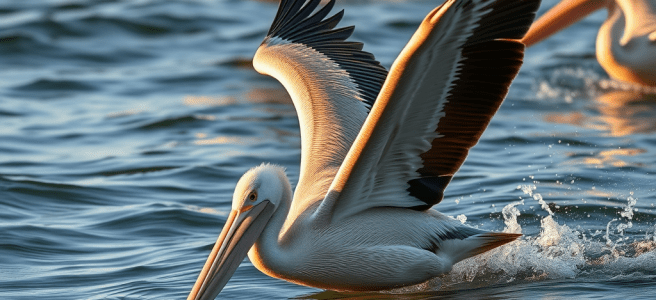
The chain of dignified brown pelicans swoop down so low they skim the waves. They have a prideful look with their necks pulled back and their eyes looking downward over their long pointed beaks. They are hovering over a school of fish and effortlessly capturing hundreds of little fish by opening their jaws and dipping the water’s surface. Then they ripple in formation as if to mimic the tide. The wonder is that such a ridiculous looking bird can achieve gracefulness at all. On dry land they look as if their predacious beaks are too heavy for their neck muscles, their bellies too low slung to stay air borne.

Some of the pelicans dive from high above the water’s surface capturing a bill full of fish and spilling out the water on their ascent to the air. The pelicans hit the water with a splash, and then float. It’s an hour before dinner when they will be joined by hundreds of their own kind as well as terns, gulls and osprey. The tide will becomes dark with frenzied feasting.

I feel like the oddly shaped pelican. I scoop up bits of information, opinions, sights, sounds, aromas, and take in whatever comes my way. Then I begin to sort, keeping what makes sense to me and flushing out the useless and harmful bits.

I identify too with the unsuspecting minnows. They swim nestled in the comfort of their community until suddenly gulped into a dark mouth. I am sure I am an edible catch, not shell or seawater that will be spit out. There is no turning back, no way to escape. All I can do is wait for the throat to squeeze and swallow.

A Skitter of Squirrels

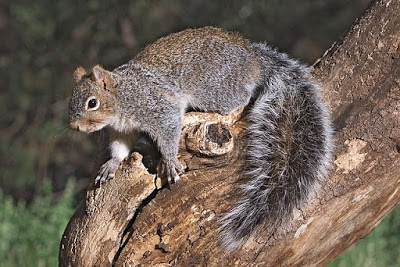
Scurry, tackle and play the squirrels are dashing into the yard for the morning romp. They are noisy, scratching up trees in a spiral twist, and racing through crackling leaves. They cavort with each other, doing somersaults and tumbling. They freeze only when I let the old dog out, but when they realize the dog is not a threat they go back to foraging for food on the ground.
 
I sit at the dining room table in front of the glass french doors munching on my breakfast cereal and watching two squirrels who are sitting upright just on the other side of the glass chewing their breakfast of seeds. They have finished their game of tag. Their tails are gracefully curled upward. They can see me munching. I can see them chewing. Have they come to thank me for the peanuts scattered on the patio just for them? Most people who feed the birds don’t like having squirrels. The truth is whenever we buy birdseed we also purchase a bag of peanuts for the squirrels. They don’t bother the birdseed that is in the bird feeders when there are peanuts for them to eat.
 
The squirrels seem to mingle in a balanced harmony with the birds. After all, they share the same trees. If only humans could be that reasonable.

The reservoir

When I was growing up, my family often drove to Quabbin Reservoir. We liked to check to see how high the water was in the spring and picnic there in the summer. In the autumn, the hues of gold and crimson leaves were doubled by the reflections on the water. My mother would pack a picnic lunch for everyone, including any neighborhood children who wanted to join us. In less than an hour, we would escape the city and drive into what seemed to me to be a magical place.

Quabbin Reservoir was constructed when Winsor Dam and Quabbin Dike were built in the 1930’s to hold the water back in the Swift River Valley. Water flows in from several rivers. It also trickles down from the surrounding hillsides when the snow melts in each spring. Then the water is carried off for millions of people to use every day. The project took more than 10 years to complete and in the process, many small towns were altered forever. Entire towns were displaced, homes destroyed and cemeteries relocated. But, as a child, little of that meant much to me. What mattered was seeing the vast expanse of collective waters.

Climbing to the top of the observation tower, we could get a clear look at the vastness of the water that was dotted by pointed islands, which were once hilltops. My father would drive us across the Dam and then down the backside. We often set up our picnics at the bottom where there was a grove of trees. Once the car doors were open, all the children would begin by climbing to the top of the Dam. When we reached the top, we would all lie down on our sides and roll like sausages down the grassy steps that held the water back. At each of the step’s landing, we would walk to the next stage of the slope until we reached the bottom safely.

Sometimes, we would explore the woods and discover what had previously been a farm or pasture. Old stonewalls that had surrounded private property at one time remained, yet the houses and barns had all been removed. At the base of an old apple tree, we often found morel mushrooms with their shriveled caps. However, we harvested nothing except memories. Usually, I felt stronger when we left a visit to Quabbin, than I had when we arrived.

There were times when there wasn’t as much melting snow and falling rain. Water usage in the city and suburbs continued to increase and the water became noticeably lower and lower at the reservoir. I don’t live as near to the reservoir as I did when I was young, and at least 25 years had passed since I was last there. During those years, I have gone through periods of my life when my inner reservoir has been drained by serious illness, care and concern for loved ones and grief.

This year, I heard someone say that the water level at Quabbin was higher than it had been in years and I knew I wanted to see it again.

The reservoir was as holy as I remembered it on the hot and humid summer day. It surprised me to see that cars are no longer allowed to drive across the dam and many roads had been blocked from traffic. The spillway that I had often seen empty had water cascading over the top. The water was so clear that I could see the ivory veins of granite at the bottom of the swirling pool.

I made a promise to myself to pay more attention to the things that fill me up and strengthen my ability to spill over for those who are in need.