Pride

A diverse group of smiling people, including a woman in a wheelchair, a guide dog, and others, pose together in front of a colorful striped background.

July is Disability Pride Month and I  have been thinking a lot about a poem Laura Hershey wrote in 1971 entitled “You Get Proud By Practicing.” It is one of my favorite poems. 

I’ve had more than seventy-five years to practice being proud. When I was a child I was the only one in my age group who had to go to the doctor for treatment if I fell down and scraped a knee. I was the only one who had to go to the emergency room for a nose bleed. By the time I was a teen, I didn’t know anyone else who had to see an orthopedic surgeon. Many adults and even other children focused on what I couldn’t do rather than what I could.

I wasn’t proud yet, but I also wasn’t ashamed or embarrassed by my disability. The over culture, or the attitude of the dominant culture, is one of ableism. It is learned at a young age. I knew that most people saw me as less than “normal.” The truth is that more than one in four adults in the United States have a disability. That sounds pretty normal to me.

When I finally met another teen in the early 1960’s who had a bleeding disorder, I believed I was lucky to be a girl. My new friend was a boy with hemophilia. In order for his father to be proud of him he had to play hockey. The battering his body took trying to make his father proud of him left joint injuries that could not heal. He needed a total knee replacement before he turned fifteen. 

It took years of practice before I could feel pride in my abilities. My disabilities have increased with age but I am no longer the only one in my age group who has a disability. I don’t feel like the odd one out anymore, but I don’t see many of my peers feeling proud. In fact many have internalized ableism, trying to deny their disabilities or cover them up in order to feel good about who they are.

They haven’t learned as Laura Hershey says:

 “You do not need
to be able to walk, or see, or hear,
or use big, complicated words,
or do any of the things that you just can’t do
to be proud.”

Lenten Sacrifice

Cluster of small green buds surrounded by pointed, serrated leaves on a stem, against a blurred natural background.

Although it has not been a part of my religious practice in the past, this year I have things I want to give up during Lent. It will not be the cookies I have with my afternoon tea or the occasional meal I have that is not strictly plant based. But there are things that are both unhealthy and distracting that I am giving up during this season of sacrifice, in order to attain clarity. 

Lately my thoughts have been scattered. Like the tree branches blown over the ground with the recent wind and rain, I feel tossed betwixt and between. I spend more time  than I want reading and responding to email and social media. The books I want to read pile up and up. My relationships with friends and family go untended. 

This season is one of acknowledging death, and rebirth. As I am about to complete my 76th year of life I understand that time is precious. It is impossible to escape my mortality. I have fewer years of life before me than behind me. Dust will return to dust. My generation will be replaced by others.

Recently social media has capitalized on the human tendency to flutter from one thing to another. It keeps me scrolling way past the time I had planned to find some bit of information. Worse yet is that in order to hold my attention, much of what I stumble upon is designed to make me angry.

Years ago when I was leading workshops, I learned that distractions take precedence. It’s instinctual, probably a survival technique ingrained from our ancestors. If it is a single distraction, as when a comedian is interrupted by a heckler, the best advice is not to ignore it. 

That doesn’t work when the distractions come at an alarming number and frequency. Lately the distractions feel like the devil at work. Even though I don’t believe in Satan, I recognize that there are evil forces purposefully stirring things up, making me doubt my faith. I feel the need to return to a sacred practice.

Today the “news” seems to be less about what happened and more about what the consequences could be. I am feeling powerless, trying to figure out where to begin. It is hard to avoid the comparison with being lost in a wilderness and needing a time of solitude and reflection, in order to muster the spiritual energy to resist the evil forces.

During Lent, I am giving up the temptations of mindless busyness that have become addictive for me. Only then will I be able to pay attention to the things that mattered the most, rather than the myriad details that have been cluttering my thoughts. Perhaps it will reinvigorate me, giving me renewed energy to start where I am, use what I have, and do what I can.

Start where you are, use what you have, do what you can.
― Arthur Ashe

Celebrating Old Friendships

The old Girl Scout song we used to sing went,

Make new friends,
but keep the old.
One is silver,
the other is gold.

This month two old friends are celebrating their birthdays. It’s a big one that ends in a zero. We are older now than we ever expected to be. Years ago I drifted away from letter writing. Now I email greeting cards, or send a text message. For these old friends I want more. I want a conversation. I want to hear their voices again. We now live far apart and we haven’t seen each other in a very long time. Before I even dial the number I know part of the conversation will be about how our calendars are full of medical appointments and, how we can no longer do some of the things we used to do. It will also be about music, travel, ways we are caring for other friends or family and, the things that matter now that we are old.

Day 8 (of 31 days of free writing)

Where Did I Go Wrong?

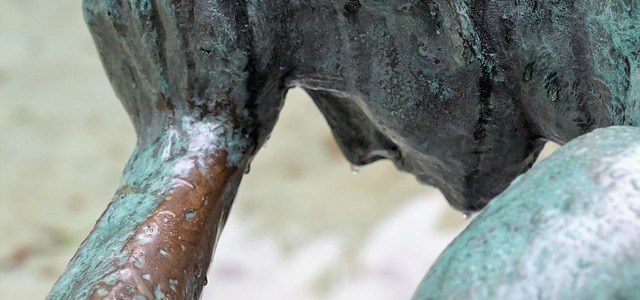
Statue of person holding drooping head with one hand

Tuesday morning I telephoned the doctor. I’d stayed awake most of the night wondering what I could have done that would cause my right shoulder to hurt. I certainly did not want to get an infusion of clotting factor, we had been enjoying a month at the beach and we had been there less than a week. I wasn’t actually sure I had a bleed in my shoulder joint. “It might just be arthritic pain from an old injury,” I said to the answering machine and asked the doctor to decide if I should get an infusion. The recorded message promised that a nurse would get back to me soon.

It had been years since pain in this shoulder had kept me awake. The first time I had an x-ray that showed previous injuries, joint damage, but not active bleeding. I went to a physical therapist and the pain eventually subsided although it came back whenever I didn’t keep the exercises up. I had no memory of a bleed in that shoulder, but the x-ray was proof.

The older I get the more previous injuries become painful. I feel ashamed that I can’t tell the difference each time a doctor says, “Why didn’t you call me sooner?” The implication is that I was in denial. That is probably at least partly true. However, I have also had false alarms and then the doctor’s scornful reproach implies hypochondria.

The next time I had pain in that shoulder was when we moved to Florida six years ago. That time I tried to return to the exercises but the pain got worse by the day. I had been packing and hefting books for our move to Florida. Motivated to meet the deadline for packing I suppressed my doubts until the pain became so intense I had no choice but to go to the Emergency Room and get infused. The doctor told me to rest the shoulder and wrote a prescription for a narcotic pain medication. Resting was not an option. The movers were coming in a day or two and we would be loading the car and driving south to Florida from Massachusetts whether my arm had healed or not.

We arrived in Tallahassee a few days before the moving van and settled the cat in our new house before the three of us checked into a motel. The next few days we spent shopping for essentials and delivering them to the house. We made frequent trips to the house to feed and reassure the cat. My arms loaded with supplies I missed a step and landed on the paved walkway to our new front door. Not only did I smash my glasses, bruising my face, I hit my right knee and landed on my shoulder, the same shoulder that had been injured packing books. That time it took several re-infusions of fibrinogen to subside and the doctor instructed me not to lift anything over five pounds.

So after calling the doctor’s office on Tuesday morning I waited, and waited, and waited. No return call as promised. Wednesday morning I called again and this time I was more sure of myself. The pain was worse. “Oh, I’m so sorry,” apologized the nurse. “I’ll schedule the infusion for this afternoon, can you get here by 2 pm?”

Sometimes I lie awake at night, and I ask, “Where have I gone wrong?” Then a voice says to me, “This is going to take more than one night.”

Cartoon boy extending both arms appears to be wailing

—Charles M. Schulz

The Power of Positive Choices

Recently I saw a quote from Norman Vincent Peale posted on Facebook. “Live your life and forget your age.” I felt as if I had been hit with a jolt of indignation. Forget my age? I like my age! I can’t really take credit for it, but it came as an unexpected surprise when I celebrated my 62nd birthday. That’s not something I want to forget because, with a bleeding disorder there were lots of medical professionals along the way who predicted a substantially shorter life span for me. When I was twelve years old and too big to crawl under the desk, I did not morn that my body had grown. Why now would I want to feel sorry that at the age of 62 there are things I cannot do that were easy when I was younger?

However, that wasn’t the only reason why the quote set off a spark of anger.

When I was a child, one of my cousins would send me a subscription to Guide Posts each year. The magazine in the 1950’s was filled with anecdotes about the power of positive thinking. They offered an easy fix for all ills. Just pretend that there is nothing wrong and it will go away. My cousin hinted that the magazine was what a little girl with a severe bleeding disorder needed to be healed.

Now I like chocolate, it makes me forget my troubles, but I know it doesn’t make them go away. I also know that the only thing I can change is my attitude. Most of the time I am an optimist, but when I have negative thoughts I don’t want to sit in judgment by someone who thinks I am undermining my health.

What is healthy is to acknowledge that my bleeding disorder (like my age, my eye color, the gap between my two front teeth) is a part of me.

If my cousin thought that I lacked positive thinking, then he really didn’t know me. Yet, even as a child, I understood that positive thinking was not enough to make my body suddenly produce fibrinogen.

What angered me was that the underlying message seemed to be that if you were sick you didn’t have enough faith. I didn’t believe that having a bleeding disorder was my fault. It was not only foolish to pretend that having a bleeding disorder had no effect on my life; it was dangerous, both physically and emotionally.

After church one Sunday I saw a friend of mine who had undergone chemotherapy treatment for cancer and was now in remission.

I said, It’s wonderful to see you looking so well!

Her husband beamed and said with pride, “Yes, if you have the right attitude you can beat cancer.”

Without thinking, I responded, “Sounds like blaming the victim to me.

My friend’s face relaxed into a warm smile and nodded as her husband looked confused.

I believe she understood that if her positive thoughts could cure the cancer, then her negative thoughts might have caused it to occur in the first place.

So excuse me if when I look in the mirror I see a 62 year-old woman. Some days I like the way I look, some days I don’t, but I believe I would be foolish to wish that I wasn’t my age.