Where Did I Go Wrong?

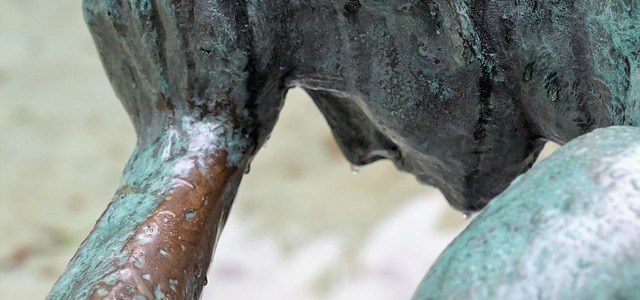
Statue of person holding drooping head with one hand

Tuesday morning I telephoned the doctor. I’d stayed awake most of the night wondering what I could have done that would cause my right shoulder to hurt. I certainly did not want to get an infusion of clotting factor, we had been enjoying a month at the beach and we had been there less than a week. I wasn’t actually sure I had a bleed in my shoulder joint. “It might just be arthritic pain from an old injury,” I said to the answering machine and asked the doctor to decide if I should get an infusion. The recorded message promised that a nurse would get back to me soon.

It had been years since pain in this shoulder had kept me awake. The first time I had an x-ray that showed previous injuries, joint damage, but not active bleeding. I went to a physical therapist and the pain eventually subsided although it came back whenever I didn’t keep the exercises up. I had no memory of a bleed in that shoulder, but the x-ray was proof.

The older I get the more previous injuries become painful. I feel ashamed that I can’t tell the difference each time a doctor says, “Why didn’t you call me sooner?” The implication is that I was in denial. That is probably at least partly true. However, I have also had false alarms and then the doctor’s scornful reproach implies hypochondria.

The next time I had pain in that shoulder was when we moved to Florida six years ago. That time I tried to return to the exercises but the pain got worse by the day. I had been packing and hefting books for our move to Florida. Motivated to meet the deadline for packing I suppressed my doubts until the pain became so intense I had no choice but to go to the Emergency Room and get infused. The doctor told me to rest the shoulder and wrote a prescription for a narcotic pain medication. Resting was not an option. The movers were coming in a day or two and we would be loading the car and driving south to Florida from Massachusetts whether my arm had healed or not.

We arrived in Tallahassee a few days before the moving van and settled the cat in our new house before the three of us checked into a motel. The next few days we spent shopping for essentials and delivering them to the house. We made frequent trips to the house to feed and reassure the cat. My arms loaded with supplies I missed a step and landed on the paved walkway to our new front door. Not only did I smash my glasses, bruising my face, I hit my right knee and landed on my shoulder, the same shoulder that had been injured packing books. That time it took several re-infusions of fibrinogen to subside and the doctor instructed me not to lift anything over five pounds.

So after calling the doctor’s office on Tuesday morning I waited, and waited, and waited. No return call as promised. Wednesday morning I called again and this time I was more sure of myself. The pain was worse. “Oh, I’m so sorry,” apologized the nurse. “I’ll schedule the infusion for this afternoon, can you get here by 2 pm?”

Sometimes I lie awake at night, and I ask, “Where have I gone wrong?” Then a voice says to me, “This is going to take more than one night.”

Cartoon boy extending both arms appears to be wailing

—Charles M. Schulz

What lies behind us and what lies before us are tiny matters compared to what lies within us. —Ralph Waldo Emerson


On the way to my annual mammogram appointment, I pulled into the parking garage of the radiology center. I was nervous. The hospital had stopped doing routine ultra sounds and CT scans. When I had mammography in the hospital, my doctor had authority. That gave me a sense of safety. On the cover of my chart, written in large red ink, the doctor had scrolled, “BRUISES EASILY.”

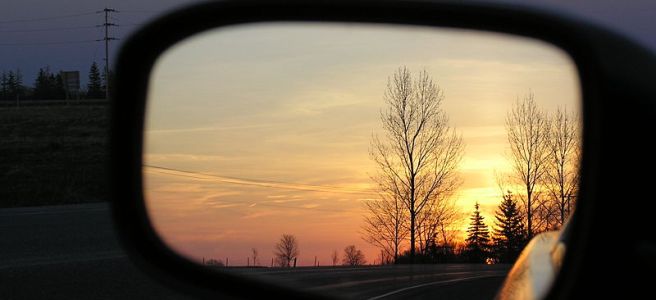
Distracted with concern for what might happen without the supervision of my physician, I found a parking spot, opened the car door, grabbed my purse and zigzagged between tightly spaced mini-vans and sedans. Just then, my right arm hit the side-view mirror of a parked vehicle. On the side-view mirror it said, “Objects in mirror are closer than they appear.” I should have taken this warning more seriously.

Anyone else would have said a simple “Ouch!” and moved on as if nothing had happened. It would have been insignificant. However, I live with a bleeding disorder that can topple my plans into chaotic debris at the most unexpected times. My blood’s inability to clot creates the disorder in my life.

I suppressed my desire to kick the parked car or utter an obscenity that would echo in the concrete and steel. From painful experience, I have learned that anger doesn’t provide optimal healing. However, when I have one of these absurd accidents, I have been known to take my rage out on the nearest inanimate object, stranger or loved one. Most of the time, I can control the fight-back response that the adrenalin brings up, with the understanding that it could create a secondary injury for me.

The margin of error is as narrow as the space between two parked vehicles. Once a bleed begins, the decisions before me stretch between what I want and what I need. Often I make compromises that result in getting neither.

I sniffed the exhaust fumes in the parking garage and fretted about my options. By the time I stepped up to the check-in desk, the bruise between my wrist and elbow was hot to the touch and swelling. Soon blood began to fill the space under the skin making the arm heavy and painful. It would hurt to hold the arm down by my side for the mammogram. What I wanted immediately was to apply ice while I sat in the waiting room.

“Imagine a medical facility without an ice pack,” I snarled, when I was told there was none available.

Once back at home, I began searching my closet for summer outfits with long sleeves. One thing was certain, in the coming weeks the bruise would turn from red and blue to purple and finally yellow green. Pretty colors in other locations, but they would raise questions, horror and sympathy that I would want to avoid.

“What did you do to yourself?” friends and strangers will ask me in the next three to four weeks as the bruise enlarges, spreads and then fades away slowly. “What did you do?”

The question sounds accusatory to me, as if I had inflicted the pain on myself through my carelessness or stupidity. I plan to glibly reply, “Oh, I got into a fender bender with a parked vehicle; my arm was damaged, but the car is fine.”