Pride

A diverse group of smiling people, including a woman in a wheelchair, a guide dog, and others, pose together in front of a colorful striped background.

July is Disability Pride Month and I  have been thinking a lot about a poem Laura Hershey wrote in 1971 entitled “You Get Proud By Practicing.” It is one of my favorite poems. 

I’ve had more than seventy-five years to practice being proud. When I was a child I was the only one in my age group who had to go to the doctor for treatment if I fell down and scraped a knee. I was the only one who had to go to the emergency room for a nose bleed. By the time I was a teen, I didn’t know anyone else who had to see an orthopedic surgeon. Many adults and even other children focused on what I couldn’t do rather than what I could.

I wasn’t proud yet, but I also wasn’t ashamed or embarrassed by my disability. The over culture, or the attitude of the dominant culture, is one of ableism. It is learned at a young age. I knew that most people saw me as less than “normal.” The truth is that more than one in four adults in the United States have a disability. That sounds pretty normal to me.

When I finally met another teen in the early 1960’s who had a bleeding disorder, I believed I was lucky to be a girl. My new friend was a boy with hemophilia. In order for his father to be proud of him he had to play hockey. The battering his body took trying to make his father proud of him left joint injuries that could not heal. He needed a total knee replacement before he turned fifteen. 

It took years of practice before I could feel pride in my abilities. My disabilities have increased with age but I am no longer the only one in my age group who has a disability. I don’t feel like the odd one out anymore, but I don’t see many of my peers feeling proud. In fact many have internalized ableism, trying to deny their disabilities or cover them up in order to feel good about who they are.

They haven’t learned as Laura Hershey says:

 “You do not need
to be able to walk, or see, or hear,
or use big, complicated words,
or do any of the things that you just can’t do
to be proud.”

Pondering Progress, Problems, & Possibilities

A humanoid robot with blue eyes is shown on the left, with a digital circuit board pattern on a blue background on the right.

After reading AI 2041: Ten Visions for Our Future by  Kai-Fu Lee and Chen Qiufan

Television was invented years before it became affordable for the general public. The first TV in our house was one that had been rescued from the trash and repaired by a family friend. Before I was old enough to go to Kindergarten, I sat on the floor following Miss Frances’ instructions. I parroted the advertising jingles, like “Pop, pop, fizz, fizz, oh, what a relief it is.” Along with the lessons, I absorbed in Ding Dong School I found out what toys I should ask my parents to buy for me and, what cereal tasted the best.

As people opted to stay home and watch TV for entertainment, fewer folks listened to radio performances. There was a drop in attending movie theaters and live events, leading to job losses. Actors, writers, producers, sound engineers and musicians all lost jobs if they could not transition to other venues to attract an audience. Over the years, most people learned new skills or found other ways of marketing their talent. 

My disability caused me to miss many days of school each year. In my teen years I was unable to attend High School, because I could not readily climb up and down stairs carrying a heavy load of books. I became an avid fan of daytime talk shows, evening news broadcasts, and nighttime situation comedies.

Having had more than my share of TV in my youth both at home and in hospital beds, I have opted to no longer own one. As a person who can no longer read print, I shifted my focus to streaming music, audiobooks, podcasts and online news sources.

In 2023 I first learned about GBT Chat 4. That was the year the world was just waking up to the potential of AI.  I listened in amazement to a panel of physicians on a podcast discussing how they would now be able to more accurately diagnose and treat rare diseases.  Now that a significant number of medical records had been uploaded  and humans had trained Open AI to understand complex questions, doctors all over the world could upload images and describe symptoms, then get reliable options to care for their patients.

In 2024 I learned that I could produce an audiobook version of my memoir for less money and editing time than using a human narrator requires. I began the search right away for a mature female AI voice that suited the tenor of my story. It felt like a dream come true. When I finished uploading my text, reviewing the narration, and fine tuning some sections that didn’t reflect the emotional content, I was pleased with the results. I now had a book that I, a person who cannot read print, can read. 

Much to my surprise when  I started telling people what I had done, most folks reacted with alarm. “You can’t do that,” was a common reaction. They said, “It’s too risky. It might be a scam” or “You’ll be taking jobs away from real people.” Even worse, many traditional book distributors would not accept my audiobook because I had not used a human narrator.

As a person who was born with a rare medical condition, I have encountered many doctors who neither understood or were willing to trust that I knew best what I needed to survive. It would have been wonderful if they had been able to use Chat GBT. I would have gladly used a human to narrate my memoir, but I did not have the funds, or time, or ability to use my own voice. As a person with a disability, one of the things I have learned is how to use new ways of accomplishing my goals. I wonder if that has made me understand that all change comes with a set of benefits and risks, gains and losses.

You can now purchase my audiobook from Libro.FM and other online booksellers.

Bone Body Mind: Ankle Reflections

After Loving Our Own Bones by Julia Watts Belser

In 1968, I tossed a prosthetic ankle brace into my closet. Wearing that brace had caused a purple welt on the back of my knee. A hematoma formed from the pressure of the strap. The brace had to be modified more than once before I could wear it without injury and, when that was done it did not give the support that my ankle needed. I wore it for almost a year before throwing it into my parent’s attic forever.

In addition to being less than functional, it exposed me as a cripple. The looks strangers gave me were of pity. At nineteen, I did not love my own bones, yet I would rather use a wheelchair if necessary, than do additional harm to my body.

Osteoarthritis in both of my ankles, both knees, both shoulders, one hip and, one wrist, is the legacy of my congenital bleeding disorder. Over the years however, I have become proud of my identity as a disabled person and learned the power of coming out of the crip closet.

Since that first brace, almost sixty years has passed. The doctor looked at my X-ray and ordered me a new brace. After I wore it once, I refused to wear it again. Instead I did physical therapy for what the doctor called “serious arthritis.” That helped to make walking more stable. For the second time in my life I tossed another prosthetic support aside.

When the ankle became inflamed and so painful a few weeks ago that it would not bare my weight, I pulled the brace out from the closet. My bones may be fragile, fused, and misshapen but, I care for them.

Let it be a dance we do

This morning I awoke earlier than usual, jittery, and craving sweet foods. It is the day after an infusion of clotting factor. Years ago I began having allergic reactions, which included hives and shortness of breath. Now I receive pre-treatments that control these reactions, however one of the pre-treatments is a corticosteroid. It makes me hyperactive for at least 24 hours before I crash. It is a familiar feeling to me now and I have learned to adjust.

In the 60th year of my life, I changed my approach to dealing with my bleeding disorder once again.

I realize that I am part renegade and part coward when it comes to treating my bleeding disorder. In my childhood, the advice from my hematologist was to infuse with Factor I (fibrinogen) only when I had a life threatening bleed. Blood products were dangerous and not to be used freely.

Frequently long days of rest, elevation and ice would slow a bruise enough for it to be managed without and infusion. There were topical solutions like Gelfoam sponge™ and Blood Stop™ that could be used on surface wounds.

When I was a teenager one physician who did not believe that I could be a girl and have a “real” bleeding disorder carried this advice to an extreme. During those difficult growth spurt years I suffered unnecessarily from bleeds into my ankles. The effect of the untreated bleeds has been permanent arthritic damage.

For a period of time in the 70’s, I took the other road and joined the flock. The mantra then was “when in doubt, infuse.” I was on the Board of the National Hemophilia Foundation when HIV began to infect the flock. We were once again the canaries in the mineshaft. Many of the flock already had Hepatitis C.

I abruptly left that heavily trafficked road, to follow “the road less traveled.” It felt familiar and safer although more challenging. Like Robert Frost described, it has “made all the difference.” Frost never said it was a better road. Most people like to think that is what he meant. I would like to think that my choice of roads brought me to the age of 60, but I don’t say that anymore. I do believe it was just the road that made all the difference in my life.

So now that I am over 60, I have chosen still another path. Each month I go into the outpatient hematology/oncology clinic and get a dose of cryoprecipitate. It brings me up to about 50% of normal clotting. The half-life is long and even though the research does not back me up on this one, I believe I can notice an effect for at least two weeks.

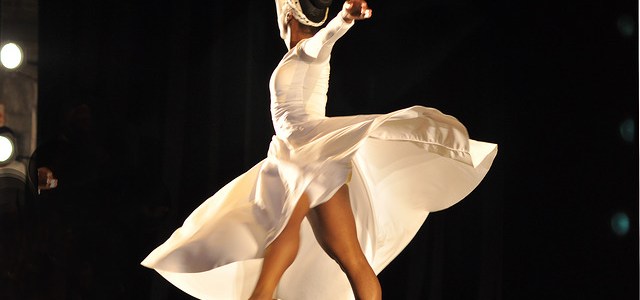
It’s a matter of choice. Even if my body can no longer dance, I feel like it gives me some time for my spirit to dance.

Spontaneous Bleed

One day when I was about nine years old, I was dancing around the kitchen while my mother cooked supper. My feet slid on the newly waxed floor and before I knew it, plop I landed hard on my bottom. My mother was convinced that there would be a large bruise from the fall. A few days later no bruise at the point of impact and I had forgotten about the fall. My mother vowed never to wax the kitchen floor again and breathed a sigh of relief.
 
Later that same week I started noticing a rash in my arm pits. It prickled and burned a bit. A day after the rash appeared, the armpits seemed to be hot, puffy and sore. By the next day the swelling had increased to a point were I could not lower my arms and I was in excruciating pain. I looked like Frankenstein with my face contorted, my neck stiff and my arms outstretched. I knew what this meant, there was bleeding under my arms and I needed an infusion of factor to make it stop. I can still remember that during the car ride to the hospital, each bump in the road felt like a hot knife was cutting off my arms.
 
My unusual condition created some curiosity in the Emergency Room. Several doctors and nurses came to observe and wonder about the cause. It wasn’t until days later that I remembered the fall in the kitchen and how I had thrown both of my arms over my head and back trying to keep my balance.
 
This week a hematologist asked me, “Have you ever had a spontaneous bleed?”
 
Firmly I responded, “No, although sometimes it takes me a long time to identify the cause of a bleed.”
 
The doctor looked confused. Perhaps I just don’t understand what is meant by “spontaneous bleed,” I mused. Spontaneous combustion, I learned in the dictionary, is defined as, “the ignition of organic matter (e.g., hay or coal) without apparent cause, typically through heat generated internally by rapid oxidation.”
 
Is it too late to change my answer to that question, doctor?