Baby Goes to Boston

It is standard practice for doctors and hospital staff to ask questions. From dentists to phlebotomists each new encounter brings the inquiries:
 
“How did they discover that you had a bleeding disorder?”
 
“How old were you when your bleeding disorder was diagnosed?”
 
“Were you born with the bleeding disorder?”
 
The questions rarely vary and neither do the answers I give. I try not to answer mechanically, understanding that the medical professional in front of me has never seen someone with my condition. What I have is rare, a one in a million chance.
There was no evidence at my birth that I had a bleeding disorder. The family physician identified there was something wrong when I was still a baby. Each time I received an immunization shot, I developed a large bruise. At first, the doctor apologized for the bruises caused by the injections. Later, he began to recognize that my bruises indicated am underlying problem. I am sure that this was simply confirmation for what my mother already knew. The elderly doctor seemed like a physician from an earlier century. He still made house calls carrying his large black leather bag filled with stethoscope, small surgical tools and many bottles of assorted pills. His office was a room on the first floor of his home. He was wise enough to know that he could not make a diagnosis of my problems himself, but he did know who could. He recommended we go to Boston and see Dr. William Dameshek.
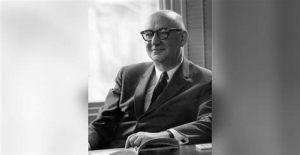
Dr. William Dameshek
My parents did not yet own a car and my father could not afford to take a day off from work. It was a half-day journey to Boston on the train. Because of the familiar nursery rhyme my father had read to me so many times, “Baby Goes to Boston,” I was happy to go on the trip. Mom had packed a lunch for us and the Raggedy Anne doll she had hand sewn. For me it was a grand adventure.
 
My parents were thirty-six years old the year I was born.  Mom and Dad had been married for ten years by then. Life was hard in those post- World War II days. My parents were renting a cold-water apartment on the second floor of a three-story tenement. The gray stucco building had an exterior staircase. Mom cleaned when she was anxious. She scrubbed the kitchen floor on her hands and knees in the chilly, walk-up apartment as she worried about how the bills would be paid. My father took the bus to work, carrying his lunch in a tin pail. He did his share of worrying too.
 
On the day we took the train to Boston, my mother carried the cash that was required to see this world famous specialist. My father’s health insurance plan covered only hospitalizations, not doctor’s appointments. The money was more than a month’s pay for my father.
 
That day there were no answers. First, Dr. Dameshek ordered some blood samples to be drawn. He interviewed my mother about our families’ medical history. Then he performed a physical examination and talked directly to me. His white lab coat was meticulously clean and crisp. From the first, I liked this man with the round face and relaxed smile.
 
A week or two later a letter arrived from Dr. Dameshek. He had determined that I had congenital afibrinogenemia. Over the next few years, Dr. Dameshek followed my progress carefully. My mother and I made routine train trips to Boston four times each year. Each time he greeted me enthusiastically, as if I was his guest, not his patient. He never missed an opportunity to teach me something. His explanations were clear and simple while remaining accurate. He beamed when, at three years old, I could say congenital afibrinogenemia. “Knowledge will save your life,” he said with pride.

Not Ivy

“Ivy had hands just like yours,” my mother said as I struggled to practice my piano lesson. “Her fingers didn’t reach a full octave either, but it didn’t stop her from playing the piano.”

It made me want to scream, “I am not Ivy.”

Ivy spent every weekend doing the laundry and cooking for her brother Byron and their mother. As far as anyone knew, she had made no friends in Kentville and had never been smitten by love. After her mother died in 1959, Ivy continued to spend her days off from work with Byron at the farmhouse.

On a Sunday night in late June of 1962 Ivy died in a car accident. She was driving back to her apartment in Kentville from her weekend at the farmhouse. The Royal Canadian Mounted Police (RCMP) notified Byron who sat alone in the dark until morning before calling his brother Guy. The telephone tree was started from one sibling to the next. “I can’t believe it,” my mother said as she hung up from the call she received that morning. Even though she was forty-four years old, they still considered Ivy the baby of their family. She had been the last to be born and now she was the first to die. Those who had moved out of Nova Scotia caught flights from Toronto, Montreal and Boston. They had not been together since their mother had died three years earlier.

When some of Ivy’s brothers and sisters met with the RCMP to hear the report of what had caused the accident, they learned an intoxicated driver had tried to pass her car. Ivy slowed down to let him pass. The driver saw an oncoming car and swerved to get back into the space he had just left. He didn’t notice that the car he had attempted to pass was not where it had been before. He knocked Ivy’s car off the road. Trying to do the other driver a favor, she lost her life.

As mourners came to her funeral I heard people saying, “She was so loyal to the family homestead.”

“She took care of her mother and her brother and never thought about herself.”

My mother’s grief was complicated by regret. Ivy was four years younger than my mother and Mom felt closer to her than her older sisters. However, a disagreement the last time they had seen each other had ended in angry words.

After Ivy’s death, when my mother compared me to Ivy it made me feel like spiders were crawling up my back. On my birthdays Mom began commenting, “If Ivy was still alive it would be her birthday this week too.”

On a chilly autumn night in 1993, I had left work about ten p.m.. I was tired, having worked since early that morning. I was enjoying the 45 minutes of quiet in my car. The traffic was light as compared to the usual rush hour times of day. I had traveled this route daily. The straight, well-lit highway required little thought or concentration.

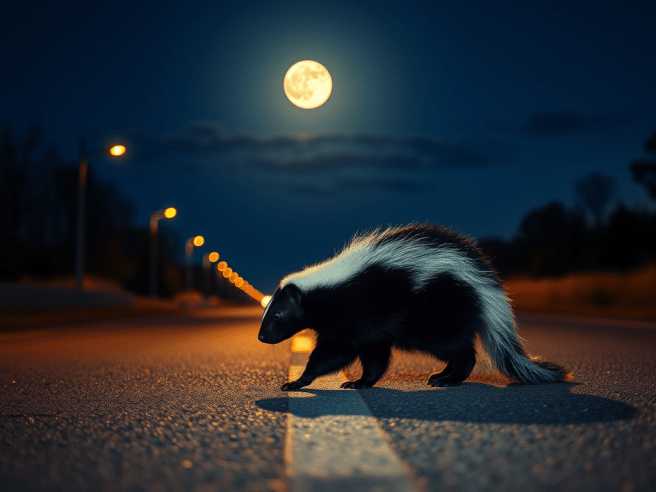
The harvest moon seemed to smile down on me from a cloudless sky. When I lowered my eyes back to the road I spotted a skunk meandering across the highway in the path of my car. The slow-moving skunk seemed out for a relaxing stroll. Without thinking, I jerked the steering wheel to the left in an attempt to avoid crushing the critter. Instantly I realized my car was now heading toward the median strip, and the oncoming vehicles on the other side. I yanked the wheel of the car, this time to the right, and slammed my foot on the brake. This action sent the car out of my control. I was forty-four years old. My first thought was “I’m going to die just like Ivy.”

In a heartbeat, I hit the curb on the right. The car flipped over as I gripped the wheel in disbelief. In a few brief seconds, it was over. My car toppled upside down, and landed right side up in a strip of grass between an exit and an entrance ramp. I stared at the tree, just inches in front of my car.

I unbuckled my seat belt and stepped out to see a beautiful night sky filled with glowing planets and blinking stars. I averted my eyes from the crumpled car beside me. In minutes a State Police trouper came to investigate. A truck driver who witnessed the accident had reported it. The trouper asked, “Did you fall asleep at the wheel?”

I responded, “No, I was awake for the whole thing.” I wanted to laugh or maybe cry. Adrenalin was still making my heart pump faster than usual. I was alive and I could feel giggle bubbles rising in my chest. I wanted to shout, “I’m not dead!” The police trouper looked like a no nonsense kind of person and I decided to suppress my joy for the moment.

“We’ll get your car towed and I’ll drive you to the station where you can call someone to pick you up,” he said. I could see him watching me walk as he led me to the cruiser. I was still a little dizzy and wondered if the car had rolled over more than once. My knees were weak but I had no trouble getting into the cruiser. I babbled about the skunk and how I hadn’t wanted to hit it. He glanced at me in his rear view mirror and said, “Next time, hit the skunk.”

When we got to the State Police barracks I realized that my first call should be to my doctor. As a person with a bleeding disorder I could not believe that I had escaped with no injuries. My hematologist was on call. He listened and then said, “I want you to put the phone down and feel all over your head for any sore spots.” I looked around at the police officers behind the desk and heaved a sigh. This I thought would cause the officers to question my sanity. I did as the doctor requested. I ran my fingers across my face and massaged my scalp. “No soreness,” I said, picking up the phone again.

“Good,” he said, “but I want you to come to the hospital anyway.” Like me he was doubtful that I had escaped with no internal injury.

Next, I called my spouse, Robin. “Would you come get me?” I said, trying to keep my voice as calm as possible. “I’m at the State Police Barracks. I’m fine. I’ll tell you the story when you get here.”

After examination in the hospital it was determined that I was unhurt. Back at home as I drifted off to sleep, I thought for one last time, “I am not Ivy.”