The Devil I Know

Often I have found myself explaining to people who ask, “So, if you have no fibrinogen, do you bruise easier?” What I want to reply is, “No, I have very thick skin.” Of course I would be thinking figuratively, not literally. I’ve answered so many of these questions in my lifetime I have adopted a defense system that shields me from blood phobias.

The questions were scary for me when I was a child and someone would ask, “Can you bleed to death from a cut?” The questions were embarrassing when I was an adolescent, “How do you stop bleeding from your monthly periods?” As a young adult the questions seemed ridiculous, “What happens when you shave your legs?”

Most people fumble about trying to phrase the question they really want to ask, “Will you start to bleed in front of me and collapse in a pool of blood?” Eventually, I grew weary of the questions.

I learned a skill set and developed a level of confidence. More than that, being a “bleeder” became part of my identity. It did not define me, but I knew how to handle it. Then came the game changer in the form of an email message from a friend in California. She had been born with a fibrinogen deficiency and had reached out internationally online to find others who also had low levels or no fibrinogen.

A small group of us had been exchanging information on an email list for several years when she wrote saying that she was now having problems with thrombosis. At first there was disbelief, It gave me the heebie-jeebies when she reported that they were giving her clotting factor and anticoagulant medications at the same time. Then in 1997 a young woman in Switzerland sent a message that she had several embolisms in both of her lungs. When I was hospitalized not long after that for an internal bleed in my lower intestine, my hematologist laughed when I told him that an embolism was my biggest concern. It was no laughing matter to me though. Since then one of the members of our group has died from complications of thrombosis and one has recently reported that she lost the use of her right hand and some vision when clots formed in the arteries of her arm and neck.

Having long passed the fear of bleeding I now found myself afraid of the opposite. The irony is that I am starting all over with the pattern of vulnerability, misunderstanding, and angst. It felt like it was a new devil sticking its tongue out at me. It’s not, though, it’s just that same old devil testing me. It smiles and whispers in my ear. “You think you are in control, but you aren’t.”
What lies behind us and what lies before us are tiny matters compared to what lies within us. —Ralph Waldo Emerson


On the way to my annual mammogram appointment, I pulled into the parking garage of the radiology center. I was nervous. The hospital had stopped doing routine ultra sounds and CT scans. When I had mammography in the hospital, my doctor had authority. That gave me a sense of safety. On the cover of my chart, written in large red ink, the doctor had scrolled, “BRUISES EASILY.”

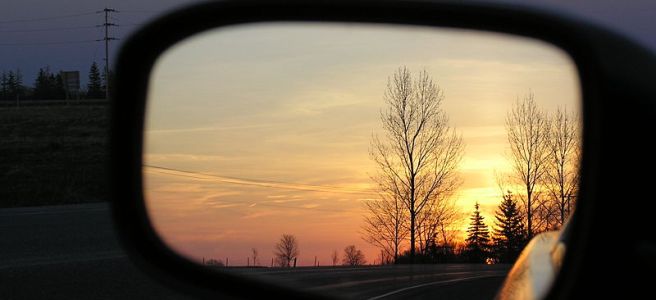
Distracted with concern for what might happen without the supervision of my physician, I found a parking spot, opened the car door, grabbed my purse and zigzagged between tightly spaced mini-vans and sedans. Just then, my right arm hit the side-view mirror of a parked vehicle. On the side-view mirror it said, “Objects in mirror are closer than they appear.” I should have taken this warning more seriously.

Anyone else would have said a simple “Ouch!” and moved on as if nothing had happened. It would have been insignificant. However, I live with a bleeding disorder that can topple my plans into chaotic debris at the most unexpected times. My blood’s inability to clot creates the disorder in my life.

I suppressed my desire to kick the parked car or utter an obscenity that would echo in the concrete and steel. From painful experience, I have learned that anger doesn’t provide optimal healing. However, when I have one of these absurd accidents, I have been known to take my rage out on the nearest inanimate object, stranger or loved one. Most of the time, I can control the fight-back response that the adrenalin brings up, with the understanding that it could create a secondary injury for me.

The margin of error is as narrow as the space between two parked vehicles. Once a bleed begins, the decisions before me stretch between what I want and what I need. Often I make compromises that result in getting neither.

I sniffed the exhaust fumes in the parking garage and fretted about my options. By the time I stepped up to the check-in desk, the bruise between my wrist and elbow was hot to the touch and swelling. Soon blood began to fill the space under the skin making the arm heavy and painful. It would hurt to hold the arm down by my side for the mammogram. What I wanted immediately was to apply ice while I sat in the waiting room.

“Imagine a medical facility without an ice pack,” I snarled, when I was told there was none available.

Once back at home, I began searching my closet for summer outfits with long sleeves. One thing was certain, in the coming weeks the bruise would turn from red and blue to purple and finally yellow green. Pretty colors in other locations, but they would raise questions, horror and sympathy that I would want to avoid.

“What did you do to yourself?” friends and strangers will ask me in the next three to four weeks as the bruise enlarges, spreads and then fades away slowly. “What did you do?”

The question sounds accusatory to me, as if I had inflicted the pain on myself through my carelessness or stupidity. I plan to glibly reply, “Oh, I got into a fender bender with a parked vehicle; my arm was damaged, but the car is fine.”