
Sunday was chilly and the rain clouds were moving in as I set my pot of vegetarian chili onto the grill at the Church potluck. Even though my mother died two years ago, when I cook, I still cook with her guiding my hands.
When I was a child, every Sunday evening in the cold weather, we had waffles and ice cream for supper. Friends and neighbors would drop by our house on Sunday evenings even when the winter snow was falling fast and thick. Moreover, despite the weather outdoors, they would all arrive in enough time to join in the tradition my parents had created. However, it wasn’t just the waffles and the ice cream that brought them to our back door. Mom’s homemade canned peaches created the magic. At the end of every summer, my mother took bushel baskets of fresh peaches, peeled and pitted them, cooked them in sugar syrup and stored the sealed jars in our basement. There were enough jars of canned peaches to put on top of the ice cream covered waffles for each Sunday during the chilly days of late autumn and winter.
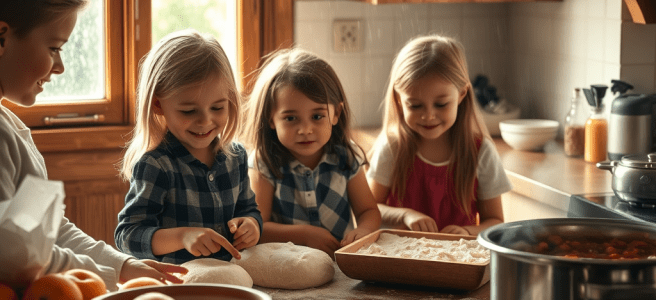
When the weather turns cold and dampness works it’s way into my aging bones, as it did today, I still think about cooking with my mother. I started “helping” her cook when I was so young I wasn’t tall enough to reach the counter top in our kitchen. My childhood friends and I learned how to measure and sift ingredients following my mother’s instructions. We kneaded bread dough and tasted cake batter by licking out the large wooden spoons we had used to stir it all together.
There was more than food processed in my mother’s kitchen. The conversations that happened as we prepared food and ate together were part of the plentiful feast, part of the communion.
One of my most vivid childhood memories is of the day that my friend Sherry was tossing the bread dough in the air and it went so high that it stuck to the kitchen ceiling. Slowly, as everyone in the room held their inhaled breath, the gooey and slightly gray colored substance oozed back down into my friend’s waiting hands. Sherry had an abusive alcoholic father. None of us was aware of the secrets she held inside herself then. Reshaping the sticky, soiled mess back into form, Sherry said with a satisfied tone, “That’s ok; I’ll bake this loaf for my Dad.” There was something about the way she said it that sounded important. No one, even my mother, questioned her decision. Sherry carefully carved “Dad” onto her loaf and baked it in the oven with the rest.
 My Turn