Lenten Sacrifice

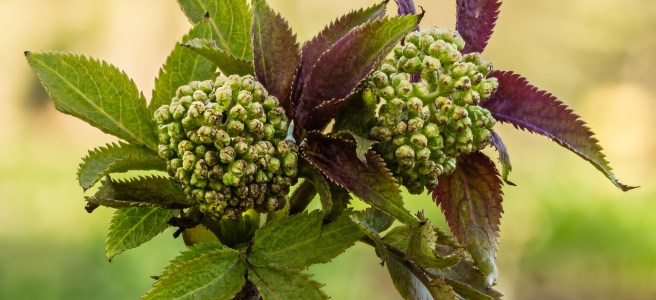
Cluster of small green buds surrounded by pointed, serrated leaves on a stem, against a blurred natural background.

Although it has not been a part of my religious practice in the past, this year I have things I want to give up during Lent. It will not be the cookies I have with my afternoon tea or the occasional meal I have that is not strictly plant based. But there are things that are both unhealthy and distracting that I am giving up during this season of sacrifice, in order to attain clarity. 

Lately my thoughts have been scattered. Like the tree branches blown over the ground with the recent wind and rain, I feel tossed betwixt and between. I spend more time  than I want reading and responding to email and social media. The books I want to read pile up and up. My relationships with friends and family go untended. 

This season is one of acknowledging death, and rebirth. As I am about to complete my 76th year of life I understand that time is precious. It is impossible to escape my mortality. I have fewer years of life before me than behind me. Dust will return to dust. My generation will be replaced by others.

Recently social media has capitalized on the human tendency to flutter from one thing to another. It keeps me scrolling way past the time I had planned to find some bit of information. Worse yet is that in order to hold my attention, much of what I stumble upon is designed to make me angry.

Years ago when I was leading workshops, I learned that distractions take precedence. It’s instinctual, probably a survival technique ingrained from our ancestors. If it is a single distraction, as when a comedian is interrupted by a heckler, the best advice is not to ignore it. 

That doesn’t work when the distractions come at an alarming number and frequency. Lately the distractions feel like the devil at work. Even though I don’t believe in Satan, I recognize that there are evil forces purposefully stirring things up, making me doubt my faith. I feel the need to return to a sacred practice.

Today the “news” seems to be less about what happened and more about what the consequences could be. I am feeling powerless, trying to figure out where to begin. It is hard to avoid the comparison with being lost in a wilderness and needing a time of solitude and reflection, in order to muster the spiritual energy to resist the evil forces.

During Lent, I am giving up the temptations of mindless busyness that have become addictive for me. Only then will I be able to pay attention to the things that mattered the most, rather than the myriad details that have been cluttering my thoughts. Perhaps it will reinvigorate me, giving me renewed energy to start where I am, use what I have, and do what I can.

Start where you are, use what you have, do what you can.
― Arthur Ashe

In Memory of Horace

This week marks the twentieth anniversary of my father’s death. It is a date that I usually let slip from my memory. I don’t want to remember the day he died or the two days prior as he lay in a hospital bed, while I sat by his side day and night unable to find the words to say goodbye. I prefer to remember him animating my childhood stuffed animals, bringing them to life in my imagination. I want to see the twinkle in his eye when he told a trickster tale. I want to remember his generosity, especially to those who were very young and undervalued by others. I want the images in my head to be of his love of the natural world, including animate and inanimate beings.

Yet, too many nights as I try to drift into sleep I see images of him during his last days. I replay the early morning telephone call from the doctor. “Your father had a massive heart attack last night. He is in the intensive care ward now. We don’t expect him to live more than a day or two.”

My heart still races when I recall how I rushed to his side, finding him engulfed in beeping machines and an entanglement of electrical monitors. Years earlier he and my mother had written their living wills and discussed their wishes with me. Now I had to tell the nurses and doctors to remove all the equipment and transfer him to a private room where he and I could be alone.

I wish that I could forget watching helplessly as he shared what it felt like as his organs failed to function. When he turned to me and said, “This is just like being born,” he was teaching me what it was like to die. He was a penultimate learner and teacher. I am so grateful to have had him as my father.

Father pushing baby daughter in a stroller.
In the park

Pondering Pandemic

Even though I no longer have a television and only listen to the radio when I am driving, the news comes to me without me looking for it. So I already knew about the virus predicted to kill globally, I was surprised when I went out to lunch last week with friends I hadn’t seem in three years. I was taken aback that no one would touch me, no one hugged me, no one would even do a fist bump. They were all afraid of getting COVID-19. All but one of us was over sixty years of age, and most of us had serious medical weaknesses. The consequences were in deed worrisome.

After I regained my composure from being told there would be no touching, my first thought was “We’re all going to die anyway.” I don’t want to live my life in voluntary seclusion. I get energy from being with people. In my childhood I spent days, sometimes weeks, confined to a bed and wondering about what my friends were doing in school or at play. Over my lifetime I have learned to adapt when I needed to be hospitalized but, I never learned to enjoy social distancing.

I also have considerable experience being told I would not live long. At a young age I not only knew I was going to die, I thought it would happen soon. I’ve meditated on my own death, a spiritual practice that help me gain some perspective on my minuteness in this world. I’ve developed a rather cynical sense of humor. I’ve recently read “Smoke Gets in Your Eyes: And Other Lessons from the Crematory,” It’s a book I recommend. The author, Caitlin Doughty is on a mission. She also has a blog and a podcast because she is serious about normalizing death or as she puts it, “Accepting that death itself is natural, but the death anxiety and terror of modern culture are not.”

It still astonishes me when I’m confronted with death deniers. I chuckle at folks who believe that mid-life is age fifty. In a way, I understand. My imagination isn’t broad enough to fully comprehend a world where I do not exist even if I know that will happen. Knowing I will die sooner rather than later leads me to think about what I want to do while I am still alive. It does not make me want to crawl under the bedcovers.

What startled me last week escalated into a swirling vortex of anxiety as more and more friends began expressing concern when I said I intended to do little to protect myself from getting the virus. Peer pressure has made me reevaluate my attitudes. So yes, I am taking precautions now.

I’ve always been a planner, trying to anticipate what could go wrong and taking steps in and attempt to prevent injury. At the same time I recognize the limitations of any plan. To quote President Eisenhower, “In preparing for battle I have always found that plans are useless, but planning is indispensable.”

The only thing I can have the possibility of controlling is my mind and that is challenge enough for me. The worrier in me wonders about random things. All of the presidential candidates are in the high risk category. What will happen if they all die? What will happen if all the children are asymptomatic but infect their caregivers? How many sick people will hospitals be able to help before they become over burdened and can not accept any more patients?

“Breathe,” I tell myself with a bit of sarkiness, “while you still can.”

Hallelujah! I have lived more than seventy years and it has been mostly a great life, full of love, and caring. Perhaps it would be for the best if vast numbers of we old people and those with weakened immune systems did die off. Would it help to save the planet, at least temporarily? Would it give the younger generation a chance to do a better job than we have?

“In the end these things matter most:
How well did you love?
How fully did you live?
How deeply did you let go?”
— Jack Kornfield, Buddha’s Little Instruction Book

I Did It My Way

I’ve been working to update my “When File.” It’s a list of things to do when I die, like what places my beneficiary should notify in order to collect whatever life insurance or retirement funds remain. It also has information about who might want to receive a call, email or letter explaining that I have died. There are instructions on how to remove my email from the many listservs I belong to and passwords to close out my blogs, Twitter, and Facebook accounts. I don’t want to be one of those back-from-the-dead faces that pop up on a computer screen saying, “You and Elsie have five mutual friends, don’t you want to be Elsie’s friend too?” I happen to know that Elsie died four months ago. That means it is now too late to be her Facebook friend.
 
What my When File does not contain is instructions for any funeral or memorial service in my memory. Let the living plan whatever comforts them, I’m the one person who will not be there. I also haven’t made arrangements for disposal of my bodily remains. “Do whatever is the least expensive and least time-consuming,” I tell my spouse.
 
I know I will leave behind clothing, photographs and unfinished writing projects, but these I believe can be easily given away or tossed in the trash.
 
Of course one thing I do not know is when the When File will be used.
 
“She probably won’t live to be ten years old,” one doctor told my mother when I was eight. I wasn’t aware of the prognosis at the time, but I was aware that my parents treated time as precious. Relationships with people and with the earth were of the utmost value; acquiring objects were the lowest. They didn’t stop planning for the future, but the present took priority.
 
When one of my friends learned that she had liver cancer and would probably not live for more than a year she went on a search to complete her glass frog collection. Her friends all over the world began to look for the red frog she desired, focusing their love and concern for her on the task.
 
Another friend made her “bucket list” shortly after her fiftieth birthday, writing down all the countries she wanted to visit and all the adventures she wanted to try. The first items on her list included divorcing her husband, giving her daughter a dream wedding and purchasing a little house by the ocean. For years I received postcards from her and notes about completed items from the list. One note said, “I got my ride on a tug boat this summer.” Lately her email messages say more about the friends she has made in her new community, her grandchildren and how she has started dating again.
 
One of my cousins wrote instructions to her husband on how to cook meals, do laundry and take care of things on their own. In the last week of her life she stuck the notes on doorways, walls, the refrigerator and the washing machine.
 
When we are motivated by goals that have deep meaning, by dreams that need completion, by pure love that needs expressing, then we truly live life.
—Greg Anderson