In Memory of Horace

This week marks the twentieth anniversary of my father’s death. It is a date that I usually let slip from my memory. I don’t want to remember the day he died or the two days prior as he lay in a hospital bed, while I sat by his side day and night unable to find the words to say goodbye. I prefer to remember him animating my childhood stuffed animals, bringing them to life in my imagination. I want to see the twinkle in his eye when he told a trickster tale. I want to remember his generosity, especially to those who were very young and undervalued by others. I want the images in my head to be of his love of the natural world, including animate and inanimate beings.

Yet, too many nights as I try to drift into sleep I see images of him during his last days. I replay the early morning telephone call from the doctor. “Your father had a massive heart attack last night. He is in the intensive care ward now. We don’t expect him to live more than a day or two.”

My heart still races when I recall how I rushed to his side, finding him engulfed in beeping machines and an entanglement of electrical monitors. Years earlier he and my mother had written their living wills and discussed their wishes with me. Now I had to tell the nurses and doctors to remove all the equipment and transfer him to a private room where he and I could be alone.

I wish that I could forget watching helplessly as he shared what it felt like as his organs failed to function. When he turned to me and said, “This is just like being born,” he was teaching me what it was like to die. He was a penultimate learner and teacher. I am so grateful to have had him as my father.

Father pushing baby daughter in a stroller.
In the park

Father’s Last Walk

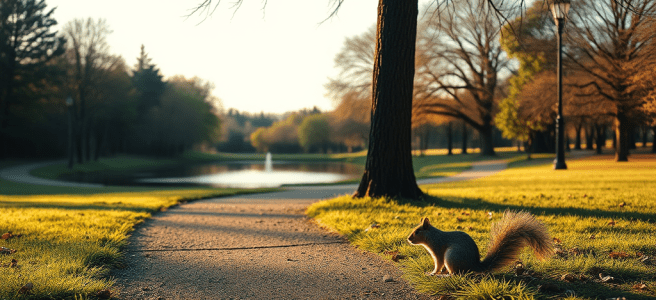
My father walked to relax, observe, and reflect. When he went for a walk, he paid attention to the sounds of natural silence, the skitter of squirrels and the rustling of wind. He stopped to notice when the skunk cabbages were in bloom, or to pick a twig to chew from a sweet birch tree. The twigs tasted of wintergreen.

Until I was ten years of age, I often joined my Dad in his daily late afternoon walk. Two blocks from our home was a path that led into a park. Once inside the park, a paved road made a circular path. It had been closed to all motorized traffic and now it was used by bicycles and walkers. In the center of the park was a lake, which we could see at a distance. As we walked along just inside the outer edge of the park, Dad would point out the ferns by name, and identify the rocks I squatted down to examine.

My father shortened his steps to match the gait of my child-sized legs. The gentle rise we called Blueberry Hill felt steep to me then. Dad slowed his stride, so I could keep pace going up the slope. On these walks, we noted the passing of time not in hours and minutes but by the angle of sunlight and the seasons.

In the springtime the blueberry bushes displayed delicate white flowers. Afterwards, the pale green pearls formed in early spring, turning gradually into a delicate pink, blending to rich purple and finally blue by summer’s end. Each week the berries became plumper and plumper. I would often break into singing a popular song of the time, “Blueberry Hill” by Fats Domino.

I imagine that I kept up a verbal chatter that rivaled the sounds of the ducks quacking as they paraded back to the pond. By the end of our route, we passed the backsides of neighborhood homes. From out of open windows, the scent of dinner rolls baking, chickens simmering and pork chops frying awakened our growling stomachs. My father would wink at me, ”It’s time for supper.” Like the birds returning home to their roosts, Dad and I would quicken our steps.

After he retired, Dad increased his walks to several each day. To humor my mother and I, he carried a walking stick and wore a hat to protect his head from sun and rain, but he refused to relinquish his walk just because the snow piles had not been shoveled or the weather report warned that there was extreme heat and humidity.

Up until he had a massive heart attack when he was 91, my father continued his daily walks. In his last year of life his walks were to the nursing home, where my mother was a resident.

During his final three days of life, I sat at his bedside. As the doctor predicted his systems were shutting down. Each time a nurse entered the room to ask, “How are you doing?”

He responded, “I would be fine if I could just go for a walk.”