
“Everything…affects everything”

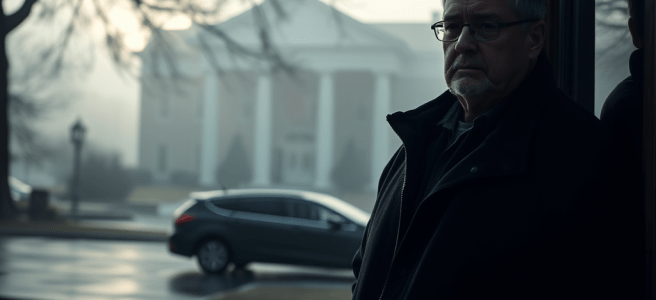
Ralph the custodian at the library arrived for work on a chilly morning. He noticed another car at the back of the parking lot. “That’s odd,” he thought, “the library doesn’t open for another two hours.” He thought perhaps the owner had not been able to start it for some reason and left it there, but then he noticed the engine was running. Ralph walked over to see if the car’s owner had left a note on the windshield. It startled him to see that in the driver’s seat was a young woman, slumped over the steering wheel. He knocked on the window and got no response. The car door was locked.

By the time I pulled my car into the lot everything appeared as usual, Ralph was standing by the door waiting for me. He opened the door so that I would not have to use my key. His usually cheerful face was grave. Halting a bit, he explained the police had come and gone. As Ralph feared, the woman was dead. She had blocked the car’s exhaust pipe, turned on the car engine, locked the doors, and waited to die. If she had had any second thoughts later she would have been too paralyzed by the fumes to get out of the death trap she had constructed.

I had often thought of Ralph as our Tin Woodman, a man who was more comfortable building bookcases and taking care of people, than acknowledging his kind heartedness. He lowered his voice and said, “They took her body to the morgue and towed her car away.”

It was mid-morning when the police officer came to the library to say that they had identified the body. She was a college freshman. The officer told me her name, but I didn’t recognize it. Her name rippled from one staff member to another in hushed tones. Most shook their heads and said, “No I don’t remember her.” Murmurs of “How sad,” echoed each time another staff member came into work.

But Emily at the circulation desk said, “Oh yes, I remember her now. She was soft spoken, kind of shy. She probably used the college library most of the time, but she came here every once in a while.” 

Most of that day few people talked about it. The atmosphere was somber. At the staff meeting the next day, I asked everyone to say a few words about what they had felt when they learned of the suicide. Some librarians, who had children of their own, thought how the young woman’s parents must be grieving. Several people said that they wished they had known her better, known that she seemed withdrawn and anxious. Perhaps if they had taken the time, while checking out her books, to inquire how she was, they could have offered her some comfort. If she hadn’t felt so alone, could it have made a difference? Then Ralph spoke, “I thought I was the only one who thought perhaps I could have prevented this. I wondered if I had just arrived extra early to work, could I have saved her life.”

I think she would have been surprised that the town librarians sat together mourning her death. She may have been astounded to know that thirty years after her suicide, the director of the library still remembered her death as tragic.

Going on a library hunt

During the summer months, my friends and I walked to the Liberty Branch Library. Each child carried a few books we had read under the shade of a tree or illuminated by a flashlight. We turned the pages faster as our reading improved with practice. “Just one more chapter, please!”  we begged if our parents called us.

Our short legs walked at a meandering pace and it took us at least half an hour to get to our destination. We passed by the elementary school and skirted a side of the city park. There was only one busy street for us to cross at a traffic light.  We dropped our books at the check-in counter.

Mrs. Walker, the children’s librarian, never seemed to tire of questions. Instead she took an immediate interest in whatever we found curious. We knew we could count on her to find out which bird built that nest in our maple tree or what makes lightening flash and thunder boom. She would glide her finger across the rows of books on a shelf and, like magic, pull out the very one that held the answer.

When we heard the bell ring we would gather in front of the basement door and wait until Mrs. Walker led the row of assembled children down the stairs and into the story telling room. We took our places in the metal folding chairs eager for the stories and songs. Some of the stories we repeated almost every time. My favorite was the Bear Hunt. We would slap our hands, alternating left hand then right, to our thighs making pat, pat noises that were supposed to sound like foot steps. Each line of the story that Mrs. Walker told, we echoed.

“Let’s go on a bear hunt!” Mrs. Walker would begin.

“Let’s go on a bear hunt,” repeated the children’s voices.

On cue, we all made the appropriate hand movements and sounds for walking through the tall grass in the field, crossing the bridge, walking through the fallen leaves in the forest, swimming across the river, and squishing through the mud. Finally when Mrs. Walker announced we had reached the deep dark cave we would reach out our hands in front of us and pretend to feel around.

“I feel a wet nose.”

“I feel a wet nose,” as if we all felt it too.

“I feel furry ears.” Mrs. Walker said with concern in her voice.

“I feel furry ears.” we repeated in unison.

“It’s a bear!” Mrs. Walker shouted, “let’s get out of here!”

“It’s a bear!” we shouted, “let’s get out of here!”

This was the signal to reverse our previous steps rapidly, making squishing noises through the mud, swimming strokes crossing the river, crackling through the forest, parting the tall grass and finally opening the door to home. We heaved a sigh of relief and collapsed as if the race had been run on our legs, not our imaginations  and hands.

After story time we would pick out more books before reversing our steps home. Past the Italian bakery that smelled of warm bread, stopping at the traffic light to cross the street, feeling the cool breeze coming from the park and past the school yard. By the time we got home we would be ready to sit and begin one of the books before we were called to supper.

Independence Day

Parades with banners, stars and stripes flags, and marching bands; barbeque grills, potato salad and watermelon; open air concerts and firework displays all send the messages of victory from oppression and the “unalienable Rights” that include “Life, Liberty and the pursuit of Happiness.”

Liberty brings thoughts of a man I correspond with in Texas. He has been incarcerated now for about 15 years for a crime that he says he did not commit. Perhaps he is guilty. Maybe he is innocent.

I have never been incarcerated myself. For several years I worked as a consultant to librarians in State residential facilities. The libraries were for people with severe developmental disabilities, mental illness, and those awaiting trial in county jails or convicted felons in state prisons.

As part of my job preparation, I attended the Department of Correction Orientation program. The tour guide informed us that the people doing time are most likely to have had access only to a court appointed lawyer. The people I would see on the inside, he explained, are those without financial resources or the ability to read. I was amazed by the candor of the orientation. The purpose of the prison system is not to punish or reform, but to separate those who have been convicted from the general public.

I thought about how few “free” people have witnessed what I did when I walked through cellblocks where the decibel level of noise alone makes it difficult to control confusion and anger. The smell of human bodies not allowed to shower while confined in lock down for weeks at a time lingers in my memory even now. I recall the voices of many women and men explaining to me that when they were incarcerated they had not been taught to read. In prison they had the time to teach themselves. They were not stupid, just uneducated. I wondered if I could contain my resentment and rage if none of the rules that governed my day-to-day activities made any sense to me. Would I be able to stay calm if I were myself in this situation? Would my heart yearn for contact with friends or family separated by the walls?

I watched men, released directly to the street from isolation in a space 12 feet 8 inches by 7 feet 6 inches, stumble through the door because they no longer had any peripheral vision.

It is not the nature of the crime that determines where a convicted person will be housed. People who do not display anger at being incarcerated are placed in minimum security. Those who resist the confinement in an overcrowded environment, lack of privacy, limited time outside of a cramped cell; these people are placed in medium security. And those people who display aggressive behavior are confined to maximum security or solitary.

As I write to this man I have never met and probably never will, I remember what I saw and heard in person. It is not easy. I think about liberty and I suspend judgment to simply read his letters and respond.