Father’s Last Walk

My father walked to relax, observe, and reflect. When he went for a walk, he paid attention to the sounds of natural silence, the skitter of squirrels and the rustling of wind. He stopped to notice when the skunk cabbages were in bloom, or to pick a twig to chew from a sweet birch tree. The twigs tasted of wintergreen.

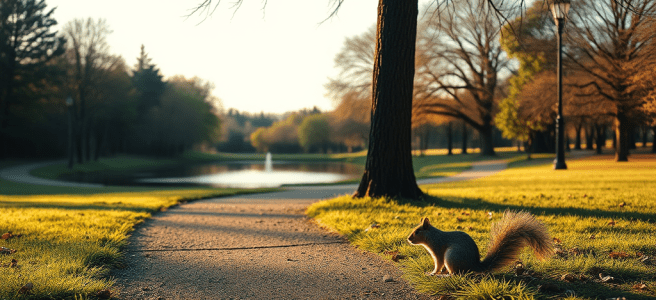
Until I was ten years of age, I often joined my Dad in his daily late afternoon walk. Two blocks from our home was a path that led into a park. Once inside the park, a paved road made a circular path. It had been closed to all motorized traffic and now it was used by bicycles and walkers. In the center of the park was a lake, which we could see at a distance. As we walked along just inside the outer edge of the park, Dad would point out the ferns by name, and identify the rocks I squatted down to examine.

My father shortened his steps to match the gait of my child-sized legs. The gentle rise we called Blueberry Hill felt steep to me then. Dad slowed his stride, so I could keep pace going up the slope. On these walks, we noted the passing of time not in hours and minutes but by the angle of sunlight and the seasons.

In the springtime the blueberry bushes displayed delicate white flowers. Afterwards, the pale green pearls formed in early spring, turning gradually into a delicate pink, blending to rich purple and finally blue by summer’s end. Each week the berries became plumper and plumper. I would often break into singing a popular song of the time, “Blueberry Hill” by Fats Domino.

I imagine that I kept up a verbal chatter that rivaled the sounds of the ducks quacking as they paraded back to the pond. By the end of our route, we passed the backsides of neighborhood homes. From out of open windows, the scent of dinner rolls baking, chickens simmering and pork chops frying awakened our growling stomachs. My father would wink at me, ”It’s time for supper.” Like the birds returning home to their roosts, Dad and I would quicken our steps.

After he retired, Dad increased his walks to several each day. To humor my mother and I, he carried a walking stick and wore a hat to protect his head from sun and rain, but he refused to relinquish his walk just because the snow piles had not been shoveled or the weather report warned that there was extreme heat and humidity.

Up until he had a massive heart attack when he was 91, my father continued his daily walks. In his last year of life his walks were to the nursing home, where my mother was a resident.

During his final three days of life, I sat at his bedside. As the doctor predicted his systems were shutting down. Each time a nurse entered the room to ask, “How are you doing?”

He responded, “I would be fine if I could just go for a walk.”

Levees and the Illusion of Flood Control

At the prompt of a friend I am writing to the same title as a recent guest blog in Scientific American.

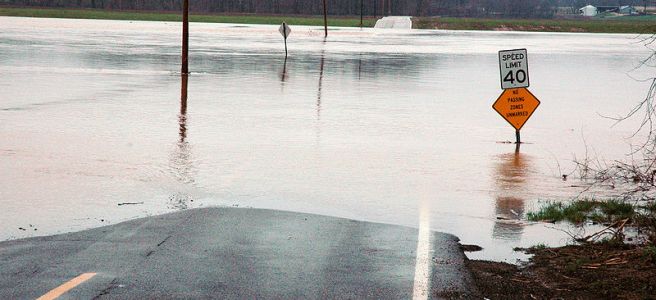
As I drove around the curve of the winding country road, I saw in the distance that the long stretch of pavement ahead seemed to be flooded. There had been no other cars pass me on the road that afternoon. That didn’t seem unusual this far away from the city. I was exploring new territory with no particular destination in mind. I continued to drive along the narrow road, wondering if the spot that appeared to be wet was a mirage created by the heat. It was a steamy afternoon, and I was enjoying the ride, besides there seemed to be no easy way for me to turn the car around, so I kept driving forward. As I got closer, I could see a body of water on either side of the road; closer still I could see that the water had overflowed its banks and was covering the road. The water appeared to be calm, a mirror of the sky above. Now when I looked ahead I could not see a point where the road reemerged. It was as if the road had disappeared beneath the water. Had I missed a sign that said, “boat ramp?” Irrationally I kept driving, wondering if my car would hydroplane, float or sink.
 
As I awoke from the dream, I sobbed uncontrollably.
 
I was raised to believe that anger and sadness were out of place. Anger was more than inappropriate; it was dangerous for me and for those around me. It had the power to displace me. “Go to your room and stay there until you calm down,” my mother would say.
 
I remember an illustration in one of my children’s books of a child kicking a tree and longed to do the same, but I knew that I would begin a hematoma in my foot that would require ice and perhaps even a trip to the Emergency Room of the hospital. Eventually I constructed a wall to hold the anger in and channel it away. When I went into therapy as an adult, the therapist asked, “Aren’t you angry?”
 
I could only reply, “What good would that do?”
 
The anger didn’t all flow down stream; some came out in short spurts of sniping sarcasm. The tears I shed were mostly in movie theaters. The barrier walls were strong enough to contain my emotions even though the levees made them run faster and rise higher. I could see the evidence as the blood pressure cuff squeezed tight and then released around my wrist.
 
I reinforced the embankment of defenses to control my anger and my sadness. I reasoned that displaying either would only make the ones I loved fearful and sad too and I certainly did not want that. “Smile and the world smiles with you, cry and you cry alone,” was the refrain. It didn’t make me feel any happier or any less alone.
 
Being in control is an illusion, I learned. The climate around me was changing and the old ways of coping were inappropriate for the conditions of my life now.
 
In the same way that the levee works well when the water volume is moderately increased, and not so well when there is a torrential flood, I started having recurring dreams about water after four of my cousins and both of my parents died within the space of two years. I was living on an internal flood plain and I didn’t know it consciously. If I remove the containment walls and let the water spread wide, will I find myself on fertile ground?

It’s Not Easy to Be Green

Yesterday, we noticed a Green Anole trapped behind the glass door on our wood stove. We imagine that it climbed down the chimney, perhaps nibbling insects along the way, and then could not figure out how to climb back up.

When it was still there today, we became more concerned. We gathered the necessary critter rescue kit and freed the Anole to its outdoor habitat. After it was safely outside again, we watched as it gradually turned from the drab brownish color it had become inside the wood stove back to a brilliant green again.

In my childhood I gained a lot of experience capturing backyard critters of many sizes and shapes. Grasshoppers, toads, garter snakes, turtles and spiders were often placed in temporary habitats constructed in jars or terrariums with screened lids. One day, I entered the kitchen just in time to hear my mother calmly talking on the telephone. Her last sentence was, “I’m sorry, Jane, I have to hang up know. My daughter’s snake just crawled out from behind the stove.” As she lowered the phone, I could hear Jane screaming, “Did you say snake?” I learned by that experience that a snake could easily escape if an old hosiery stocking was used to cover a jar motel.

Eventually, my father created a special guest room for viewing spider webs. It had a wooden frame with twigs inserted along the inner side edges and moveable Plexiglas panels on the front and back. There was a corked hole at the top for dropping in a spider. Each spider created it’s own special web stretching the threads between the twigs. Hours of amusement were spent feeding the spiders before they were set free again. The web remained in the box. By removing the Plexiglas, it could then be spray-painted, placed on a piece of black construction paper, and labeled with the species of spider that had created it.

All the critter visitors were fed and given fresh water for a day or two, then released back to freedom where they had been found. My mother, who enjoyed it as much as the neighborhood children, usually taught the backyard nature study. The children arrived several times a day to assist and observe. Together we watched as toads shed their skins by sweating and larvae transformed into butterflies. We learned that a preying mantis would drink water from a spoon held in front of it, tilting its head in a horse-like pose. Mom would bring out the identification books that we owned or walk us to the local branch library to find information about our current guests.

However, I learned more than how to identify these backyard critters. I grew to respect each of them as individuals and to value their companionship. By caring for them, I came to care about their safety and the survival of the planet we share together. It seems natural to me to reduce, reuse and recycle; not to waste limited resources; to tread softly upon this earth.

As I watched the Anole transform from the dusty color it had taken on inside the wood stove back into a green, melded with the leaves, I reflected that it’s not easy to get green. But, when the survival of all our relations is at risk, it becomes urgent.

Bidens

Outside my bedroom window, some of the weeds around the side of our house are now tall enough to bob and tilt in the wind. The flower that looks like a white daisy is Bidens. Its common names are Beggar Tick or Stickseed because it has sharp seeds that cling to clothing, fur, or feathers. From my window I can see the flowers dance and swing, teasing the butterflies to catch them. I risk passing through the clump of Poison Ivy to view the daisies closer.

What makes a plant a weed? I wonder as I admire this thriving plant that has a system for transporting its offspring to faraway lands. Some would call it invasive for these very qualities of adaptability and endurance. Thorns are considered a nuisance by humans, not a survival technique. Perhaps I take the criticisms about weeds a bit too personally. I have a rather prickly disposition at times myself, or at least so I am told. My imagination tells me that our new neighbors are less than pleased by the weeds allowed to grow wild in our yard. I simply admire the way in which they invite butterflies to my window.

What makes a weed a weed is, in my view, not the audacity it displays by growing wherever. It is not even the persistence that it displays in returning again and again after it has been pulled out by its roots. It is the value it is given by humans. A weed is simply a plant that is not wanted.

What puzzles me the most is the great lengths that humans will go to in order to control and organize the natural world. Weeding, mowing and watering grassy lawns seems a waste of energy and resources to me. Some landscape designers plan gardens so they will mimic the natural forests. It seems presumptuous to me that the natural beauty of a forest could be improved by human intervention. I have a similar reaction to the planned burning in the National Forests. If there are not enough wildfires from lightening strikes, controlled fires are set to clean out the dead wood, unhealthy trees and help other plants to germinate. In my view, this reveals a lack of faith in nature.

It reminds me of the way in which religious beliefs are ranked by some as either true or false. Recently, I have started attending a Zen Buddhist group to practice meditation and chanting. A friend of mine told me that she would be afraid to practice meditation. She had been told in church that people who meditate are members of a cult. It seems extreme to define this religious practice, which has been in existence since at least the 7th Century CE, a cult. But, by calling any religion a cult, it labels it as negative and even dangerous. Like the weeds in my yard, it is considered undesirable. Some certainly believe that cults need to be weeded out, to protect the “true believers” and save all of our souls. I wonder, is it simply a belief that is not our own?

When I take a good look at the world around me, it gives me more faith in diversity, not less.

Lightning

When my father would hear the first rumble of thunder, he would often gather us all into the car and drive to the highest point of land where we could get the best view. If it weren’t possible to chase the storm, Dad would position himself on the covered patio on the side of our garage. He would stand there, smoking his pipe, watching and listening attentively. The display of electricity as the sparks shot down from the sky and met the ground below never disappointed him.

It was with the deepest reverence and respect that I learned to watch the bursts of light cutting through the clouds. Even today, I find myself counted the seconds off between the audible jolts of sound that precede and follow the long, jagged, tentacles of sparks. It is hot meeting cold, positive crashing against negative. It is energy and brilliance being discharged so that it can be seen and heard. All the elements of wind, rain, sky and earth are present. Atmospheric scientists explain that the push of two sea breezes, one from the east and one from the west, force air upward. This is a common cause of lightning. The pressures of wind and gravity produce an enormous electrical potential.

It feels so much safer to surround myself with other people who share my values. I search for news reports that reflect opinions I already hold. I protect myself from the explosive power of opposites.

Not too long ago, I looked out the window to see two women walking towards the front door of my house. It was a cold, rainy morning. The two women were carrying pamphlets and I had a moment of panic as the doorbell rang. Should I just pretend that there is no one home and let them leave their religious tracts by my door? They looked almost as surprised as I did when instead I opened the door wide and invited them to step inside. For a moment, I felt their surprise and indecision, as I had when I saw them come walking down my path. When I risk conflict, I can feel the pressure rise. Often, I can see it rising from the other side too.

The two women chose not to be tempted by the warmth of my home. Returning to their preset agenda, they stood outside in the drizzle and offered me a pamphlet. I declined to accept their gift. We all missed the energy of the opposite forces pushing against each other. We all missed the possibility of conflict and the potential of transformation.