Reflections on Blogging

I seem to have attracted a few followers every day since I started this thirty-one days of free writing challenge. Each day I glance at the names of the other bloggers out there who have clicked like on what I posted yesterday. Then I puzzle over what they write. It seems to me that most are picking up on the key words I have added to signify my topic. When I used food as a tag, my piece was noticed by people who write exclusively about recipes. Most of the people who say they “like” my post have only done so once. I see no evidence that I have a true following with the exception of a few personal friends. What I notice is that many of the people who claim to be following my blog in fact have hundreds, if not thousands of followers themselves. This make sense if they are going around and liking posts rather willy-nilly. Maybe it’s like having friends on Facebook and the more you have the better you feel about yourself. Today, day twenty-one, I actually liked someone’s blog back. Call me a snob if you want but I’m just not that easily swayed by popularity clicks.

Day 21 (of 31 days of free writing)

“Everything…affects everything”

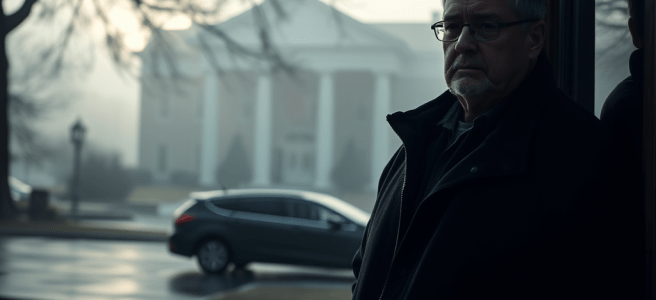
Ralph the custodian at the library arrived for work on a chilly morning. He noticed another car at the back of the parking lot. “That’s odd,” he thought, “the library doesn’t open for another two hours.” He thought perhaps the owner had not been able to start it for some reason and left it there, but then he noticed the engine was running. Ralph walked over to see if the car’s owner had left a note on the windshield. It startled him to see that in the driver’s seat was a young woman, slumped over the steering wheel. He knocked on the window and got no response. The car door was locked.

By the time I pulled my car into the lot everything appeared as usual, Ralph was standing by the door waiting for me. He opened the door so that I would not have to use my key. His usually cheerful face was grave. Halting a bit, he explained the police had come and gone. As Ralph feared, the woman was dead. She had blocked the car’s exhaust pipe, turned on the car engine, locked the doors, and waited to die. If she had had any second thoughts later she would have been too paralyzed by the fumes to get out of the death trap she had constructed.

I had often thought of Ralph as our Tin Woodman, a man who was more comfortable building bookcases and taking care of people, than acknowledging his kind heartedness. He lowered his voice and said, “They took her body to the morgue and towed her car away.”

It was mid-morning when the police officer came to the library to say that they had identified the body. She was a college freshman. The officer told me her name, but I didn’t recognize it. Her name rippled from one staff member to another in hushed tones. Most shook their heads and said, “No I don’t remember her.” Murmurs of “How sad,” echoed each time another staff member came into work.

But Emily at the circulation desk said, “Oh yes, I remember her now. She was soft spoken, kind of shy. She probably used the college library most of the time, but she came here every once in a while.” 

Most of that day few people talked about it. The atmosphere was somber. At the staff meeting the next day, I asked everyone to say a few words about what they had felt when they learned of the suicide. Some librarians, who had children of their own, thought how the young woman’s parents must be grieving. Several people said that they wished they had known her better, known that she seemed withdrawn and anxious. Perhaps if they had taken the time, while checking out her books, to inquire how she was, they could have offered her some comfort. If she hadn’t felt so alone, could it have made a difference? Then Ralph spoke, “I thought I was the only one who thought perhaps I could have prevented this. I wondered if I had just arrived extra early to work, could I have saved her life.”

I think she would have been surprised that the town librarians sat together mourning her death. She may have been astounded to know that thirty years after her suicide, the director of the library still remembered her death as tragic.

What a Wonderful Bird Is the Pelican

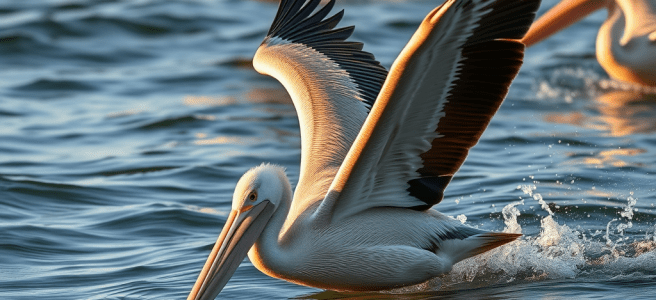
The chain of dignified brown pelicans swoop down so low they skim the waves. They have a prideful look with their necks pulled back and their eyes looking downward over their long pointed beaks. They are hovering over a school of fish and effortlessly capturing hundreds of little fish by opening their jaws and dipping the water’s surface. Then they ripple in formation as if to mimic the tide. The wonder is that such a ridiculous looking bird can achieve gracefulness at all. On dry land they look as if their predacious beaks are too heavy for their neck muscles, their bellies too low slung to stay air borne.

Some of the pelicans dive from high above the water’s surface capturing a bill full of fish and spilling out the water on their ascent to the air. The pelicans hit the water with a splash, and then float. It’s an hour before dinner when they will be joined by hundreds of their own kind as well as terns, gulls and osprey. The tide will becomes dark with frenzied feasting.

I feel like the oddly shaped pelican. I scoop up bits of information, opinions, sights, sounds, aromas, and take in whatever comes my way. Then I begin to sort, keeping what makes sense to me and flushing out the useless and harmful bits.

I identify too with the unsuspecting minnows. They swim nestled in the comfort of their community until suddenly gulped into a dark mouth. I am sure I am an edible catch, not shell or seawater that will be spit out. There is no turning back, no way to escape. All I can do is wait for the throat to squeeze and swallow.

Pop-Top

“You really need to get a port,” the hematologist said. He kept up this mantra for more than twenty years.

My veins have always been small, the best ones seem to automatically retract or dodge away from an oncoming needle. By the time I was twelve years old I had three scars where a doctor had cut the skin to get an IV line started. Some times it took a few tries but they always succeeded eventually.

By the time I was an adult the IV nurses who knew me best wouldn’t come near me until I had soaked both arms in hot moist towels to plump up the veins. The nurse would choose a child-sized butterfly needle and take a deep breath. I tried all the tricks I knew for my part of this drama. I drank several glasses of water to hydrate. I meditated and relaxed. I wouldn’t let them try to stick me until the blood products were hung beside me, just in case it took several tries. I didn’t want too many pinholes oozing all at once if the first few attempts to start the IV failed.

When I had a hemorrhagic stroke in 2002, I awoke to find that they had inserted a line into my femoral vein. The doctor increased his nagging, “You need a port.”

“Not yet,” I said, “Not yet.”

I couldn’t quite explain why I kept putting it off. I knew there was a risk of infection, ports could get clogged and have to be replaced on a regular basis. I new it was surgery and my automatic response to surgery had always been, no. I knew once I made the decision, there would be no going back. Unlike people who have a port for chemotherapy, I would have one for the rest of my life.

Nurses said, “You’ll love it.”

“Doubtful,” I thought. I guessed that the nurse might love it, but I couldn’t imagine that I would.

“You’ll wonder why you didn’t do it earlier.”

“Probably, I won’t,” I said.

I held them off until I was 64. By that time the only veins that could be felt or seen were on my hands and they were dotted with scars from previous use.

“Ok,” I said after one day there were four failed attempts and the one that succeeded was on the base of my thumb. “Ok, I’ll have a port put in.”

I almost reconsidered when the surgeon explained that he was going to cut my jugular vein and run the plastic tubing to just above my breast where the port would be implanted. Then the line would continue downward just above my lung.

It took a few weeks for the scars to heal, but once it was in they could easily test my clotting levels and give me additional fibrinogen.

Now there is a round bulge about the size of a quarter just under the surface of my skin. I can also feel the plastic tubing that runs from my neck to the port. It is a foreign object and I do not love it. Nor do I wish I had done it earlier. The nurses don’t shudder when they see me walk in the door. But, it only takes one skin stab to start the infusion or draw a blood sample and I have to admit there are some benefits to having a pop-top.

Patriots Day

In the 1970’s on Patriots Day, I would stand at the crest of Heartbreak Hill in Newton, Massachusetts cheering and clapping for those who had made it to the sign-less landmark in the Boston Marathon. I didn’t always get a spot to stand until the winners had passed, but I tried not to leave until the last straggler made it past me. To call it a hill is an exaggeration.

The slow incline that goes up for almost half a mile begins about twenty miles into the race. Most of the runners who made it to the top of the hill looked like it had taken every bit of endurance to keep moving forward. Their heads drooped; their eyes had lost focus and their fatigue was palpable. But when they heard the applause from the crowd, they raised their heads up and pushed out a smile, regaining some energy. They grabbed at cups of water held out to them, drinking on the run. If the day wasn’t cloudy or rainy, some poured the cup of water over their heads before tossing the paper cup to the tree belt. The supporters at the top of Heartbreak Hill weren’t as numerous as the crowd the runners had seen at the start or the people who would be waiting for those that made it to the finish line. I wanted to applaud the many who would win a personal victory through their endurance.

This year two bombs were detonated near the finish line, killing three and injuring more than 170. Many hearts were broken. The city and surrounding towns were in a lock-down, no public transportation ran, no businesses were allowed to open, everyone was told to stay home with their doors secured. People were constrained into seclusion between the time law enforcement teams killed one of the suspects in a street battle and the time when the second suspect was captured the following day. Parent’s had to find the words to explain to their children why they were quarantined on a beautiful sunny spring day.

Instead of the alarm of Paul Revere, “The British are coming!” people were more inclined to think it was now the terrorists who were attacking. Now it is the city and the marathon that will have to make it up a hill of pain and trauma before they triumph.